
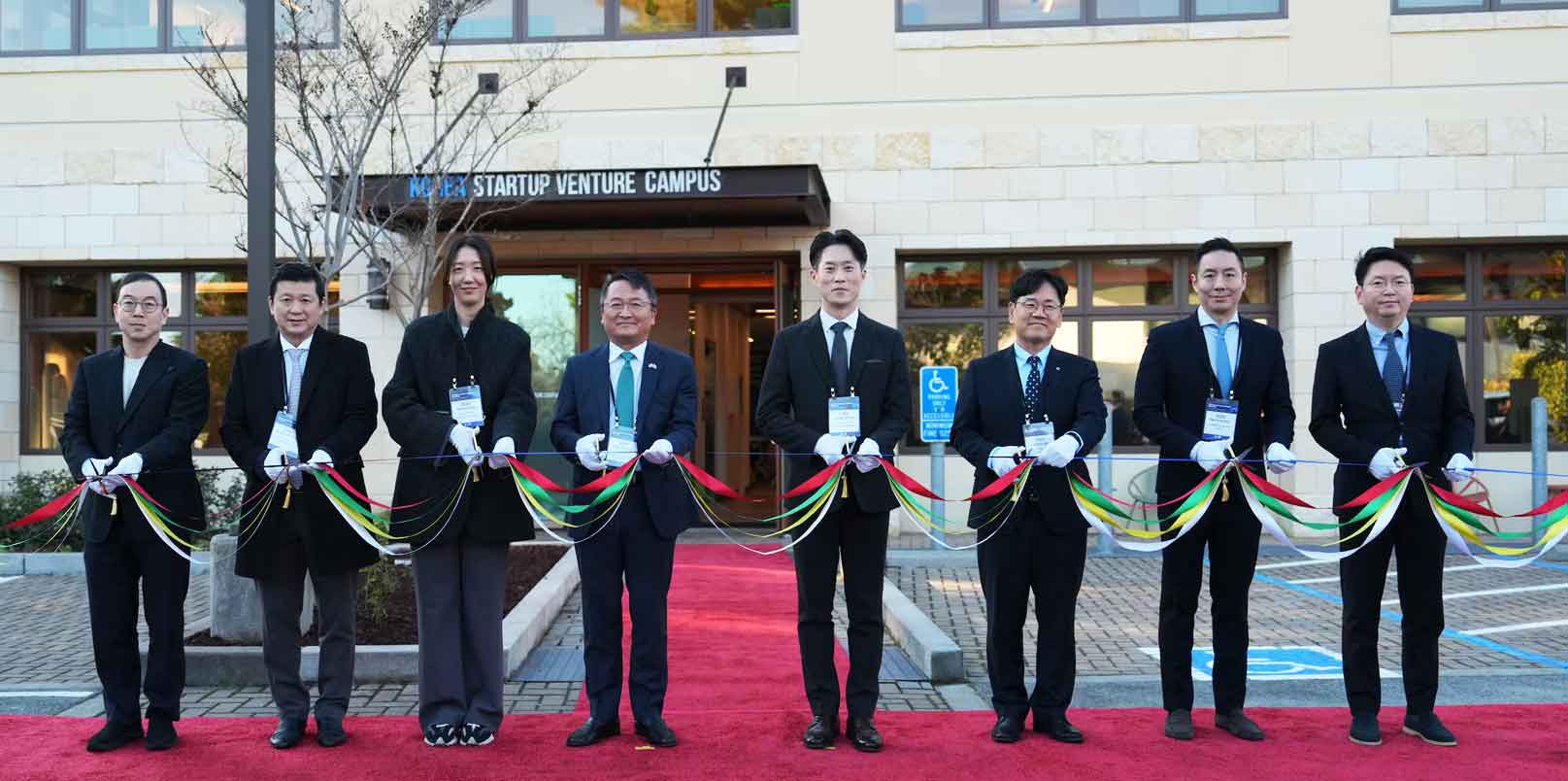
South Korea has officially planted its flag in the world’s most competitive innovation belt. The new Startup Venture Campus in Silicon Valley marks the moment Korea’s startup policy takes physical form. What began as a national vision of becoming a top global venture power now manifests as an operating base where public strategy, private capital, and global ambition meet face to face.
Korea’s Global Strategy Turns Tangible with Silicon Valley Campus
Korea’s startup policy has entered a new phase — one that exists not only in plans and funding but in physical presence. The Ministry of SMEs and Startups (MSS) has officially opened the Startup Venture Campus (SVC) in Silicon Valley, establishing the nation’s first permanent global base for Korean ventures.
The SVC is designed to turn years of venture policy design into practical infrastructure. It serves as both a workspace and strategic hub for startups, investors, and institutions navigating the U.S. innovation landscape.
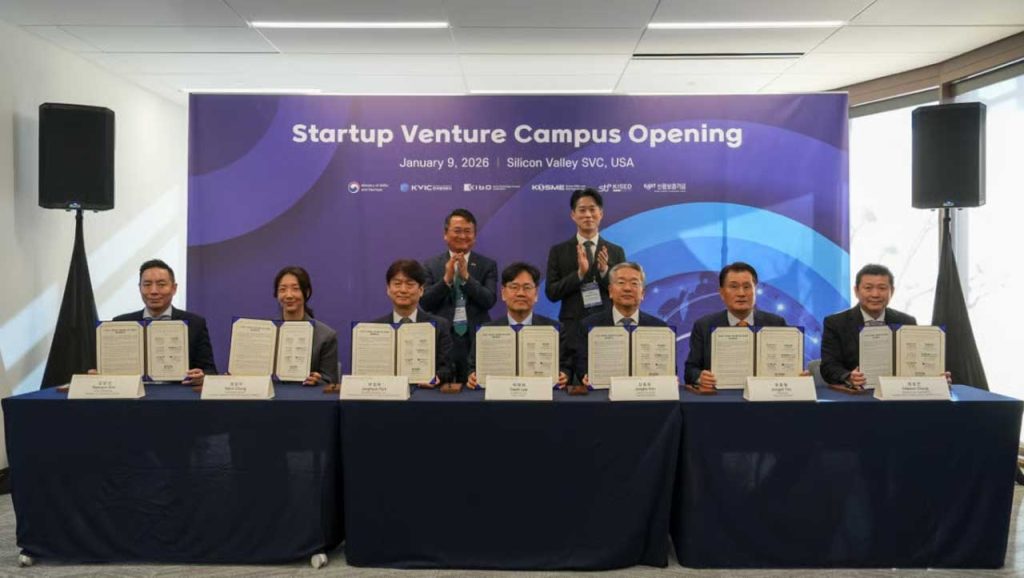
Silicon Valley Becomes Korea’s First Overseas One-Stop Hub
The new Startup Venture Campus integrates what were once separate overseas offices — the K-Startup Centers (KSCs) and Global Business Centers (GBCs) — into a unified global operation model.
Located in Menlo Park, the SVC hosts Korea’s key startup support agencies: Korea Venture Investment Corp. (KVIC), Korea SMEs and Startups Agency (KOSME), Korea Institute of Startup and Entrepreneurship Development (KISED), and Korea Technology Finance Corporation (KIBO).
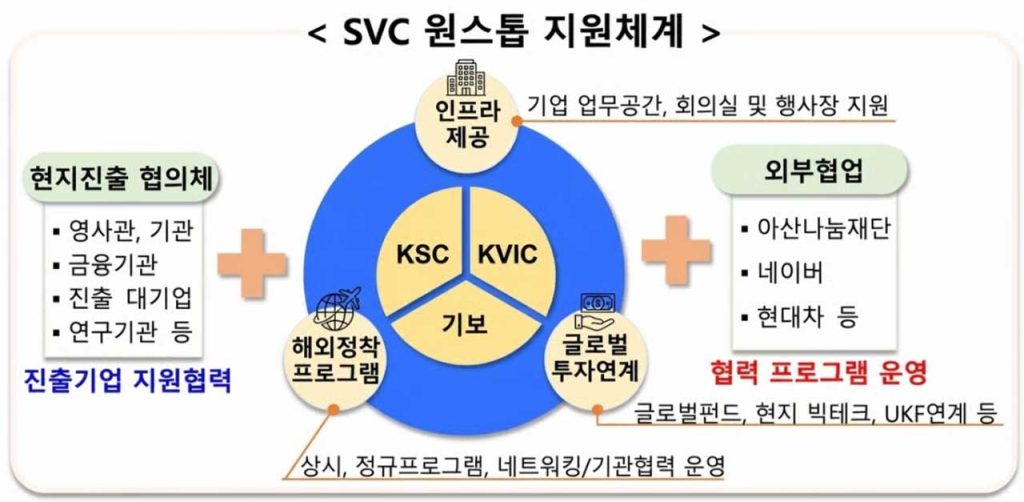
They are joined by private venture capital firms and will collectively provide over 200 tailored programs annually, ranging from market validation and investment matchmaking to co-R&D with global corporates like Naver and Hyundai Motor.
The campus also offers workspace and networking zones for Korean startups conducting short- or long-term U.S. operations.
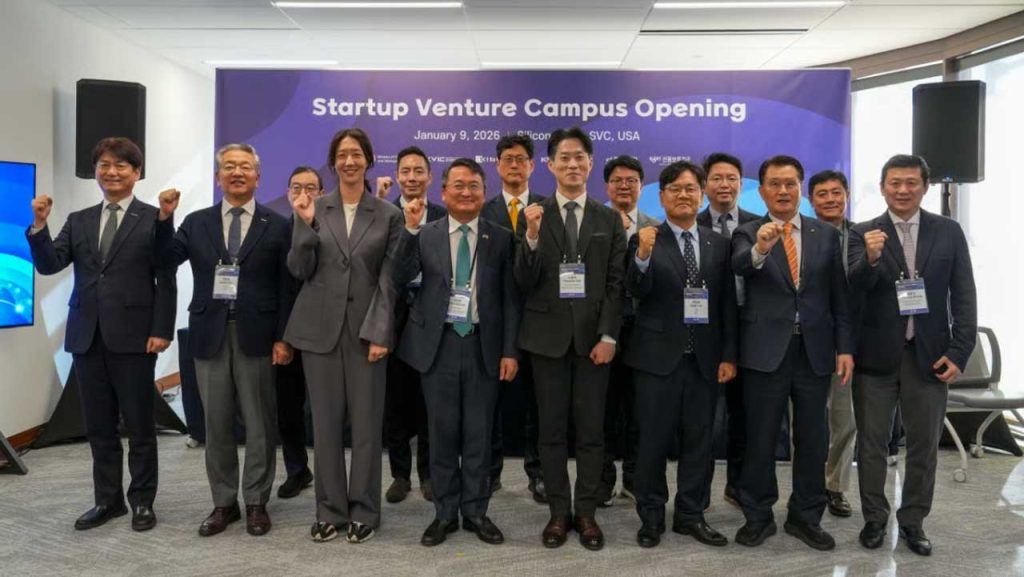
Over 200 guests, including Vice Minister Noh Yong-seok, Consul General Lim Jeong-taek, and representatives from Asan Nanum Foundation, Naver, and Hyundai Motor, attended the official opening on January 9, 2026 (local time).
Turning National Strategy into Global Infrastructure
The Silicon Valley SVC is part of the government’s broader plan to position Korea among the world’s top four venture nations by 2030, as outlined in its KRW 40 trillion Global Venture Powerhouse Master Plan.
That plan connects policy finance, deep-tech development, and international startup campuses into a unified system — enabling startups to expand abroad with structured support rather than isolated acceleration programs.
Unlike previous overseas efforts, which focused on temporary residency or acceleration, the SVC represents a long-term institutional foothold. It links policy-level support with private capital and international investor networks, bridging Korea’s domestic ecosystem with the heart of global venture capital.
This model is already being positioned for replication in Tokyo, Singapore, and other key innovation hubs.
Policy Meets Global Market Reality
During the opening ceremony, Vice Minister Noh Yong-seok described the SVC as a “core platform to expand Korea’s startup ecosystem globally.” He emphasized that Silicon Valley remains the world’s most influential startup environment, where deep-tech and AI-based industries are reshaping global competition.
He also highlighted the importance of collaboration between public agencies and private sector leaders in transforming Korean startups into global players.
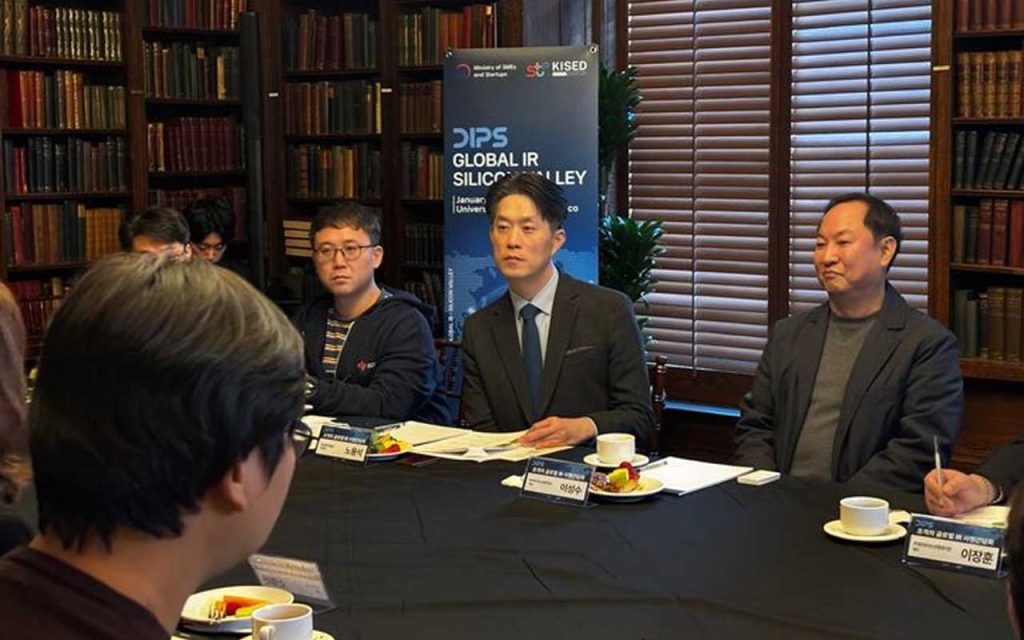
Following the launch, the Ministry also held a roundtable discussion with startups, VCs, and institutional partners to explore operational strategies. Twenty Korean startups and venture capital firms are expected to be based at the SVC initially, with more expected as the hub scales.
Vice Minister Noh said,
“Startups and ventures are reshaping global economic order around AI and deep-tech industries. Through SVC, we will work with the Korean founder community abroad to expand our startup ecosystem and accelerate internationalization, providing full policy support toward Korea’s goal of becoming one of the world’s top four venture powers.”
Korea’s Globalization Strategy Enters Execution Phase
The SVC’s establishment signals that Korea’s globalization agenda has moved from policy drafting to execution.
By situating key agencies in Silicon Valley — the world’s most capital-rich and innovation-dense environment — the MSS has created a direct pipeline between Korea’s venture ecosystem and global funding networks.
The SVC’s collaboration with organizations like Asan Nanum Foundation, Naver, Hyundai Motor, and KVIC adds corporate, financial, and mentorship depth. It also strengthens co-investment channels with U.S. VCs and institutional investors, aligning with the ministry’s partnership with United Korean Founders (UKF), which operates venture summits connecting Korean founders and global funds.
This integration marks a structural change: Korea’s venture diplomacy now blends state-led policy infrastructure with private innovation networks, allowing Korean startups to evolve from government-supported challengers into independent global competitors.
From Strategy to System — Korea’s Next Venture Frontier
The launch of the Silicon Valley Startup Venture Campus is more than a symbolic milestone; it is the first physical translation of Korea’s global venture vision.
It connects entrepreneurs, investors, and institutions in real operational terms, turning national ambition into an active international ecosystem.
As the government prepares to replicate the model across other regions — and as founders begin to leverage this infrastructure for real cross-border growth — Korea’s startup globalization is no longer just a policy objective.
It is becoming a living system.
– Stay Ahead in Korea’s Startup Scene –
Get real-time insights, funding updates, and policy shifts shaping Korea’s innovation ecosystem.
➡️ Follow KoreaTechDesk on LinkedIn, X (Twitter), Threads, Bluesky, Telegram, Facebook, and WhatsApp Channel.
🤝 Looking to connect with verified Korean companies building globally?
Explore curated company profiles and request direct introductions through beSUCCESS Connect.