Korea and China are further moving beyond symbolic engagement to design the institutional foundation for Asia’s next startup integration phase. With both governments signing a new Memorandum of Understanding on January 5 in Beijing, cooperation between the Ministry of SMEs and Startups of Korea and China’s Ministry of Industry and Information Technology now extends into startup development and deeptech collaboration — a step that transforms APEC’s regional initiatives into tangible policy infrastructure.
Korea and China Sign New MOU to Strengthen SME and Startup Cooperation
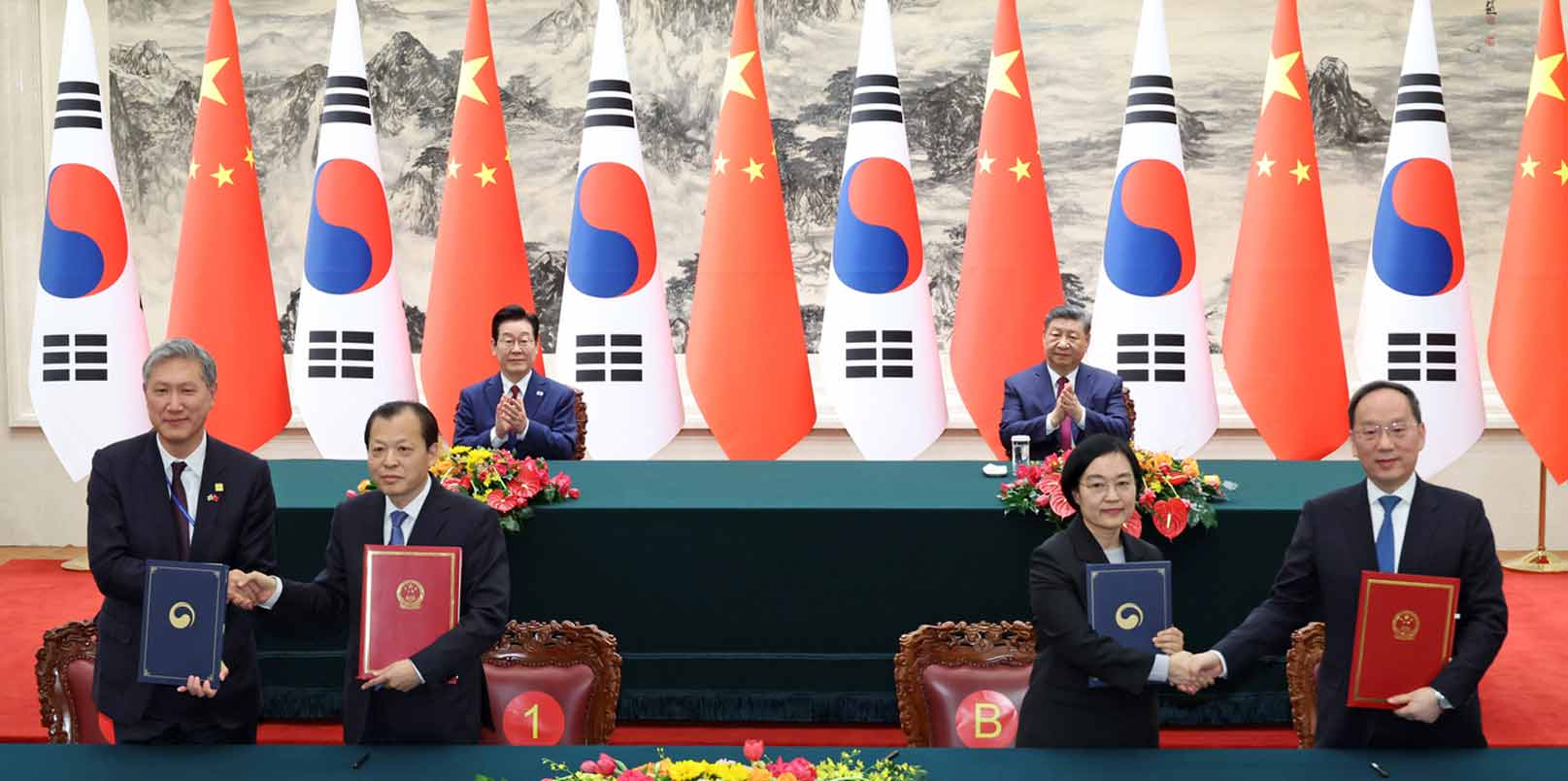
During President Lee Jae-myung’s state visit to China, the Ministry of SMEs and Startups (MSS) of Korea and the Ministry of Industry and Information Technology (MIIT) of China signed an MOU on Cooperation in SMEs and Innovation at the Great Hall of the People in Beijing on January 5.
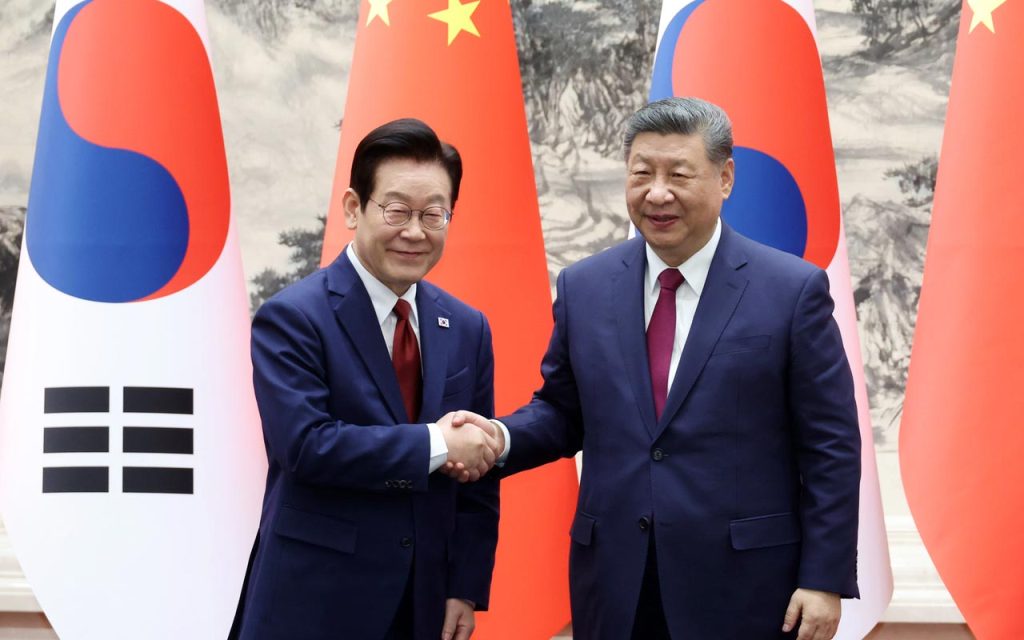
The signing took place in the presence of President Lee and President Xi Jinping, marking one of the most visible policy milestones of the visit. The renewed MOU replaces the previous agreement, which expired in June 2024, and expands the framework beyond traditional SME policy exchanges to include startup development, deeptech cooperation, and new-technology-based SME support.
According to the MSS, the agreement formalizes a broader scope of collaboration—covering information sharing, expert exchange, and capacity-building programs—and is designed to strengthen both governments’ support for startups operating in AI, robotics, quantum computing, and other advanced technology sectors.
Extending the APEC Innovation Agenda Through Bilateral Action
This MOU builds on the Jeju Initiative adopted at the 2025 APEC SME Ministers’ Meeting held in Jeju, which first outlined the creation of the APEC Startup Alliance, a government–private platform linking regional startup ecosystems.
The new Korea–China agreement directly aligns with that roadmap by transforming APEC’s cooperative principles into bilateral mechanisms for implementation. The alliance aims to facilitate cross-border venture investment, market entry pathways, and policy alignment across Asia’s innovation economies.
It also marks the first high-level Korea–China SME dialogue in seven years, continuing the momentum of discussions held during the 2025 APEC meeting. Both ministries emphasized that this renewed cooperation is not a ceremonial act but a step toward institutionalizing Asia’s regional startup integration through government-backed frameworks.
China’s strong foothold in robotics and quantum technologies, paired with Korea’s expertise in AI, semiconductors, and venture policy innovation, positions both economies as complementary players in the regional startup landscape.
New Korea – China MOU: A Shared Framework for Startup Growth
Minister Han Seong-sook of the MSS stated,
“This MOU is an important turning point that elevates Korea–China cooperation in SMEs and startups to a higher level through top-level diplomacy. Based on our partnership, we will continue to help both nations’ startups grow together.”
An MSS official added that the ministry expects the agreement to serve as the policy foundation for sustainable cooperation in startup incubation, investor engagement, and technology transfer between the two countries.
Chinese MIIT officials echoed similar views, emphasizing that bilateral cooperation will focus on “mutual technology development and inclusive innovation,” aligning with the broader Asia-Pacific innovation agenda set under APEC.
A Policy Framework for Asia’s Startup Integration
This bilateral MOU is more than a diplomatic milestone—it represents the institutionalization of startup policy diplomacy in Asia. For the first time, Korea and China are embedding startup cooperation within a structured intergovernmental mechanism that directly supports the regional deeptech ecosystem.
The move strengthens the APEC Startup Alliance’s credibility as a real working platform rather than a symbolic concept. It also provides a blueprint for cross-border venture partnerships, offering Asian startups a clearer policy environment to pursue scale-up and co-investment opportunities.
For South Korea, this complements its broader “startup-centered economy” strategy, reinforcing its position as a policy hub for regional entrepreneurship and innovation diplomacy. As for China, the collaboration offers a channel to expand its innovation influence through co-development and investment with trusted partners.
Global investors and policymakers view the agreement as a convergence of industrial policy and startup strategy—a framework that allows governments to jointly shape the trajectory of the Asia-Pacific startup ecosystem.
Building the Backbone of Asia’s Innovation Era with Korea – China Startup Cooperation
The Korea – China MOU is more than a gesture of goodwill; it anchors Asia’s innovation diplomacy in policy execution. By integrating APEC’s cooperative agenda into bilateral action, both nations are turning multilateral aspirations into operational frameworks that link startups, research, and capital.
As Korea and China prepare for follow-up working programs under the APEC Startup Alliance, the foundation for a connected regional innovation ecosystem is beginning to take form. If successful, this collaboration will serve as the policy backbone of Asia’s next deeptech expansion cycle, bridging innovation policy with venture execution across the Pacific.
– Stay Ahead in Korea’s Startup Scene –
Get real-time insights, funding updates, and policy shifts shaping Korea’s innovation ecosystem.
➡️ Follow KoreaTechDesk on LinkedIn, X (Twitter), Threads, Bluesky, Telegram, Facebook, and WhatsApp Channel.
🤝 Looking to connect with verified Korean companies building globally?
Explore curated company profiles and request direct introductions through beSUCCESS Connect.