South Korea is pushing generative AI adoption across education and public administration. Yet an operational barrier often sits below the policy discussion. Many institutions struggle with the practical side of adopting global AI tools.
A Korean startup called Monoflow is building infrastructure aimed at that gap. Its platform, MonoGPT, aggregates multiple generative AI models in a single system designed for institutional security, procurement, and usage management.
Korea’s AI Adoption Push Faces an Operational Constraint
Demand for AI training and AI-assisted work inside Korean institutions has been rising. Schools, local governments, and research organizations are increasingly exploring generative AI tools.
Yet operational constraints remain. According to Monoflow CEO Lee Ki-moon, institutions face practical hurdles when subscribing to overseas AI software.
Most global AI services require payment in U.S. dollars. Exchange rate fluctuations can trigger additional administrative reporting during procurement. Institutions must also create individual user accounts, manage authentication, and monitor usage across departments.
Security concerns also add another layer. Public institutions often need safeguards to ensure sensitive information does not move into external AI systems without control.
These operational realities can slow the adoption of generative AI even when organizations want to use it.
Monoflow Builds an Institutional AI Access Layer
Monoflow was founded in 2022 by Lee Ki-moon, a former journalist at Chosun Ilbo who studied management science at KAIST. Lee said the idea emerged after observing these administrative constraints while covering public sector technology adoption.
The company initially built a procurement service called MonoPRO.
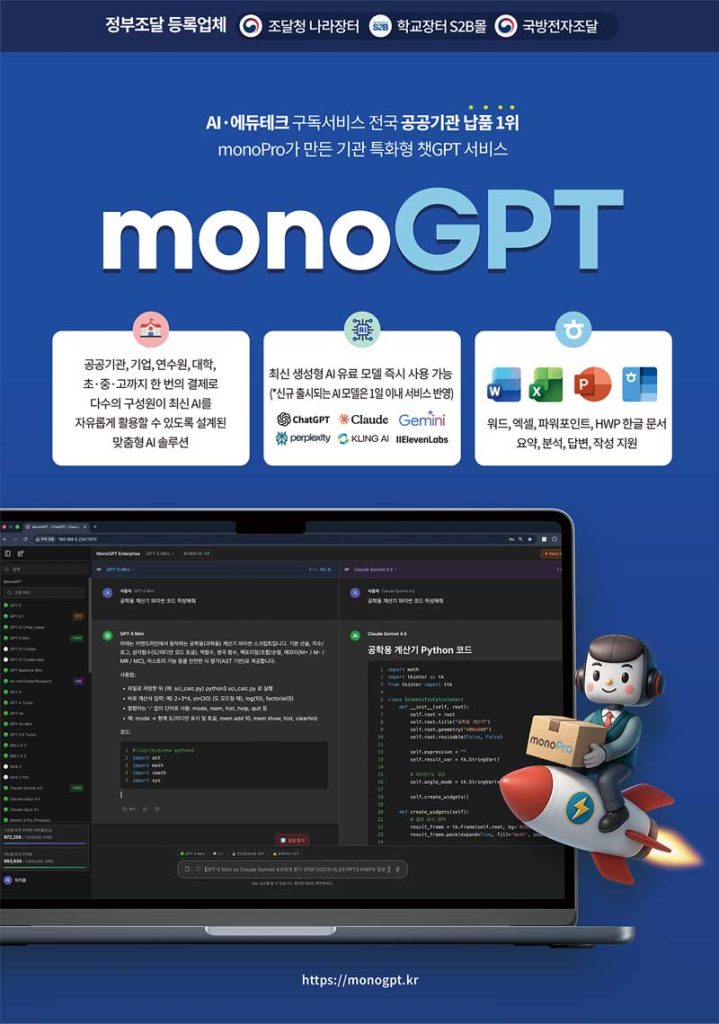
MonoPRO allows Korean institutions to adopt overseas edtech and AI software through a simplified purchasing structure. Instead of managing multiple dollar-based subscriptions, organizations can introduce services through a single payment in Korean won.
The platform also handles licensing, authentication, and account management.
Through partnerships with edtech providers including Padlet, Kahoot, Mentimeter, CoSpaces, Book Creator, Wordwall, Adobe, and TeacherMade, the service has supplied software licenses to about 1,200 public institutions and companies in Korea.
Clients mentioned in the company’s materials include organizations such as Samsung Electronics, Seoul National University, and the Jeju Provincial Government.
This procurement service helped the startup establish an early foothold in Korea’s B2G and institutional technology markets.
MonoGPT Aggregates Global AI Models in One Environment
Building on that experience, Monoflow launched MonoGPT in 2024.
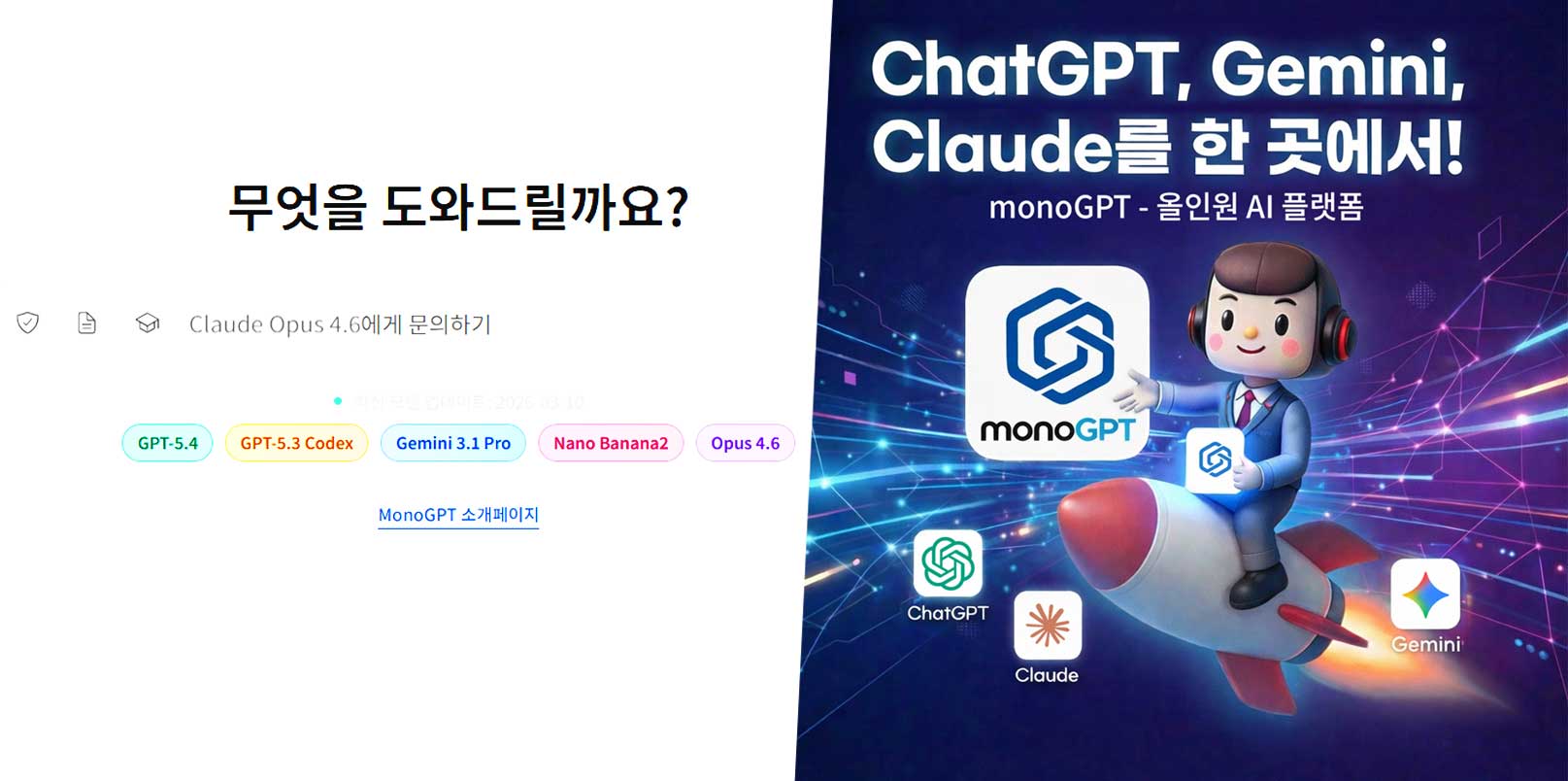
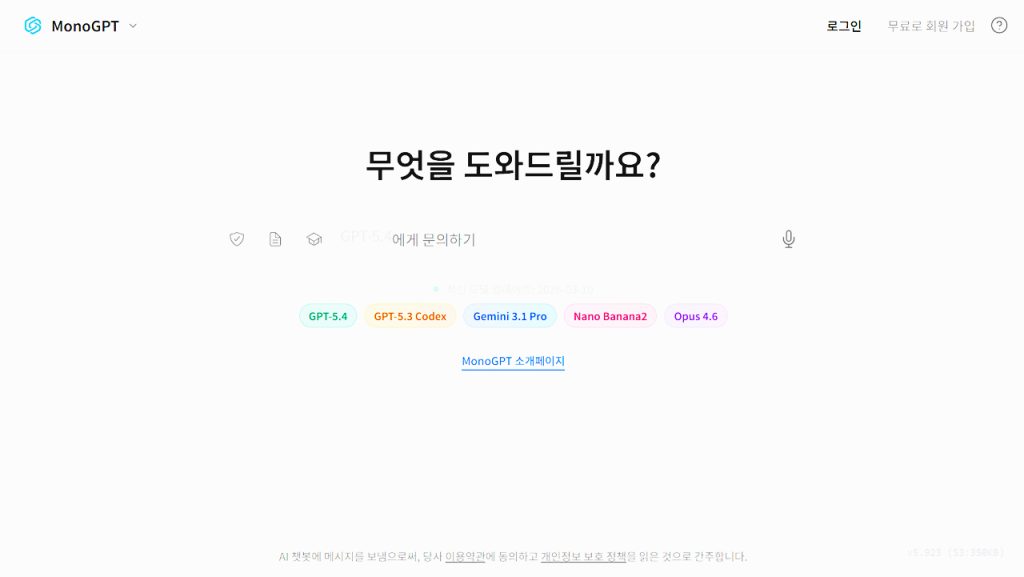
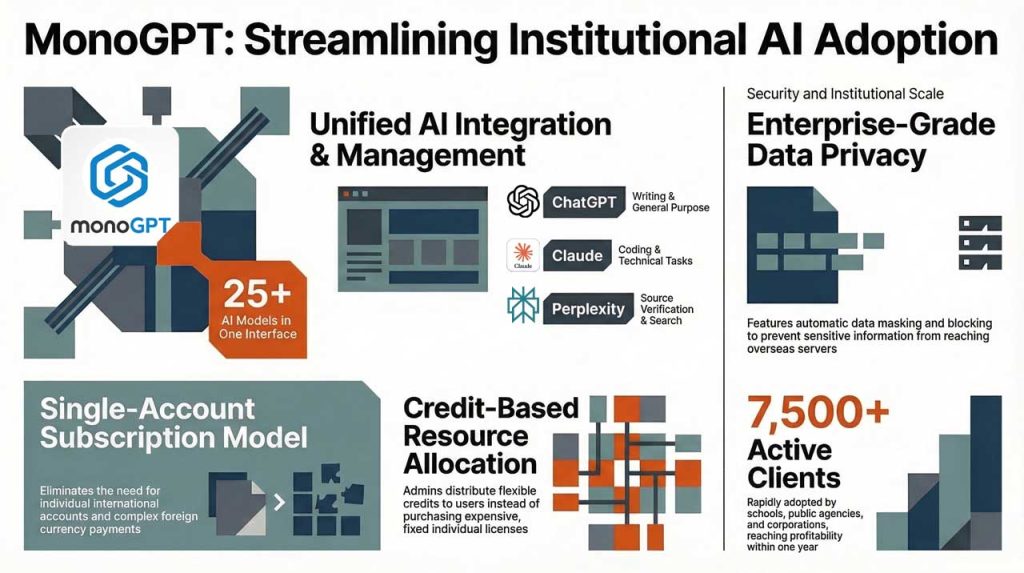
MonoGPT is designed as a multi-AI platform that allows organizations to access multiple generative AI models through one interface.
The system integrates more than 25 generative AI models, including well-known services such as ChatGPT, Claude, Gemini, and Perplexity.
Lee explained that different models often perform best in different tasks. ChatGPT may be useful in writing. Claude is often used for coding assistance. Perplexity is known for reference sourcing.
MonoGPT allows users to select the model that fits the task without leaving the platform.
The approach reflects a broader shift in AI usage. Organizations increasingly experiment with several models instead of relying on a single provider.
Security and Administrative Control Become Central Design Features
Monoflow says the platform was designed with institutional governance in mind. The system includes features intended to protect sensitive information.
Organizations can activate masking or blocking functions that prevent personal or confidential data from being transmitted through AI interactions. Education institutions can also apply input and output filtering to reduce exposure to harmful content.
Administrative tools are another core component.
MonoGPT uses a credit-based usage system rather than individual account subscriptions. Institutions allocate credits to users or departments instead of purchasing separate AI licenses for each employee.
Administrators can monitor usage through a dashboard that shows activity by user and department. Credits can be redistributed internally when certain teams require more AI usage.
The model allows organizations to control AI usage within a defined budget while expanding access across staff.
Early Adoption Signals Growing Institutional Demand
Monoflow says its services now support more than 7,500 organizations, including public institutions, education organizations, and private companies across Korea. The company reports that revenue has more than doubled annually and that operating profit has remained positive since 2023.
The startup also received support through the Early Startup Package program operated by the Gwangju Center for Creative Economy and Innovation.
According to Lee, the program provided mentoring and marketing support in addition to funding. The center also assisted the company when it conducted customer surveys with corporate clients to refine its services.
Such programs remain a common pathway for early-stage Korean startups to test and refine products in domestic markets.
Early Overseas Interest Appears in Southeast Asia
Monoflow recently secured its first overseas customer. The company signed a supply contract with a webtoon production company in Singapore to deploy MonoGPT.
The contract marks the startup’s first international expansion step. The company said it is exploring additional opportunities in Asian markets.
Creative industries may represent an early entry point for generative AI tools. Webtoon studios and digital content companies often experiment quickly with AI-assisted workflows.
Why Korean Startup Monoflow Reflects a Larger AI Infrastructure Layer
The Monoflow story highlights a layer of the AI ecosystem that receives less attention.
Much public discussion around AI focuses on models, chips, or computing infrastructure. Institutional adoption introduces another challenge. Organizations must manage procurement rules, security requirements, and operational governance.
Startups that sit between global AI providers and institutional users are beginning to address that gap.
Monoflow’s platform attempts to act as that integration layer. It aggregates multiple AI models and places administrative and security controls around them.
The approach mirrors a broader pattern seen in enterprise software markets, where orchestration and governance tools often emerge once a new technology spreads across organizations.
Future Outlook: AI Platforms for Institutions May Become a Growing Category
Monoflow said it plans to expand the adoption of MonoGPT as a security-focused AI platform designed for institutional environments, targeting both companies and public institutions. The company added that it aims to make generative AI easier for organizations to deploy internally while pursuing long-term expansion into overseas markets.
CEO Lee Ki-moon said the company’s strategy centers on positioning MonoGPT as a secure, all-in-one AI platform capable of serving enterprise and government users, with international growth as a longer-term objective.
The trajectory remains early. Yet the startup’s focus highlights a practical question for AI transformation and adoption across many countries. Access to AI models may be global. Institutional integration often remains local.
Key Takeaways on MonoGPT by Monoflow
- Korean startup Monoflow launched MonoGPT, a multi-AI platform integrating more than 25 generative AI models.
- The platform allows institutions to access tools such as ChatGPT, Claude, Gemini, and Perplexity through a single interface.
- Monoflow previously built MonoPRO, a procurement service used by about 1,200 public institutions to adopt overseas edtech and AI software.
- The company now reports 7,500 organizational customers and says it has remained profitable since 2023.
- A recent contract with a Singapore webtoon production company marks Monoflow’s first overseas client.
- For Korea’s AI ecosystem, the case illustrates how operational infrastructure may shape real adoption inside institutions.
🤝 Looking to connect with verified Korean companies building globally?
Explore curated company profiles and request direct introductions through beSUCCESS Connect.
– Stay Ahead in Korea’s Startup Scene –
Get real-time insights, funding updates, and policy shifts shaping Korea’s innovation ecosystem.
➡️ Follow KoreaTechDesk on LinkedIn, X (Twitter), Threads, Bluesky, Telegram, Facebook, and WhatsApp Channel.