A “unicorn” badge no longer guarantees liquidity in Korea’s venture market. Several startups once valued above KRW 1 trillion are now struggling to find buyers in secondary share transactions, even at sharply discounted prices. As IPO timelines slip and operating losses persist, late-stage risk is being reassessed. For global investors tracking Asia-Pacific venture markets, Korea is entering a new pricing discipline.
Unicorn Valuations Fall as Secondary Share Trading Freezes
According to industry sources cited on February 17, more than 10 percent of unicorns designated by Korea’s Ministry of SMEs and Startups (MSS) are effectively unable to conduct meaningful secondary share transactions in the venture market.
Several of these companies were valued in the multi-trillion-won range just two to three years ago. However, amid growing uncertainty around growth prospects and delayed IPO plans, market-assessed valuations have declined significantly.
In some cases, sellers have lowered asking prices to roughly one-quarter of their previous valuations yet still failed to secure buyers.
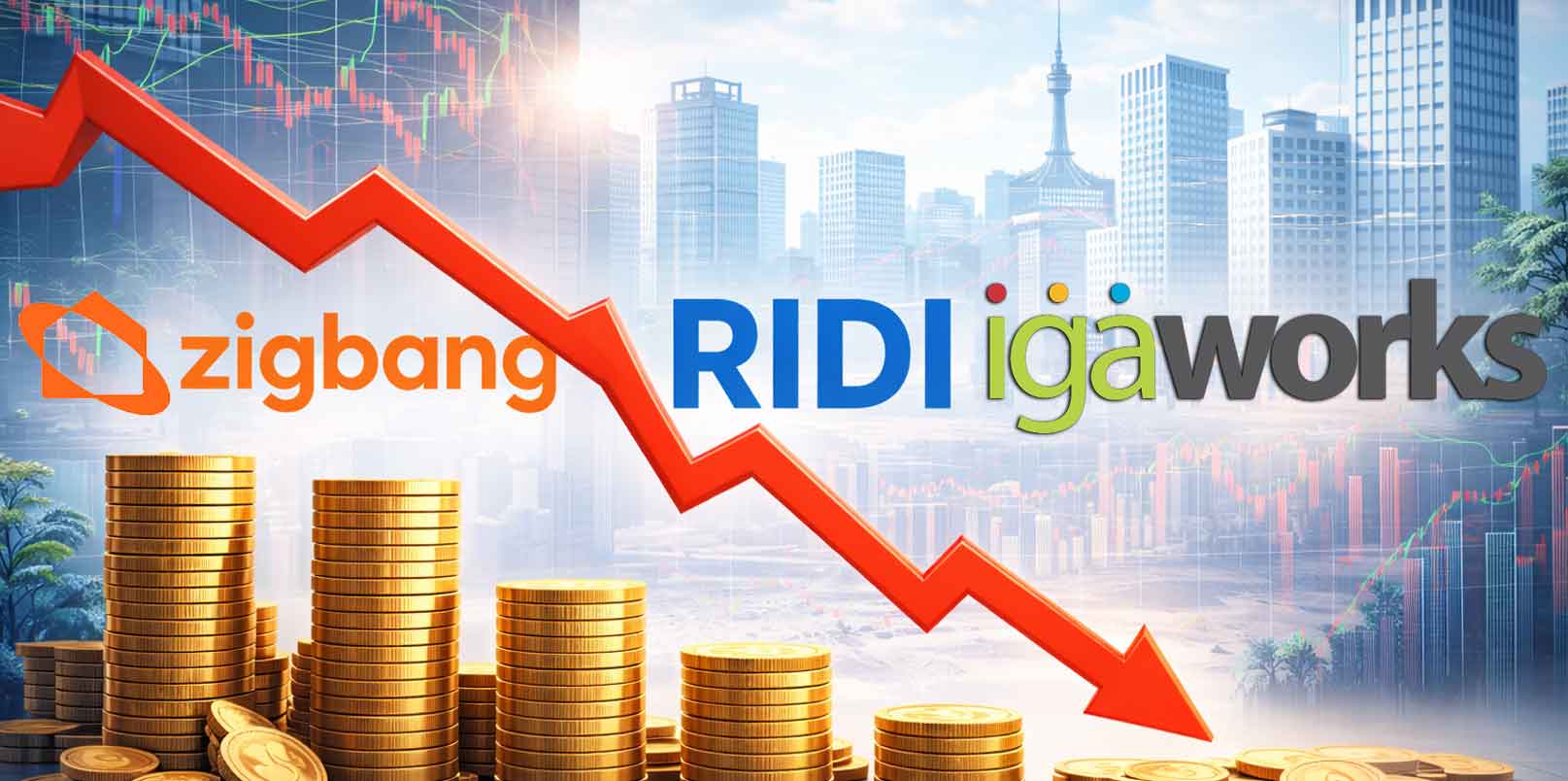
Zigbang is one prominent example. In 2022, it achieved a valuation of approximately KRW 2.5 trillion following investments from Korea Development Bank, Altos Ventures, and IMM Investment. The company had been seen as a leading digital platform in real estate transactions.
Since then, delays in expanding into brokerage services, continued operating losses, a cooling real estate market, and intensified competition have weakened its outlook. Industry sources indicate that even at around KRW 500 billion, secondary share sales have struggled to attract demand. Some financial institutions have reportedly classified the company as a distressed asset in accounting terms.
RIDI, a digital content platform operator in e-books and webtoons, faces similar conditions. It was valued at approximately KRW 1.6 trillion during a 2022 investment round involving GIC, Korea Development Bank, and Atinum Investment. Current secondary market indications suggest that even valuations below KRW 500 billion have not generated active transactions.
Tridge and IGAWorks, also included on the government’s unicorn list, are understood to have experienced sharp valuation adjustments. Tridge previously raised capital at roughly KRW 3.6 trillion but is now reportedly assessed at below KRW 1 trillion. Slower growth and profitability concerns have weighed on investor expectations.
Why Korea’s Late-Stage Liquidity Is Tightening
The immediate issue is not funding availability at the early stage. Recent government data show venture investment recovering in 2025, with private limited partners contributing more than 80 percent of new fund commitments. Capital formation remains active.
The tension lies in the exit environment.
When IPO timelines extend and operating losses continue, secondary markets become the only liquidity channel for early investors. If buyers retreat, valuation resets follow. In the cases cited above, secondary trading has stalled despite steep price adjustments.
A venture investment industry official noted that companies once priced at peak valuations often face difficulty recalibrating expectations. When valuation gaps widen between founders and investors, progress to the next financing stage becomes harder.
This dynamic signals a broader shift in Korea’s venture capital exit environment. Valuation is now more closely tied to profitability visibility and IPO credibility than to brand recognition or historical funding rounds.
Valuation Discipline Replacing Momentum Pricing
Industry participants emphasize that high valuations achieved during expansion cycles are difficult to defend without measurable financial improvement.
One venture industry official stated,
“Companies that once achieved high valuations often find it extremely difficult to adjust downward later. As the valuation gap between investors and companies widens, more cases are failing to move to the next stage.”
The same source advised companies to reassess valuation expectations at realistic levels and focus on long-term strategy rather than past peak pricing.
These remarks reflect growing investor caution rather than isolated sentiment.
Korea Venture Exit Environment 2026: Why Late-Stage Liquidity Is Tightening
This development does not contradict Korea’s broader venture recovery. Recent government data indicate that new venture investment reached KRW 13.6 trillion in 2025, with record deal counts and strong second-half momentum. Private capital has re-entered the market at scale.
However, the repricing of former unicorns reveals a structural shift in risk perception.
First, late-stage capital is becoming more selective. Investors are prioritizing demonstrated revenue stability and credible IPO pathways over valuation narratives.
Second, secondary share liquidity has emerged as a pressure point. When liquidity narrows, valuation compression accelerates.
Third, the symbolic power of the “unicorn” designation is weakening. Government recognition does not shield companies from market reassessment.
For global LPs and cross-border investors, Korea now presents a clearer signal. The market is transitioning toward profitability-driven startup valuation models, aligning more closely with global post-2022 venture discipline seen in the United States and parts of Europe.
Korea’s venture market liquidity in 2026 will therefore hinge less on funding volume and more on exit clarity.
Future Outlook: Pricing Reality Over Narrative
If IPO windows remain narrow and secondary markets stay selective, further valuation resets are likely among late-stage startups with extended loss profiles.
At the same time, this recalibration may strengthen long-term ecosystem resilience. Pricing discipline can redirect capital toward firms with durable business models and clearer profitability paths.
The next phase of Korea’s startup cycle will not be defined by how many unicorns are created, but by how many can sustain valuation under market scrutiny.
For founders, this marks a shift in strategic emphasis. Growth remains important, but earnings visibility and credible listing timelines now carry heavier weight in capital negotiations.
Key Takeaways on Korea Venture Exit Environment 2026
- Over 10 percent of Korea’s designated unicorns reportedly face stalled secondary share trading.
- Several former multi-trillion-won startups have seen valuation expectations fall sharply.
- Zigbang and Ridi illustrate how IPO delays and persistent losses affect secondary market demand.
- Tridge and IGAWorks are also understood to have experienced significant valuation compression.
- Korea’s venture investment volume has recovered, but exit liquidity is tightening.
- Profitability visibility and IPO credibility now drive late-stage startup pricing.
- The symbolic value of “unicorn” status no longer guarantees liquidity or investor confidence.
- Korea’s 2026 venture landscape is entering a more disciplined, profit-focused valuation era.
– Stay Ahead in Korea’s Startup Scene –
Get real-time insights, funding updates, and policy shifts shaping Korea’s innovation ecosystem.
➡️ Follow KoreaTechDesk on LinkedIn, X (Twitter), Threads, Bluesky, Telegram, Facebook, and WhatsApp Channel.
🤝 Looking to connect with verified Korean companies building globally?
Explore curated company profiles and request direct introductions through beSUCCESS Connect.