
South Korea’s digital asset market has entered its most defining test since FTX collapsed. A simple payout typo at Bithumb — Korea’s second-largest crypto exchange — mistakenly sent 620,000 Bitcoins, worth around KRW 60 trillion, to event participants. What began as a clerical error has escalated into a full financial inspection, a political hearing, and a regulatory reckoning over how centralized exchanges account for “held assets” in digital markets.
Financial Supervisory Service Launches Full Inspection of Bithumb
The Financial Supervisory Service (FSS) formally converted its on-site review of Bithumb into a high-intensity inspection on February 10, following the company’s massive Bitcoin misallocation error. The decision came only three days after the FSS began preliminary checks, signaling how seriously authorities view the incident’s implications for Korea’s financial system.
Officials confirmed the inspection will include Bithumb’s asset custody structure, ledger management, and internal control systems. Additional staff have been deployed, and the inspection could extend beyond this week if new issues are discovered.
The FSS described the situation as “a matter that could shake trust across the entire virtual asset market.”
Governor Lee Chan-jin stated, “If the ghost coin problem cannot be resolved, it is difficult to see how the virtual asset market can enter the institutional financial system,” emphasizing that findings will inform the government’s upcoming second-phase digital asset legislation.
How the 620,000-Bitcoin Error Happened
According to the official record, the February 6 incident originated from a clerical error in Bithumb’s event reward system.
The exchange intended to distribute 620,000 won (about USD 460) among 249 promotion winners — but mistakenly entered the unit as “Bitcoin,” resulting in the system distributing 620,000 BTC instead of 620,000 KRW.
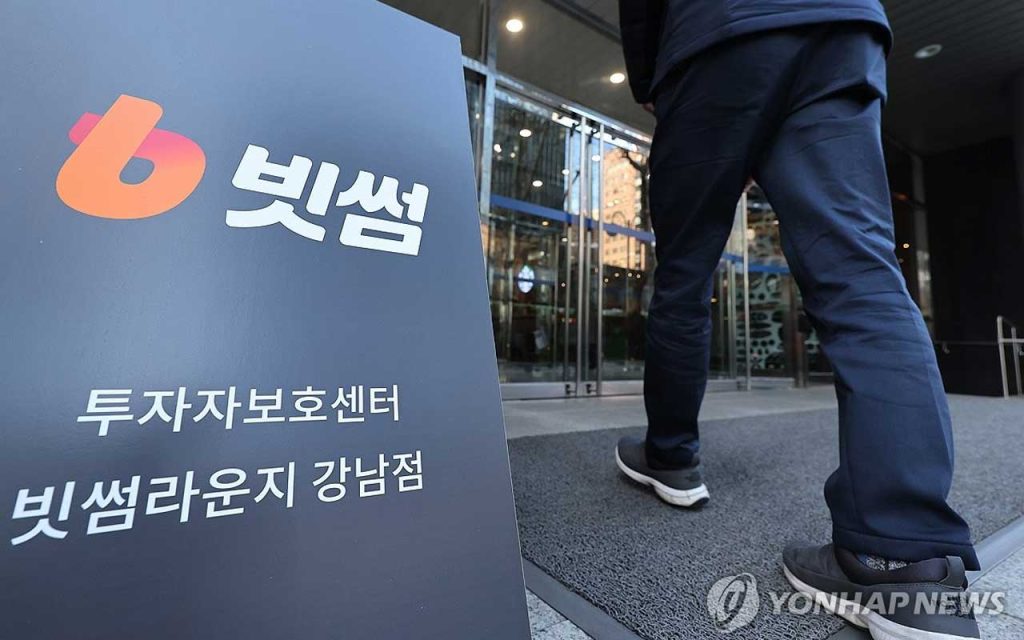
Although 99.7% of the erroneously issued coins were quickly reclaimed before being processed on-chain, approximately 1,788 Bitcoins were sold by users before the rollback. Bithumb stated that 93% of those sales have since been recovered in fiat currency, and 7% will be retrieved in other crypto assets such as Ethereum.
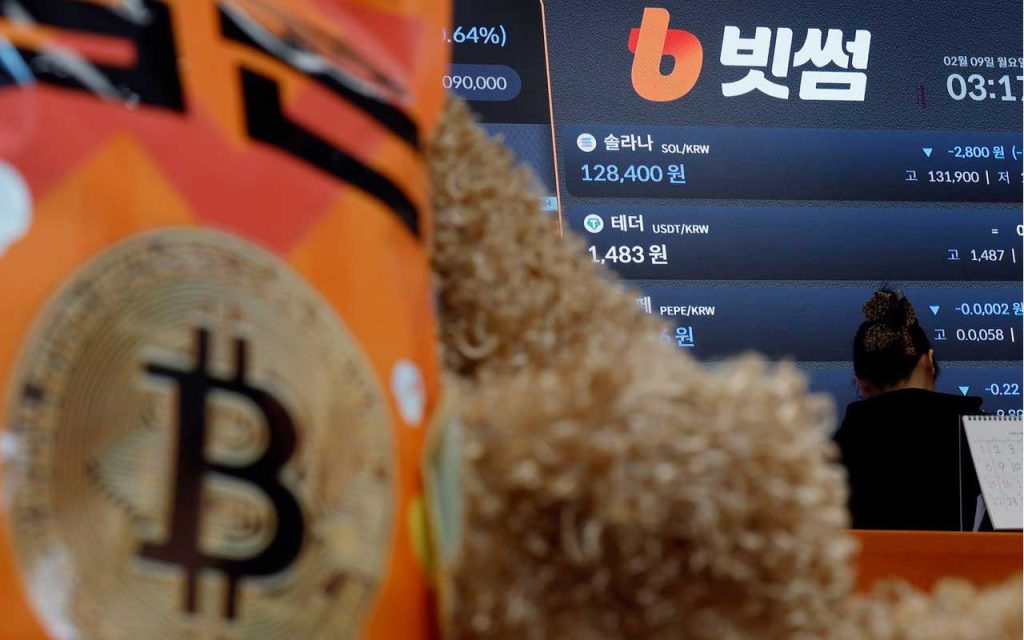
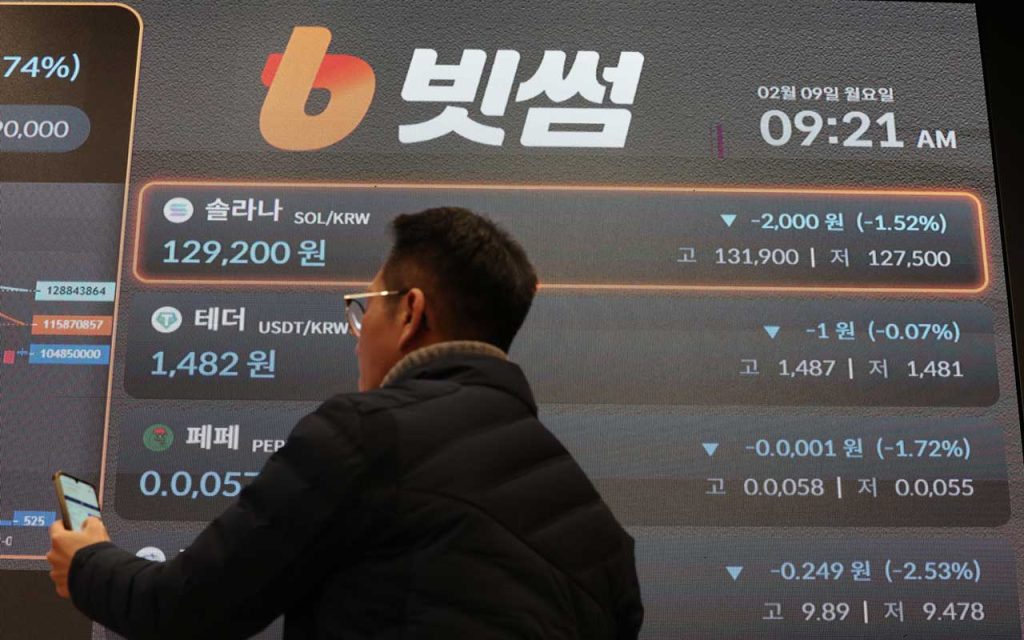
The incident caused a temporary crash in Bitcoin prices on the platform, falling from around 95 million to 81.1 million won, triggering forced liquidations in 64 lending accounts. Authorities estimate direct losses near 1 billion won, though total consumer exposure is expected to be larger as collateralized accounts were auto-liquidated.
Ledger-Based Trading and the ‘Ghost Coin’ Problem
The incident has exposed structural vulnerabilities within centralized exchanges (CEXs) that operate through ledger-based trading systems rather than real-time blockchain settlements.
CEXs record transactions internally, updating user balances in their databases instead of immediately executing transfers on-chain. This system enables high-speed trading but depends entirely on accurate ledger integrity and internal controls.
At the time of the incident, Bithumb’s actual Bitcoin holdings stood at approximately 46,000 — meaning the system temporarily allowed payouts nearly 14 times greater than its real assets.
Officials are investigating whether this violates the Virtual Asset User Protection Act, which requires service providers to hold the same quantity and type of assets entrusted by users.
FSS teams are also reviewing Bithumb’s monitoring systems, approval workflows, and “one-click payment” vulnerabilities that made such a large misallocation possible.
Parliament and Public Scrutiny Intensify
The National Assembly Political Affairs Committee convened an emergency hearing on February 11.
Bithumb CEO Lee Jae-won, Vice President Moon Sun-il, and FSS Governor Lee Chan-jin were called to testify, alongside representatives from the Financial Services Commission and Financial Intelligence Unit.
Lawmakers from both ruling and opposition parties criticized Bithumb for its internal control failures, questioning how such an event could occur in a system handling public assets at near-institutional scale.
The hearing also focused on preventive frameworks, including potential revisions to cap major shareholders’ ownership in exchanges at 15–20 percent and to establish standardized real-time asset verification requirements for all platforms.
Bithumb’s Response and Compensation Measures
Bithumb announced a full compensation plan for users affected by the price drop and forced liquidations. The company will pay affected users 110% of their losses and provide 20,000 won to all users who accessed the platform during the incident window.
Additional measures include one week of fee-free trading and the launch of a 100-billion-won permanent customer protection fund.
Bithumb maintains that its “ledger transaction model” aligns with industry norms used by exchanges such as Binance, Coinbase, and Upbit (Dunamu), which also rely on internal balance adjustments rather than continuous blockchain settlement.
Regulatory Spillover: Inspections Expand Across Korea’s Exchanges
The Financial Services Commission, the FIU, and the FSS jointly launched emergency inspections of four other major exchanges — Upbit, Coinone, Korbit, and GOPAX — beginning February 11.
The inspections will review each platform’s asset custody verification, internal control systems, and response mechanisms to abnormal transactions. Authorities intend to use findings from all five exchanges to inform both DAXA’s (Digital Asset Exchange Alliance) self-regulation revisions and the government’s upcoming second-phase Digital Asset Framework Act.
The Bithumb Bitcoin Error: Defining “Held Assets” in Global Crypto Regulation
The Bithumb incident underscores a global issue that extends beyond Korea’s borders.
While centralized exchanges have become critical infrastructure for retail and institutional investors alike, their reliance on ledger-based accounting blurs the line between recorded balances and real custody.
In traditional finance, custodians must maintain full segregation between client and proprietary assets. In crypto markets, however, self-custody is rare, and exchanges act as both broker and custodian — a structure that magnifies systemic risk when errors occur.
For Korea’s blockchain and startup ecosystem, the event could accelerate two parallel outcomes:
- Stricter licensing and compliance frameworks for digital asset service providers, aligning with OECD and FATF standards.
- Renewed venture interest in decentralized exchange (DEX) architectures, which structurally prevent “phantom” or “ghost” asset issuance.
A Governance Test for Digital Markets
The 620,000-Bitcoin error will likely be remembered as the moment Korea’s digital asset industry crossed from market experimentation into formal regulation.
What began as a unit-input typo has evolved into a systemic audit of how crypto exchanges are built, monitored, and trusted.
For startups and investors building in the blockchain and fintech sectors, Korea’s response may set a blueprint for how regulators worldwide move from trusting data to verifying assets in the digital economy.
Key Takeaway on The Bithumb Bitcoin Error Investigation
- Incident: Bithumb mistakenly distributed 620,000 Bitcoins on February 6 due to a unit input error during a promotional event.
- Immediate Response: FSS escalated to a full inspection within three days; Parliament held an emergency hearing on February 11.
- Recovery: 99.7% of the coins recovered; forced liquidations confirmed in 64 lending accounts.
- Systemic Concern: Ledger-based trading at centralized exchanges allows internal misallocations without blockchain verification.
- Regulatory Action: Korea expands inspections to Upbit, Coinone, Korbit, and GOPAX; findings to inform Phase 2 Digital Asset Law.
- Global Implication: The case raises universal questions about asset custody, verification, and exchange accountability in global crypto regulation.
– Stay Ahead in Korea’s Startup Scene –
Get real-time insights, funding updates, and policy shifts shaping Korea’s innovation ecosystem.
➡️ Follow KoreaTechDesk on LinkedIn, X (Twitter), Threads, Bluesky, Telegram, Facebook, and WhatsApp Channel.