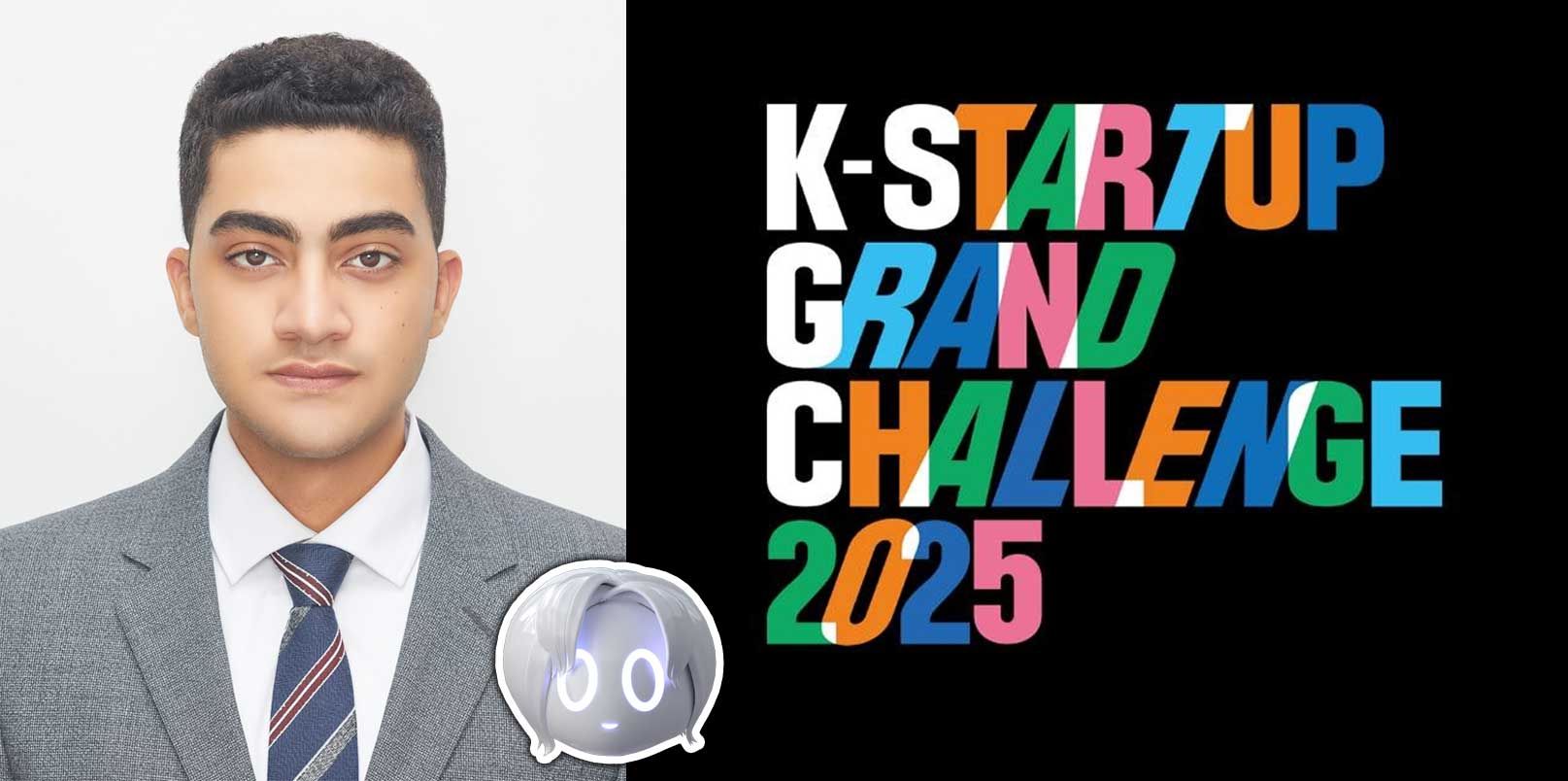
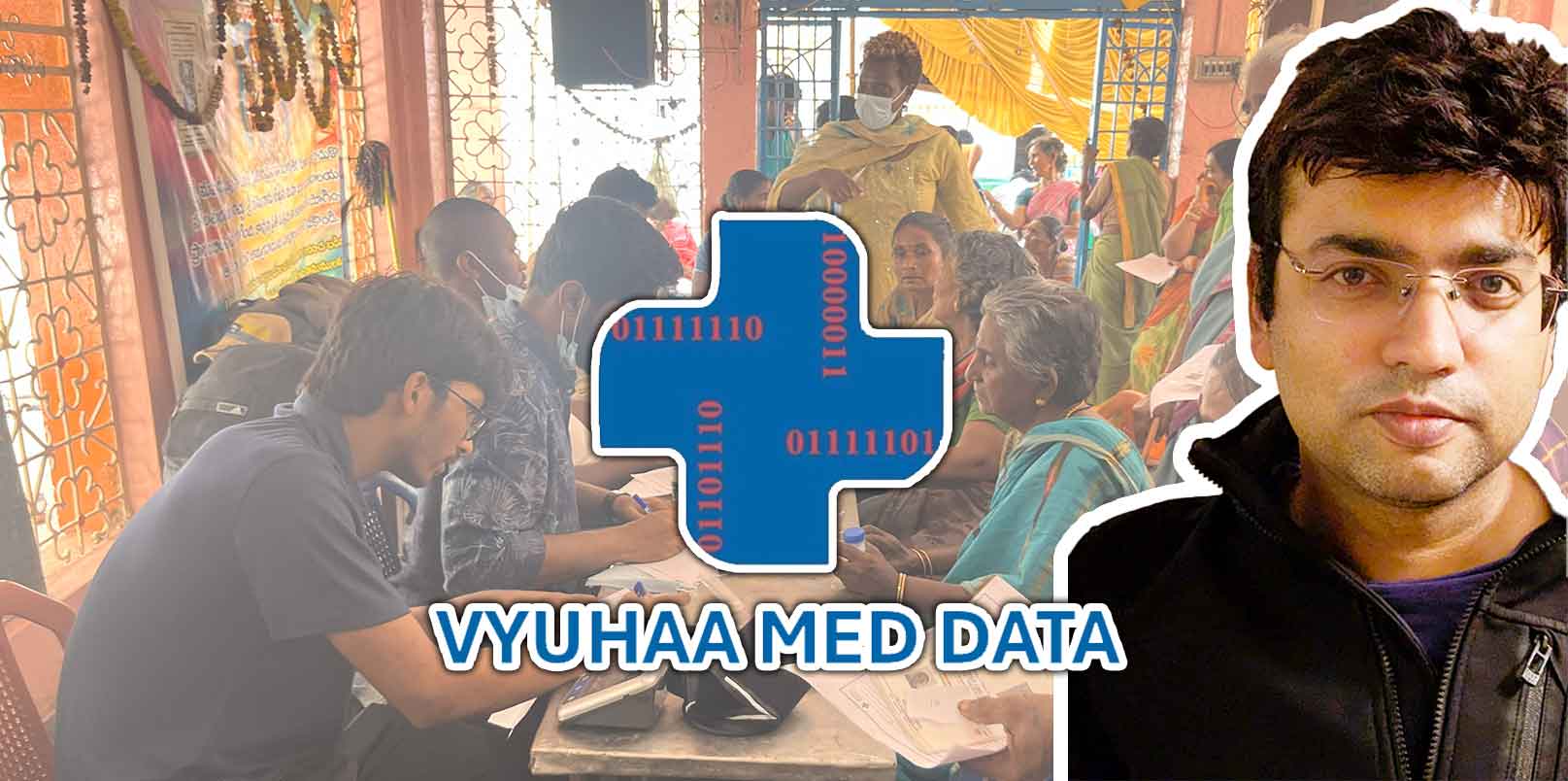
The promise of AI in healthcare often feels distant—powerful in theory, but uneven in reach. Vyuhaa Med Data, an India-based healthtech startup founded by Dhritiman Mallick, is tackling that imbalance head-on. By building AI-assisted digital microscopy tools that can deliver real-time pathology analysis even in resource-limited settings, the company is reimagining how diagnosis is accessed and shared globally.
In this KoreaTechDesk feature for the K-Startup Grand Challenge 2025 Interview series, Mallick explains how Vyuhaa Med Data—now part of the program’s Top 40 startups—bridges the diagnostic divide between urban hospitals and rural clinics—and why Korea could play a pivotal role in the next phase of this medical transformation.
“Through KSGC, our company transformed from being a regional healthtech innovator to building the foundation for a globally integrated diagnostic technology platform.”
Vyuhaa Med Data Brings Diagnosis to the Patient, Not the Other Way Around
Q1. What motivated you to start this company, and what core problem were you trying to solve?
I founded this company with a simple conviction: life-saving diagnostics should never be limited by geography, cost, or access.
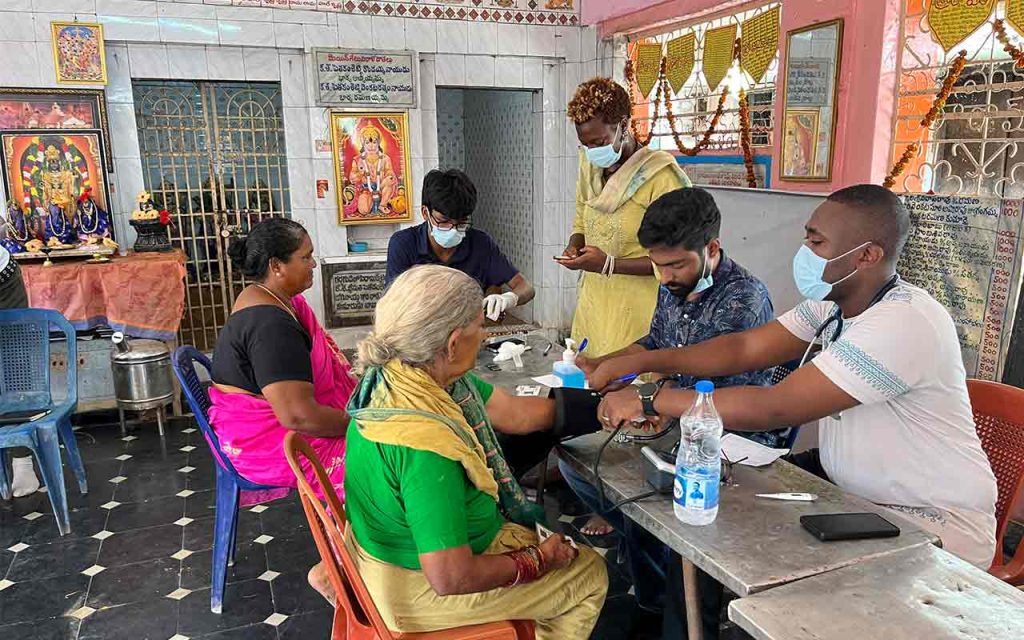
The core problem we are solving is that, even today, the ability to detect diseases early, especially cancers, depends on where you live and what resources you can reach. After spending years on the ground in community screenings across India, I saw firsthand how preventable cases turn fatal simply because screening is slow, expensive, or unavailable.
Our technology was created to reverse that reality by enabling digital microscopy and AI-assisted diagnosis on-site and in real time, even in low-resource environments.
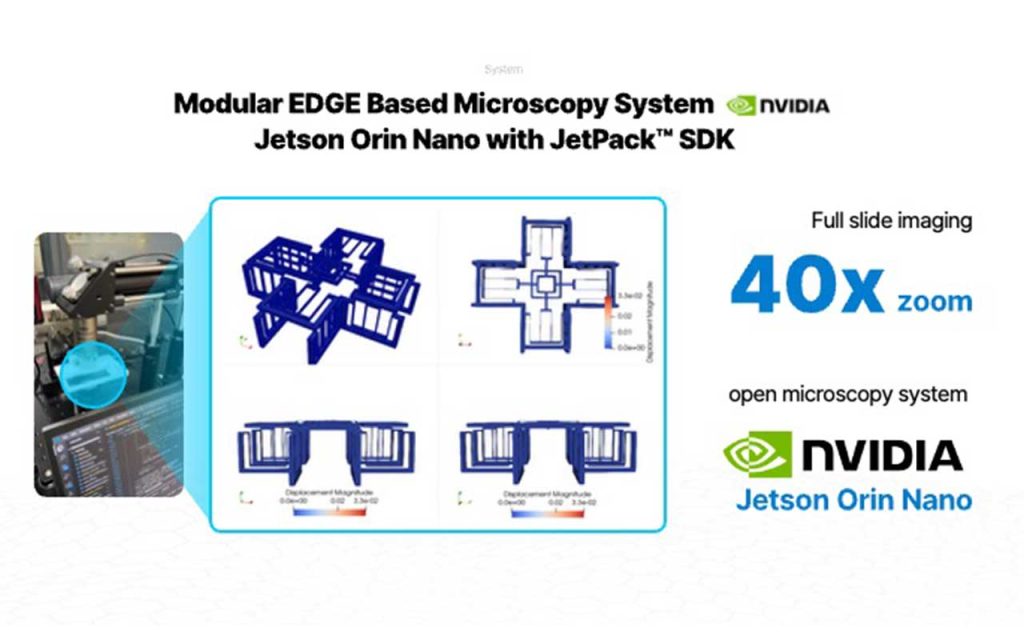
I didn’t start this company out of scientific curiosity alone; I started it because healthcare equity shouldn’t be aspirational—it should be normal. We are building the tools that bring diagnosis to the patient, instead of expecting the patient to reach diagnosis.
Why Korea Matters in the Global Diagnostic Revolution
Q2. What opportunity or unmet need did you identify in the Korean market, and what early signals convinced you that your solution could gain real traction here?
In Korea, I saw a strong national momentum around AI innovation, yet a noticeable gap in AI-assisted microscopy for cytology and oncology diagnostics, particularly at the community and regional hospital level. We realized this was a space where our technology could make a tangible impact.
The early signals were immediate and encouraging. Korean researchers expressed strong interest in accessing our imaging databank of more than 100,000 cytology slides and collaborating with our experienced pathologists. Research partners highlighted the value of our ability to digitize slides at a fraction of traditional costs, while universities began exploring joint research opportunities in AI-driven diagnostics.
These engagements confirmed that Korea not only recognized the need—but was ready to adopt and advance AI-assisted microscopy as part of its healthcare innovation agenda.
KSGC 2025 Turns Market Insight into Actionable Expansion for Vyuhaa Med Data
Q3. During KSGC, were there any mentors, partners, or specific insights that significantly influenced your product or strategy?
Yes. One of the most meaningful influences came from conversations within the KSGC network about how to practically adapt our technology and operations to Korea’s regulatory environment.
Through the program, we worked with mentors who provided hands-on guidance on local compliance pathways—from identifying a location suitable for small-scale manufacturing of our microscopy products to navigating the regulatory process for establishing a registered entity in Korea.
These insights transformed our expansion approach from theoretical to actionable, giving us a clear roadmap for local production, compliance, and long-term operational readiness in the Korean market.
Vyuhaa Med Data at KSGC 2025: From Regional Startup to Global Healthtech Innovator
Q4. After joining KSGC, what has been the most meaningful change for your company and what evidence supports this growth?
The most meaningful change since joining K-Startup Grand Challenge program has been the internationalization of our product adoption and partnerships.
Before KSGC, our deployments were primarily centered in India. Through the program, we expanded our reach into Korea, establishing collaborative discussions with leading research institutions and securing interest for pilot deployments of our AI-assisted microscopy platform.
Equally important, we broadened our technical advisory network to include Korean experts in medical imaging and AI governance, strengthening both our product validation process and our understanding of local compliance expectations.
These developments mark a decisive shift for us—from being a regional healthtech innovator to building the foundation for a globally integrated diagnostic technology platform.
Building a Borderless Diagnostic Ecosystem
Q5. Looking ahead, what is the most important vision or long-term goal your company aims to achieve, and what steps are you taking to move toward it?
Our long-term vision is to build a globally connected diagnostic network where pathology expertise can be shared seamlessly across borders—so that a woman in a rural clinic has access to the same diagnostic accuracy as a woman in a Tier-1 hospital.
Practically, this means enabling remote diagnosis, edge-based automated imaging, and standardized digital slide analysis powered by diverse, real-world clinical data.
Hence, to move toward this goal, we are:
- Strengthening our validation pipelines through multi-institutional studies.
- Advancing regulatory approvals, including ICMR in India and new pathways in Korea.
- Building bilateral collaborations between Indian and Korean medical institutions.
- Expanding our annotated imaging database to support greater model accuracy.
- Refining our AI models to further reduce false negatives in early-stage cancer detection.
Each of these steps brings us closer to a future where diagnostic equity is not a privilege—but a standard of care.
Vyuhaa Med Data’s story is not about machines replacing doctors, but about technology redistributing access. Its presence in Korea’s AI-healthcare landscape signals not just simple market expansion but also represents the rise of a new diagnostic paradigm where precision, affordability, and equality coexist.
About This Series
This article is part of the “K-Startup Grand Challenge 2025 Interview Series,” featuring 40 global startups from Phase 2 of Korea’s leading accelerator program. The series highlights how international founders are scaling innovation through Korea’s startup ecosystem.
Read more stories from the K-Startup Grand Challenge 2025 Interview Series on KoreaTechDesk.
🤝 Looking to connect with verified Korean companies building globally?
Explore curated company profiles and request direct introductions through beSUCCESS Connect.
– Stay Ahead in Korea’s Startup Scene –
Get real-time insights, funding updates, and policy shifts shaping Korea’s innovation ecosystem.
➡️ Follow KoreaTechDesk on LinkedIn, X (Twitter), Threads, Bluesky, Telegram, Facebook, and WhatsApp Channel.