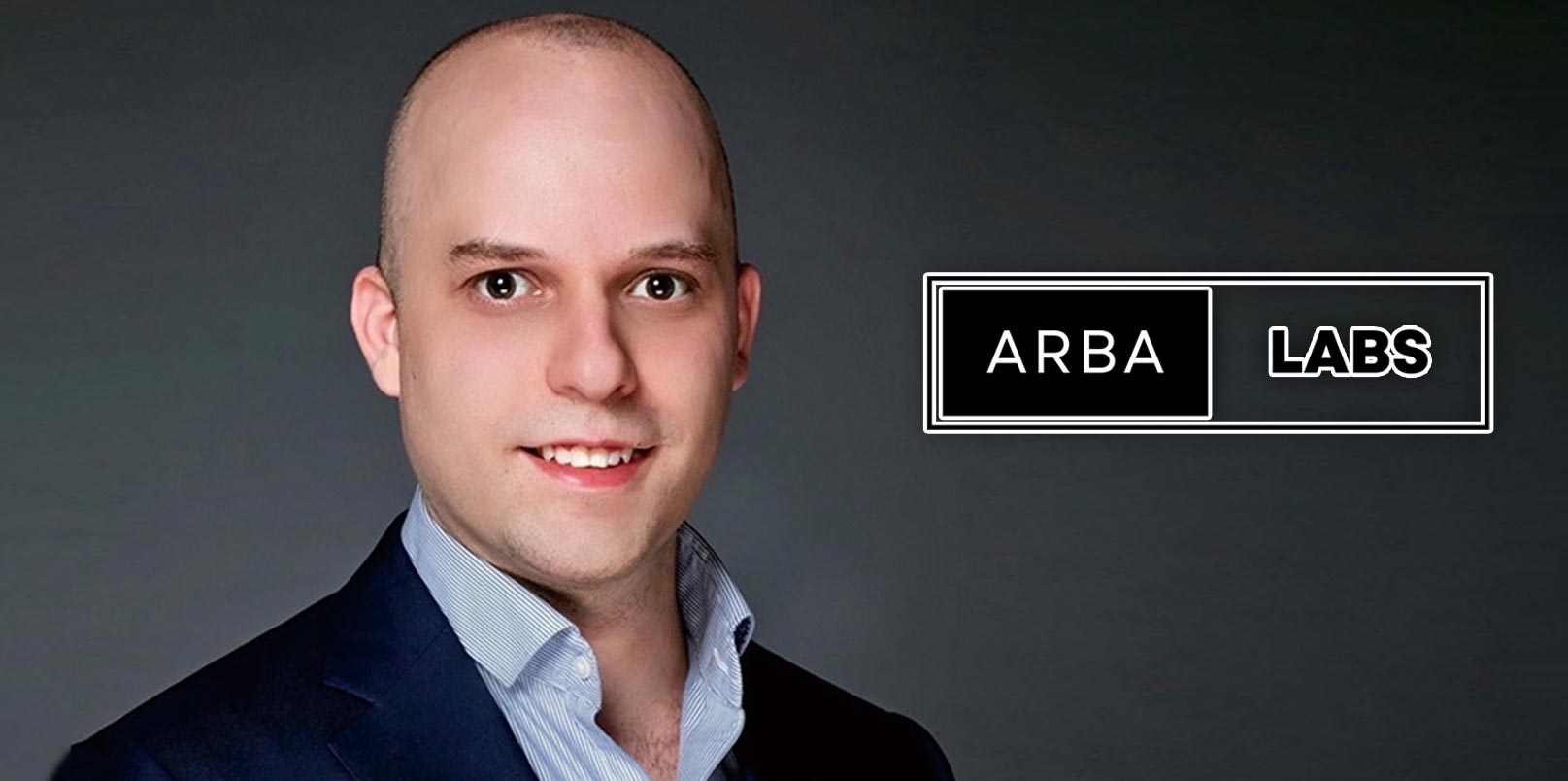
Estonia-based ArbaLabs, founded by Ashley Reeves, brings over 14 years of experience in cybersecurity and blockchain across defense, aerospace, and industrial networks. The company was selected into the K-Startup Grand Challenge (KSGC) 2025 Phase 2 to expand its trusted edge AI technology into Korea’s advanced digital infrastructure landscape.
K-Startup Grand Challenge (KSGC) is Korea’s flagship government-backed accelerator that helps global startups scale into Asia through access to funding, partners, and institutional networks. KoreaTechDesk spoke with Reeves about ArbaLabs’ mission to secure AI at the edge and how its Korean experience shaped the company’s evolution.
The Problem That Sparked ArbaLabs
Q1. What motivated you to start this company, and what core problem were you trying to solve?
I founded ArbaLabs after several years working in data integrity and cybersecurity for space and industrial systems. Across these environments, I kept encountering the same challenge: critical decisions were increasingly being made by AI running on edge devices, yet there was no reliable way to verify that those models—or their outputs—had not been tampered with.
In essence, the core problem we set out to solve is that edge AI in critical systems is neither verifiable nor auditable today, which makes it difficult to fully trust. Whether in satellites, drones, or factory sensors, most organizations still rely on logs and screenshots that can easily be modified after the fact—creating a significant trust gap between operators, suppliers, and regulators.
ArbaLabs was founded to close that gap. Our mission is to provide a cryptographic, evidence-based framework that allows anyone to answer three fundamental questions with certainty: Did the right AI model run? Did it produce this result? Was anything altered along the way?
Our flagship platform, ArbaEdge, was born from that vision—to make integrity and veracity a built-in property of edge AI, not an afterthought.
ArbaLabs: Finding Opportunity in Korea’s Advanced Edge Ecosystem
Q2. What opportunity or unmet need did you identify in the Korean market, and what early signals convinced you that your solution could gain real traction here?
In Korea, we identified a clear and specific gap. The country is making significant investments in satellites, UAVs, mobility systems, smart factories, smart cities, and digital twins—all of which increasingly rely on AI operating at the edge.
However, when we spoke with Korean engineers and system managers, they confirmed that while model training and cloud security are taken seriously, there are almost no tools to verify what actually runs on the device or to prove the authenticity of the data being returned.
The early signals came directly through conversation rather than promotion. During KSGC, we held multiple B2B meetings with Korean aerospace and industrial technology companies, and several described the same challenge in their own words: they must share AI-generated data across organizations, yet they cannot fully trust what happens at the edge.
Hearing this pain point echoed repeatedly across sectors confirmed that a dedicated “trusted AI at the edge” layer is not just relevant but urgently needed in Korea. This alignment convinced us that the Korean market could become one of our first and strongest reference regions for global expansion.
Mentorship That Refined ArbaLabs’ Strategy
Q3. During KSGC, were there any mentors, partners, or specific insights that significantly influenced your product or strategy?
One of the most valuable influences came from an industry expert in the civil space domain whom I met through a KSGC introduction. We already had a clear vision for ArbaEdge as a platform to bring trust and integrity to edge AI, but these discussions helped us translate that vision into the language and operational priorities of Korean companies.
Rather than emphasizing technology labels such as “blockchain” or “Web3,” we began framing ArbaEdge around tangible operational benefits—cleaner audit trails, simplified data sharing, and stronger compliance evidence.
The key insight was that Korean customers respond most strongly when they see precise alignment with existing test benches, inspection workflows, and reporting processes. Based on that, we narrowed our focus to a small number of concrete pilot scenarios demonstrating measurable before-and-after value.
While the core technology remained unchanged, our presentation, deployment model, and messaging evolved to become more focused, pragmatic, and aligned with Korean market expectations.
How KSGC Shaped Growth and Product Direction at ArbaLabs
Q4. After joining KSGC, what has been the most meaningful change for your company and what evidence supports this growth?
The most meaningful change since joining KSGC has been in how we apply ArbaEdge and which industries we now prioritize.
When we first arrived in Korea, ArbaEdge was already a proven product primarily focused on space and drone applications. Through KSGC, we discovered strong, adjacent demand in industrial testing, digital twins, and inspection workflows—areas where the same “trusted edge AI” capabilities address very practical operational challenges.
Based on direct feedback from a Korean partner, we developed a new ArbaEdge configuration tailored to local conditions. Instead of requiring customers to change their workflows, this version provides clear, verifiable records of AI-assisted decisions directly within existing test and inspection systems. This concrete use case helped us refine our interfaces, data outputs, and reporting standards to match Korean expectations for reliability, traceability, and evidence.
Commercially, KSGC transformed these insights into a focused business pipeline rather than a broad ambition. The program’s B2B activities opened multiple conversations with Korean companies exploring similar verification needs. We also established a small physical presence in Seoul and gained clarity on how ArbaEdge should be packaged, supported, and priced for the Korean market.
In short, ArbaEdge was operational before KSGC, but the program enabled us to find the right Korean industries and co-develop a partner-driven configuration that now defines our expansion strategy.
Vision for Trusted AI at the Edge
Q5. Looking ahead, what is the most important vision or long-term goal your company aims to achieve, and what steps are you taking to move toward it?
Our long-term vision is for ArbaEdge to become the global trust layer for edge AI in critical systems — a neutral, hardware-agnostic standard that proves AI models and outputs can be trusted, regardless of the chip, cloud, or country they run on. We believe that, over time, regulators and operators will require verifiable evidence for AI decisions in sectors such as aerospace, mobility, energy, manufacturing, and public infrastructure.
ArbaLabs aims to be one of the companies defining how that evidence is securely generated and shared. And to move toward this vision, we are taking three concrete steps.
- Expanding ArbaEdge into a modular, chip-agnostic software layer for integration with both Korean and international hardware manufacturers.
- Securing pilot projects in Korea—including UAV inspection and digital-twin testbeds—to demonstrate operational value under real-world conditions.
- Aligning our roadmap with emerging AI assurance and safety frameworks to ensure ArbaEdge supports future regulatory standards.
Korea will serve as our primary hub for demonstrating and scaling ArbaEdge in Asia, complemented by activities in Estonia and Taiwan that strengthen our European and hardware ecosystem partnerships.
And we ultimately have a definite global goal: trusted AI at the edge, with ArbaEdge providing silent, cryptographic proof wherever critical AI decisions are made.
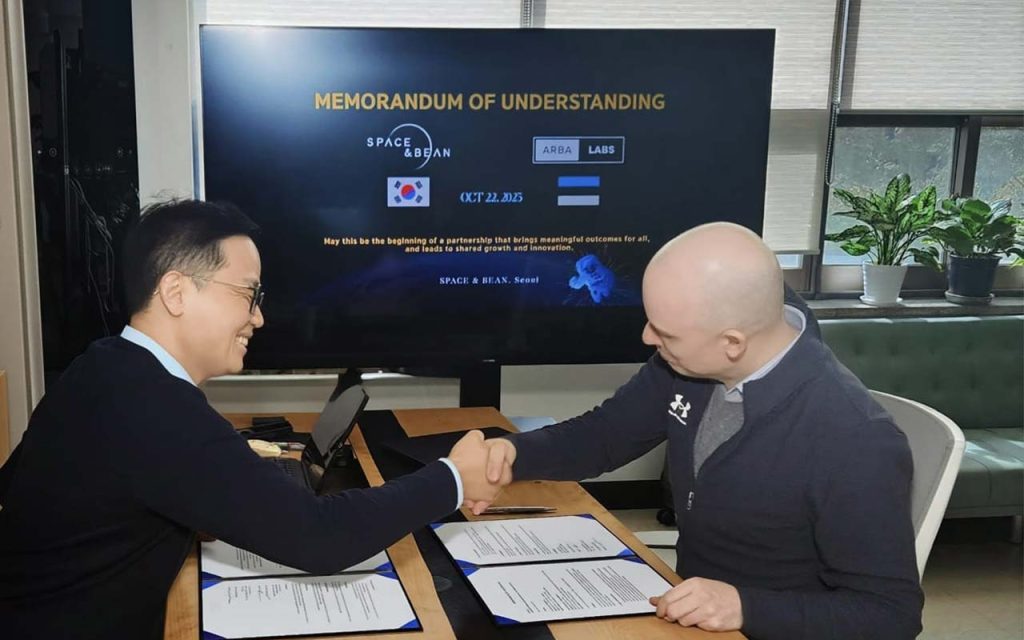
Through K-Startup Grand Challenge 2025, ArbaLabs showcases how global startups can bridge cybersecurity and AI integrity—transforming Korea into a testbed for verifiable, trusted edge intelligence.
“KSGC enabled us to find the right Korean industries and co-develop a partner-driven configuration that now defines our expansion strategy.”
About This Series
This article is part of the “K-Startup Grand Challenge 2025 Interview Series,” featuring 40 global startups from Phase 2 of Korea’s leading accelerator program. The series highlights how international founders are scaling innovation through Korea’s startup ecosystem.
Read more stories from the K-Startup Grand Challenge 2025 Interview Series on KoreaTechDesk.
🤝 Looking to connect with verified Korean companies building globally?
Explore curated company profiles and request direct introductions through beSUCCESS Connect.
– Stay Ahead in Korea’s Startup Scene –
Get real-time insights, funding updates, and policy shifts shaping Korea’s innovation ecosystem.
➡️ Follow KoreaTechDesk on LinkedIn, X (Twitter), Threads, Bluesky, Telegram, Facebook, and WhatsApp Channel.