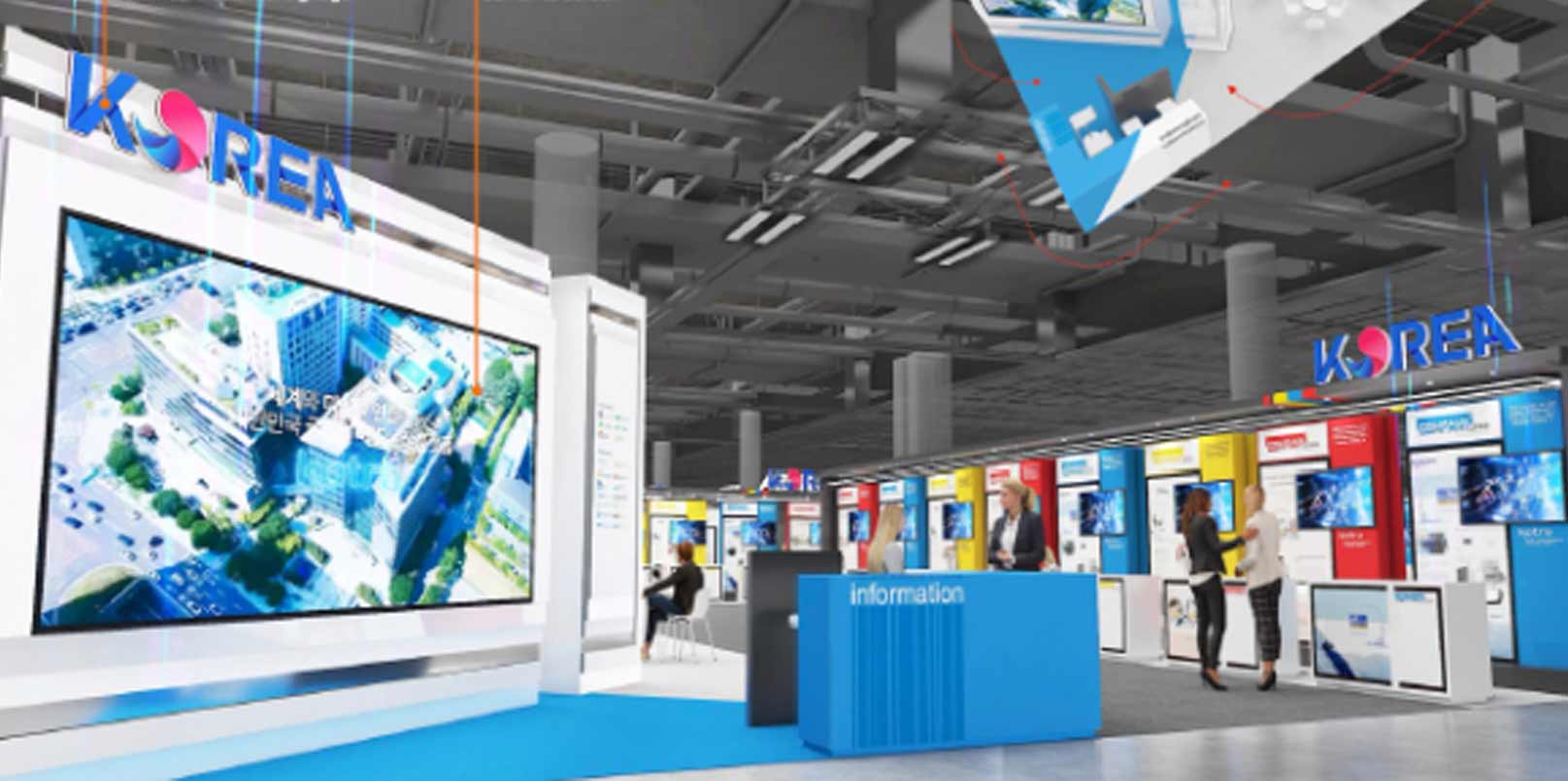
South Korea enters 2026 with its largest-ever presence at the world’s leading technology showcase, CES. The 470-company “Integrated Korea Pavilion” marks not just an exhibition milestone, but a turning point in how the nation positions itself within global innovation networks. Because now for CES 2026, Korea’s focus is no longer on consumer electronics alone but also on B2B, AI-driven, industrial transformation.
Korea Unveils Record 470-Company Pavilion at CES 2026
The Ministry of Trade, Industry and Energy (MOTIE), the Ministry of SMEs and Startups (MSS), and the Korea Trade-Investment Promotion Agency (KOTRA) jointly Korea’s largest-ever Integrated Korea Pavilion at CES 2026, to be held in Las Vegas from January 6 to 9 (local time).
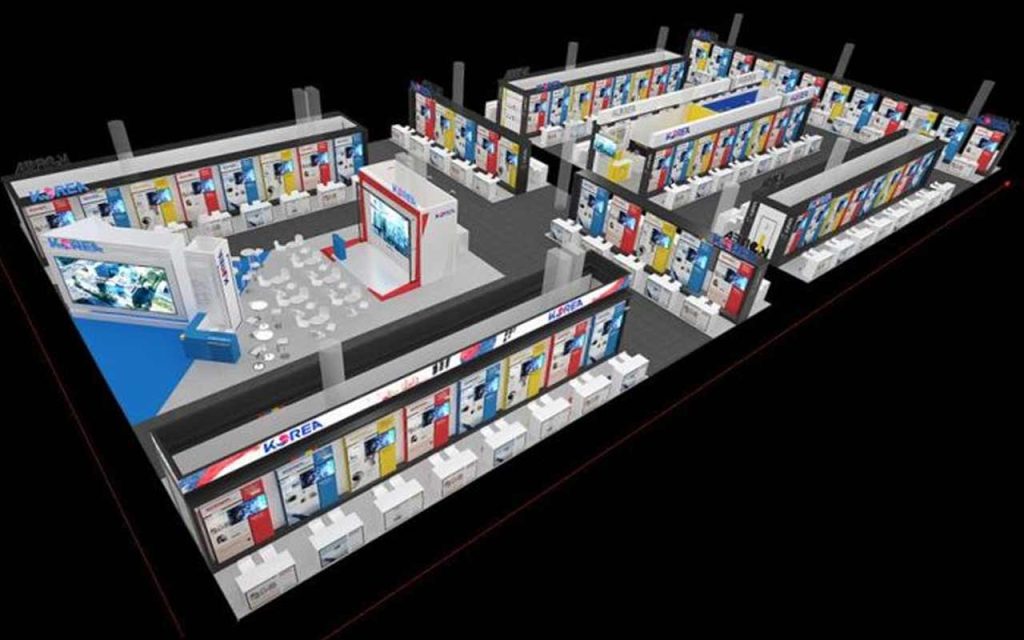
Organized in partnership with 38 institutions, MOTIE–KOTRA Integrated Korea Pavilion unites 470 Korean companies, while MSS operated the separate K-Startup Pavilion dedicated to promising venture firms. Nearly 1,000 Korean firms are participating in CES this year, meaning nearly half are exhibiting under the unified “One Team Korea” banner.
Themed “Innovators Show Up,” CES 2026 spotlights the rise of agentic AI—systems capable of autonomous reasoning and action—and physical AI, which serves as the operating intelligence for robotics, mobility, and industrial machines. These trends signal a global transition from generative AI models to technologies embedded in real-world production and logistics environments.
CES 2026 Korea Pavilion: From Consumer Electronics to B2B Industrial Intelligence
Korea’s participation this year represents a decisive pivot toward B2B innovation. While CES has historically been known for consumer technology, it has rapidly evolved into a showcase for enterprise and industrial solutions powered by AI.
KOTRA’s pre-event report, “CES Preview 2026,” identified over 50 industrial AI exhibitors integrating AI into manufacturing, logistics, and construction systems. The share of AI-related exhibitors within the Korean pavilion reached 21%, the highest among all sectors. Digital health accounted for 16%, followed by smart city and smart home technologies (11%), sustainability and energy (10%), and mobility (9%).
CES’s scope has also expanded beyond its traditional domains. New categories for 2026 include education technology, travel and tourism, supply chain logistics, and film production. Korea responded with 102 companies joining these emerging areas—demonstrating how AI integration is now influencing not only industrial processes but also consumer lifestyles and cultural industries.
Government Push for Innovation Diplomacy
MOTIE Minister Kim Jung-gwan stated,
“As competition over AI leadership accelerates, CES provides an opportunity for Korean firms to demonstrate their technological capability and potential. The government will actively support efforts to turn innovation capacity into export results.”
KOTRA President Kang Kyung-sung also emphasized,
“This year’s pavilion focuses on commercialized, field-proven innovations, aligning with CES’s trend toward practical AI applications. The goal is to ensure that record participation and award wins translate directly into export and investment performance.”
The Ministry of SMEs and Startups (MSS), which manages the separate K-Startup Pavilion, echoed this approach.
Minister Han Seong-sook noted that Korean startups’ success at CES 2026 “proves the nation’s technological ability to lead future markets” and pledged continued government support for startups expanding globally through platforms like CES.
CES 2026 as Korea’s B2B Innovation Benchmark
Korea’s scale of participation at CES 2026—a 470-company national showcase—is beyond just a symbolic exhibition participation but reflects a deeper transformation in the country’s innovation economy.
Three years of consecutive leadership in CES Innovation Awards underscore Korea’s growing technological competitiveness. Of the 284 total award-winning companies, 168 were Korean, and 137 of them were SMEs. Korea also swept the top three AI innovation awards, marking a defining moment for its deeptech ecosystem.
Behind these figures also lies a broader strategic shift. Korea’s innovation policy, historically anchored in electronics and ICT exports, now further confirmed the position of AI and industrial tech as drivers of its next industrial cycle, aligning with its national AI Transformation (AX) strategy to reach top three global AI powerhouse ambition. The strong participation of startups in education technology, logistics automation, and beauty-tech illustrates how emerging industries are adopting AI as a core productivity layer.
This movement also reflects the government’s “One Team for Export” model—integrating ministries, public agencies, and private companies to synchronize overseas marketing and investment efforts. And so, for Korean startups, CES 2026 has become a testing ground and opportunities for global scalability and cross-border partnership readiness.
Korea’s Innovation Identity Evolves Beyond Gadgets
Finally, the 2026 Korea Pavilion at CES captures more than the country’s technological strength but also encapsulates an evolving national mindset. Korea is signaling that the era of competing only in consumer electronics is giving way to a new chapter of B2B AI, industrial automation, and cross-sector collaboration.
If the 2010s were about exporting devices, and the 2020s about scaling platforms, the next phase of Korea’s global competitiveness lies in exporting intelligence—embedded across hardware, manufacturing, logistics, and urban systems.
With coordinated policy support, record startup participation, and growing international recognition, Korea’s deeptech ecosystem is now positioning itself not just as a fast follower, but as a credible industrial innovation leader in the global AI economy.
🤝 Looking to connect with verified Korean companies building globally?
Explore curated company profiles and request direct introductions through beSUCCESS Connect.
– Stay Ahead in Korea’s Startup Scene –
Get real-time insights, funding updates, and policy shifts shaping Korea’s innovation ecosystem.
➡️ Follow KoreaTechDesk on LinkedIn, X (Twitter), Threads, Bluesky, Telegram, Facebook, and WhatsApp Channel.