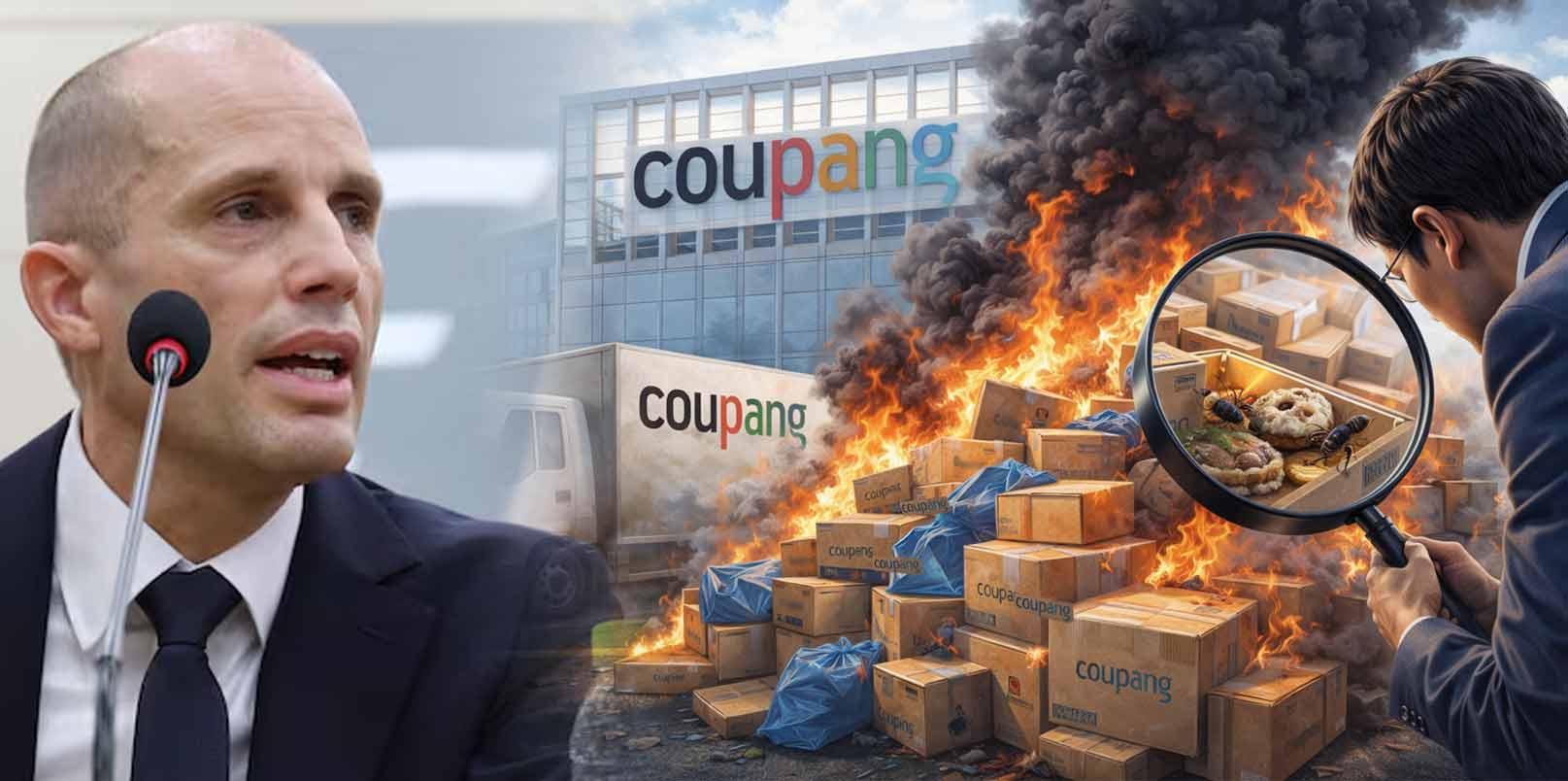
In the age of platform economies, the real currency isn’t data—it’s trust. When South Korea’s largest e-commerce company turned a national data-leak crisis into a trillion-won “apology,” what followed wasn’t relief but rebellion. The backlash now unfolding around Coupang’s ₩1.6 trillion compensation plan reveals more than public anger—it’s Korea’s defining stress test in corporate accountability for the AI-driven decade ahead.
Public Backlash Erupts Over Coupang’s ₩1.685 Trillion Compensation Plan
Coupang’s long-awaited response to Korea’s largest-ever data breach has triggered fresh controversy instead of closure. On December 29, the e-commerce giant announced a KRW 1.685 trillion (~ USD 1.3 billion) compensation plan for the 33.7 million customers whose personal data were leaked earlier this year.
Starting January 15, 2026, affected users—including former members—will receive KRW 50,000 worth of shopping vouchers, split across Coupang’s platforms: ₩5,000 each for Coupang and Coupang Eats, and KRW 20,000 each for Coupang Travel and its luxury marketplace Alux.
Harold Rogers, interim CEO of Coupang Korea, issued a public apology,
“We deeply regret the concern caused and have prepared this plan as a responsible measure to protect our customers’ trust.
Coupang will take this opportunity to reaffirm its customer-first principles and fulfill its responsibilities to the end.”
However, what was meant to be the nation’s largest consumer compensation program has quickly evolved into a public-relations crisis.
Voucher-Based Compensation Draws Criticism as “Marketing Disguised as Restitution”
Consumer groups and social media users have condemned the decision to offer non-cash, single-use coupons instead of direct monetary refunds. Critics argue that most coupons—especially those for travel and luxury categories—require additional purchases, effectively steering users back into Coupang’s ecosystem.
A joint statement from the Korea Consumer Federation described the plan as “consumption-inducing rather than compensatory.” Consumer-rights forums were soon flooded with complaints calling the move “a marketing ploy under the guise of apology” and “unusable compensation for real victims.”
Even the structure of the voucher allocation has raised eyebrows. Roughly 80 percent of the total coupon value is tied to categories with low user activity, leading to concerns that actual redemption rates will remain minimal.
Legal experts note that this model also allows Coupang to record the coupons as deferred sales, minimizing direct financial loss.
Timing and Motives Questioned Ahead of Parliamentary Hearing
The timing of Coupang’s announcement—made just one day before the National Assembly’s hearing on the data breach—has drawn sharp political and civic scrutiny. Lawmakers described the move as a “preemptive attempt to ease public anger” ahead of the official inquiry, while civic groups noted that the sudden disclosure appeared “strategically timed to influence public sentiment.”
Analysts and policy observers also pointed out that the announcement coincided with Coupang’s quarterly financial disclosures, suggesting that the company may have sought to stabilize investor confidence amid intensifying regulatory pressure and expanding class-action preparations within Korea.
Deepening Divide on Coupang Data Breach Compensation Issue
Harold Rogers emphasized in his official statement:
“Coupang’s leadership and employees deeply reflect on the concern caused by this incident. We are committed to fulfilling our responsibility and regaining customer confidence.”
Yet civic groups voiced contrasting views. A spokesperson for the Korea Consumer Federation stated:
“A voucher that forces users to repurchase from the same company responsible for the breach cannot be considered genuine compensation.”
Lawmakers from the Science, ICT, and Communications Committee also questioned whether the program violates the Personal Information Protection Act, which requires “proportionate and effective” redress for damages.
Meanwhile, legal experts warned that Coupang’s compensation announcement—made before the completion of government investigations—could complicate regulatory proceedings. One attorney involved in the class-action effort commented anonymously that the move “appears designed to control narrative, not accountability.”
Civic Response and Legal Fallout: Class-Action Suits Expand
Multiple law firms have opened collective litigation portals, with thousands of consumers already registering for joint lawsuits seeking cash compensation. In Daegu, civic group Chamyeoyundae reported more than 12,000 plaintiffs as of December 29, prompting an extension of its registration deadline to January 10.
Legal analysts estimate that, depending on court interpretation, the compensation plan could still face revision if regulators determine that non-cash redress fails to meet proportionality standards.
In the meantime, consumer sentiment continues to deteriorate. Online polls conducted across major platforms, including Naver and Kakao, show over 70 percent of respondents rejecting the coupon plan as “inadequate or insincere.”
Lesson Learned: Trust as Infrastructure in Korea’s Platform Economy
The Coupang compensation backlash marks a new inflection point in Korea’s ongoing digital governance reform. For the country’s startup and platform economy—built on centralized ecosystems and data-driven personalization—the incident highlights how corporate trust now functions as economic infrastructure.
While the initial breach challenged Korea’s data-governance framework, the compensation controversy has exposed a second layer of risk: the gap between regulatory compliance and public perception of fairness.
For investors and founders, this case signals that post-breach recovery now extends beyond cybersecurity compliance into the realm of ethical restitution design. A company’s ability to demonstrate transparent, human-centered crisis management is increasingly seen as a key determinant of long-term brand equity in Asia’s digital markets.
Furthermore, Coupang’s approach has set a precedent that may accelerate consumer protection reforms across the region. Regulators are expected to push for cash-based restitution standards in future cases, aligning Korea’s digital policy more closely with EU-style compensation models under the General Data Protection Regulation (GDPR).
Coupang Data Breach Case: The Next Test for Korea’s Digital Accountability
The KRW 1.685 trillion data breach compensation plan was intended to restore the customers’ trust on Coupang. Instead, it has reignited the very debate it sought to end—how far Korea’s corporate giants can go in defining their own accountability.
After all, once hailed as Korea’s ultimate startup success story, Coupang’s trajectory—from venture-backed disruptor to public tech giant—has long symbolized the nation’s startup ambition. That is why this latest crisis also raises a deeper question about maturity in Korea’s innovation economy: how a company that once embodied the spirit of entrepreneurial risk now defines responsibility and accountability after success.
The outcome of Coupang’s response will not only determine its corporate reputation but will also signal how Korea’s most celebrated startup-turned-conglomerate models accountability for the next generation of founders and investors.
As class-action movements expand and public trust erodes further, the case is now shaping into Korea’s most consequential consumer-rights confrontation of the digital era.
And for policymakers and founders alike, one question remains: in an economy built on platforms, can compensation still serve as apology, or has it become another form of control?
🤝 Looking to connect with verified Korean companies building globally?
Explore curated company profiles and request direct introductions through beSUCCESS Connect.
– Stay Ahead in Korea’s Startup Scene –
Get real-time insights, funding updates, and policy shifts shaping Korea’s innovation ecosystem.
➡️ Follow KoreaTechDesk on LinkedIn, X (Twitter), Threads, Bluesky, Telegram, Facebook, and WhatsApp Channel.