As generative AI accelerates across industries, the global challenge is no longer about creating intelligence—it’s about securing trust. Korean startup PYLER is emerging as a critical force in this transition, proving how video understanding AI can safeguard digital ecosystems. Its victory at NVIDIA’s Inception Startup Grand Challenge 2025 signals more than a startup success; it marks a national step toward building the Trust Layer—a safety infrastructure for the next decade of AI.
PYLER Wins NVIDIA Inception Grand Challenge 2025
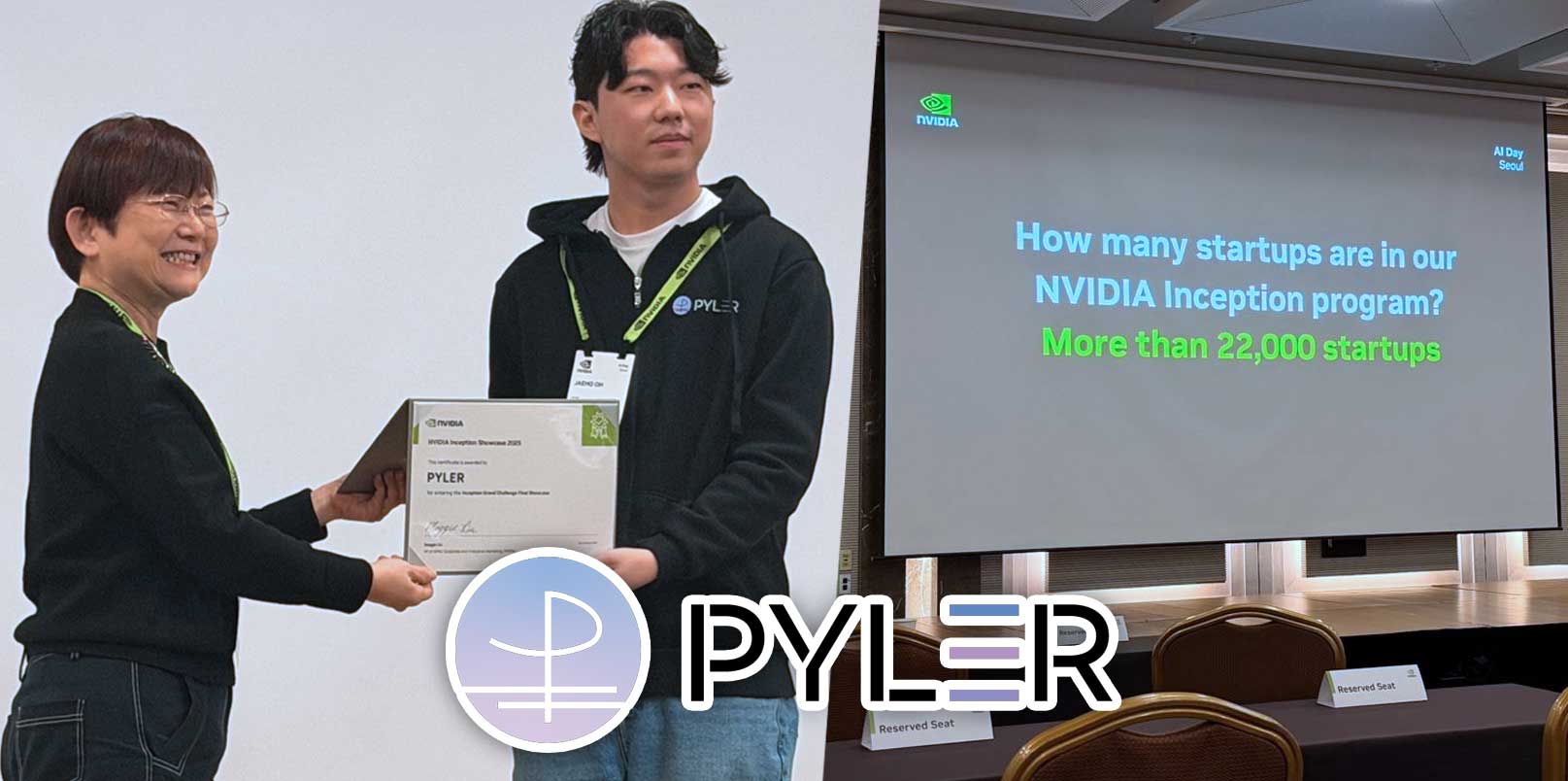
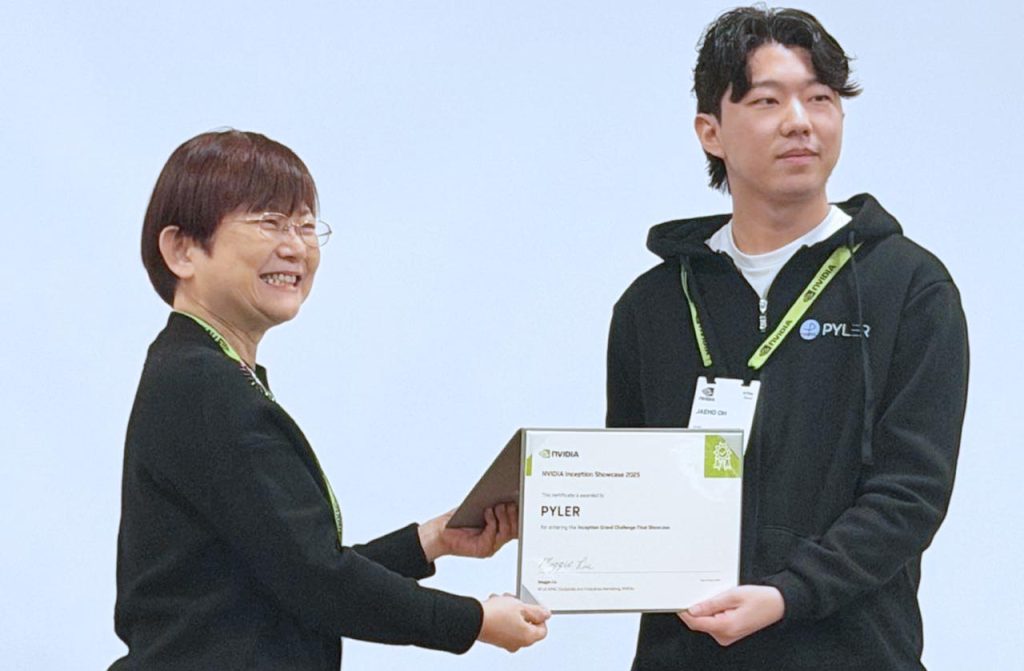
At the NVIDIA Inception Startup Grand Challenge 2025, held in November, PYLER claimed first place among over 80 global competitors. The award recognized its technological sophistication and commercial scalability in addressing one of the industry’s most urgent issues: ensuring that AI-generated and video-based content remains safe, accurate, and ethical.
Founded in 2021 by then-19-year-old Oh Jae-ho, PYLER developed Antares, a multimodal video understanding AI that integrates visual, audio, and text analysis to detect and classify harmful, misleading, or unsafe content. The company’s leading solutions—AiD (Ad Intelligence Defense) and AiM (Ad Intelligence Match)—use contextual analysis to block ads from unsafe videos while optimizing exposure to relevant and brand-aligned content.
PYLER was also awarded the Minister’s Award from Korea’s Ministry of SMEs and Startups (MSS), recognizing its contribution to building trustworthy, scalable video intelligence for the AI era. This dual recognition—from Korea’s top innovation agency and a global technology leader—underscores PYLER’s growing strategic role in shaping the Trust & Safety layer of the AI ecosystem.
PYLER’s system already analyzes three million videos per day, screening for sensitive or manipulative content, and has partnered with major clients including Samsung Electronics, KT, Hyundai Marine & Fire Insurance, Nongshim, Kenvue, and Lotte Wellfood.
AI and Brand Safety: A New Market Imperative
The exponential growth of AI-generated content (AIGC) has introduced new layers of risk—deepfakes, hate speech, misinformation, and child exploitation material—that threaten trust in digital media. PYLER’s Trust & Safety (T&S) approach represents a new layer of defense in this landscape, where human moderation alone can no longer scale.
As CEO Oh explained after receiving the NVIDIA award:
“With the surge in AI-generated content, deepfakes and harmful materials are becoming serious problems. We need a verification layer to ensure AI remains safe and trustworthy.”
This “verification layer” vision reflects a broader structural shift in the AI ecosystem—one that moves beyond efficiency to accountability. By combining automated detection, contextual targeting, and ethical safeguards, PYLER provides a technological foundation for both brand safety and AI governance.
Korea’s Emerging Role in Global AI Safety
Korea’s government has begun establishing legal and ethical frameworks for AI, including the AI Basic Act, which will take effect in 2026. This law prioritizes safety, transparency, and reliability, aligning Korea’s innovation strategy with global AI governance trends.
PYLER’s work in Trust and Safety AI positions it at the intersection of this national agenda and global market demand. Its partnership with NVIDIA and participation in international frameworks such as the IAB Tech Lab—where it was the first Korean member—demonstrate Korea’s growing presence in shaping global standards for ethical AI and digital advertising transparency.
Through events such as CVPR, ICCV, and NVIDIA AI Day Seoul, PYLER has validated its competitiveness alongside world-class AI labs and corporations like Intel, Tencent, and ByteDance.
Grounded in Trust and Responsibility in New AI Era
CEO Oh Jae-ho emphasized the societal importance of PYLER’s mission:
“2026 will be the first year of Korea’s AI Basic Act. As safety and reliability become central to AI development, PYLER aims to become the company that ensures safety in this new AI era.”
This statement reflects a critical evolution in startup leadership in Korea—one that views AI not only as a market opportunity but as a social infrastructure challenge requiring continuous validation and ethical oversight.
PYLER: From Startup Success to Structural Infrastructure
PYLER’s rise is emblematic of how Korea’s deep tech ecosystem is maturing beyond commercial AI applications toward infrastructure-level innovation. Trust & Safety AI is not a consumer-facing technology; it is the invisible foundation that underpins global digital commerce, governance, and human communication.
By automating brand safety, verifying AI-generated content, and contributing to international AI standards, PYLER is effectively building the “Trust Layer” that all future AI systems will depend on.
In ecosystem terms, this reflects Korea’s strategic pivot: moving from manufacturing intelligence to institutionalizing integrity. As more Korean startups—especially in AI governance, cybersecurity, and multimodal analysis—align with global frameworks, the country is positioning itself as a core node in global AI safety infrastructure.
The Strategic Value of Trust in Next-Gen AI Era
By watching PLYER’s new tech and achievement, founders and investors may glimpse that the next decade of AI will not be defined by who builds the smartest model, but by who builds the most trusted system. As generative AI reshapes industries, ensuring the credibility of digital content becomes a shared responsibility among startups, regulators, and corporations.
PYLER’s work stands as proof that Trust and Safety is not a compliance burden but a competitive advantage—one that enhances brand integrity, investor confidence, and cross-border market access.
By embedding AI safety into the architecture of global digital systems, Korea and startups like PYLER are laying the groundwork for a future where innovation and responsibility grow together—and where the Trust Layer becomes the most valuable infrastructure of the AI era.
– Stay Ahead in Korea’s Startup Scene –
Get real-time insights, funding updates, and policy shifts shaping Korea’s innovation ecosystem.
➡️ Follow KoreaTechDesk on LinkedIn, X (Twitter), Threads, Bluesky, Telegram, Facebook, and WhatsApp Channel.
🤝 Looking to connect with verified Korean companies building globally?
Explore curated company profiles and request direct introductions through beSUCCESS Connect.