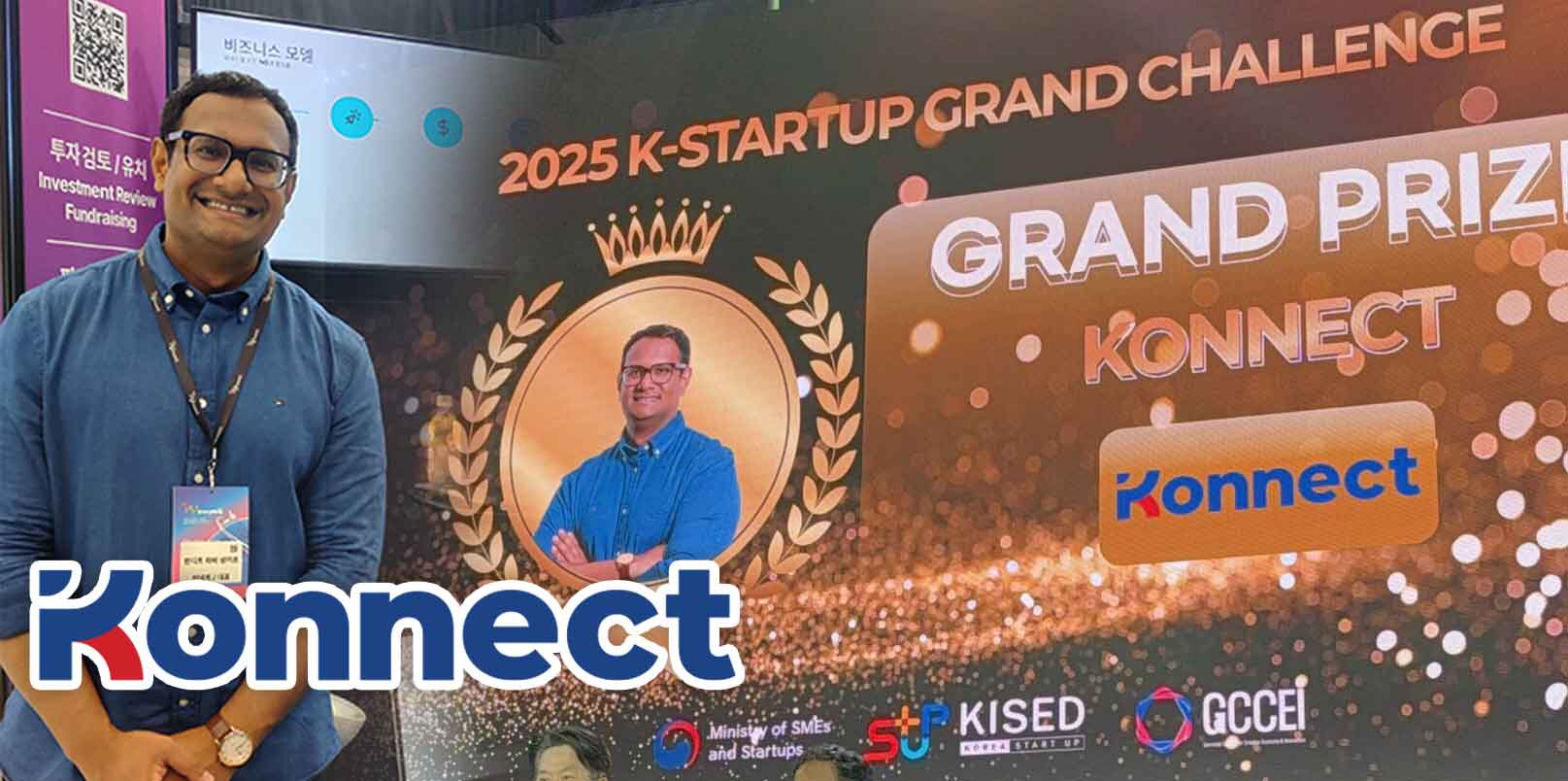
Imagine landing in one of the world’s most connected countries—and realizing the apps, systems, and services around you don’t recognize your existence. That was the reality that inspired Pandit Ravi Shankar, a long-term foreign resident and serial entrepreneur in Korea, to build KONNECT.
What began as a personal frustration has evolved into a mission: to make Korea truly accessible for every foreigner, whether they’re staying for a week or a lifetime.
We spoke to the founder in an exclusive interview about the company’s growth, strategies, and future outlook as it advances through K-Startup Grand Challenge (KSGC) 2025 Phase 2 and eventually won the grand prize. The company has now become one of Korea’s most promising solutions for foreign residents and visitors.
KONNECT: A Founder’s Mission to Unlock Korea’s Systems
Q1. What motivated you to start this company, and what core problem were you trying to solve?
As I lived in Korea as a foreign resident, I experienced the same frustrations that millions of visitors and expats face every day: essential Korean services—mobility, payments, government platforms, even basic navigation—are built for locals and remain largely inaccessible to foreigners.
Tourists struggle to move around, top-up transport cards, or book attractions. Short-term stayers get lost between apps, paperwork, and language. Long-term residents still face fragmented systems and verification locks that never go away.
Meanwhile, global platforms like Google Maps and Uber don’t work properly here, and domestic apps are difficult to use due to language and ID requirements. This became my motivation to start KONNECT: the realization that this wasn’t just a small UX issue, but a structural barrier preventing people from fully participating in life in Korea.
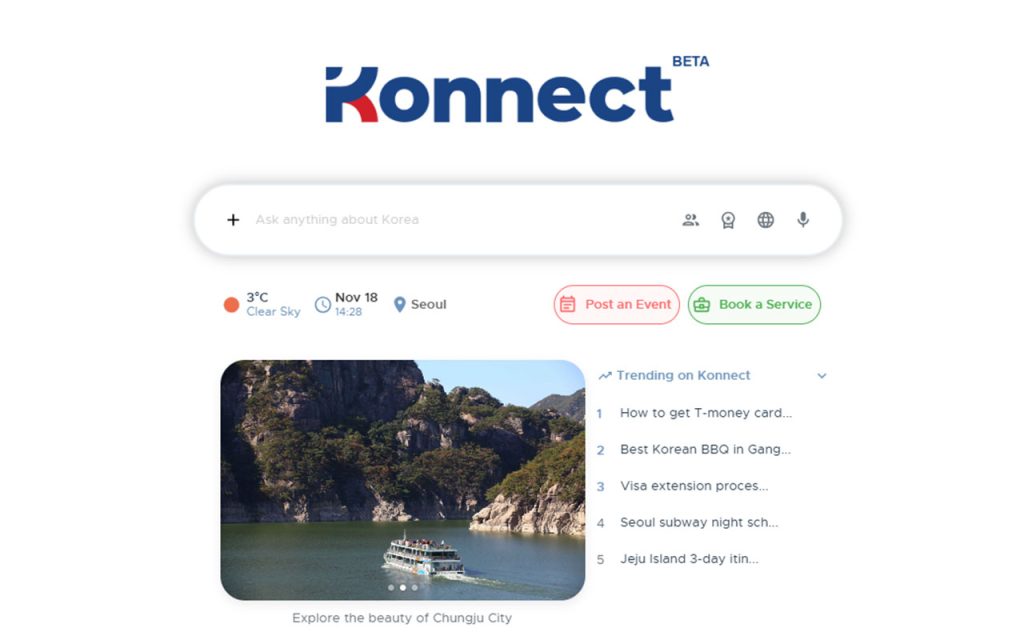
KONNECT was born to remove all of these barriers through a unified passport-based login, trusted AI search, and integrated mobility, visa, legal, and medical services—bringing Korea’s essential systems into one accessible place for foreigners.
A Market Gap Waiting to Be Solved
Q2. What opportunity or unmet need did you identify in the Korean market, and what early signals convinced you that your solution could gain real traction here?
The biggest unmet need in Korea was the absence of a truly foreigner-friendly digital ecosystem. Despite having welcomed over 16.4 million visitors in 2024 and expecting 30 million by 2027, fewer than 10% of tourists in South Korea actually use the domestic apps.
This gap revealed a massive opportunity: millions of foreigners want to access mobility, payments, healthcare, and visa services, yet the infrastructure simply does not support them.
Our earliest signals of traction appeared immediately after launch. Within six months, KONNECT attracted 100,000 organic visitors from 96 countries, with strong engagement across mobility, visa updates, and clinic searches. Users returned not only for travel planning but for everyday living needs. And it becomes clear proof that the existing platforms were not serving them.
Further validation came from the ecosystem itself, because leading Korean conglomerates such as LG CNS and Kakao Mobility, along with multiple city governments, have expressed their interest in partnering around our platform and vision.
Together, these signals confirmed that KONNECT wasn’t just desirable—it was becoming essential infrastructure for Korea’s growing foreign population.
Guidance that Turned an Idea into Infrastructure
Q3. During KSGC, were there any mentors, partners, or specific insights that significantly influenced your product or strategy?
One of the most important influences in our journey has been Gyeonggi CCEI, whose support played a pivotal role in accelerating KONNECT’s growth. Beyond providing a strong incubation foundation, the Gyeonggi CCEI team has actively opened doors to industry partners and helped us refine our direction with hands-on, practical mentoring.
Through their network, we were able to meet mobility providers, government-linked organizations, and service operators who later became potential integration or partnership leads.
Additionally, what made their support especially impactful was their consistent guidance at every step—validating our market assumptions, helping us narrow our user focus, and challenging us to think at the scale required to build essential infrastructure for foreigners in Korea. Gyeonggi CCEI also expressed early interest in KONNECT’s potential as an investable company, which further strengthened our confidence in the problem we were solving.
Their mentorship and ecosystem access were instrumental factors that shaped our early traction and helped us position KONNECT as a meaningful solution for Korea’s growing foreigner population.
A Shift from Startup to Strategic Player
Q4. After joining KSGC, what has been the most meaningful change for your company and what evidence supports this growth?
After KSGC, the most meaningful change for KONNECT was the sudden and very real interest we began receiving from investors.
Being selected as a Top 40 company gave us visibility, credibility, and momentum that opened conversations we simply could not access before. Investors who had previously been cautious about the “foreigner market” began to view KONNECT as a necessary layer of national infrastructure rather than a niche service. This shift allowed us to begin active discussions with multiple funds who are now exploring how they can support our next stage of product development and expansion.
The recognition also strengthened our position with industry partners. Following the Top 40 selection, we are now moving toward POCs with major organizations including Kakao Mobility and LG CNS, enabling us to explore integrations across mobility, payments, and public-service platforms. These relationships have been critical in proving that Korea’s largest companies see real value in unlocking their services for the growing foreign population.
KONNECT: Building Korea’s Default Platform for Global Access
Q5. Looking ahead, what is the most important vision or long-term goal your company aims to achieve, and what steps are you taking to move toward it?
Our long-term vision is to build the default digital infrastructure for foreigners in Korea—a single access layer where every essential service, from mobility and payments to visas, healthcare, and legal support, can be accessed seamlessly with just a passport.
Korea is targeting 30 million annual tourists and continues to see record growth in its foreign-resident population, yet the systems serving them remain fragmented. Our goal is to become the unified platform that connects this global population with Korea’s public and private services in a truly frictionless way.
To move toward this vision, we are taking several concrete steps. First, we are expanding our passport-based unified login, which removes the need for Korean SIM cards, local bank accounts, or ID verification—an essential requirement for unlocking mobility, government, and commercial services. Second, we are deepening integrations with large partners, and we are now progressing toward POCs with Kakao Mobility and LG CNS to extend KONNECT’s infrastructure into Korea’s largest mobility and smart-city platforms.
We are also strengthening our AI search engine, which has already attracted 100K organic users, to become the most trusted source for daily life, navigation, and compliance information for foreigners. In parallel, we are in active discussions with investors to secure the resources required for national-scale expansion.
Ultimately, our goal is to ensure that every foreigner—tourist, student, worker, or resident—can live, move, and thrive in Korea without digital barriers.
Through the K-Startup Grand Challenge 2025, KONNECT is not just building another app—it is constructing a new digital bridge that connects Korea to the world and makes everyday life accessible for everyone, regardless of nationality or status.
“Being selected as a Top 40 company of KSGC gave us visibility, credibility, and momentum that opened conversations we simply could not access before.”
About This Series
This article is part of the “K-Startup Grand Challenge 2025 Interview Series,” featuring 40 global startups from Phase 2 of Korea’s leading accelerator program. The series highlights how international founders are scaling innovation through Korea’s startup ecosystem.
Read more stories from the K-Startup Grand Challenge 2025 Interview Series on KoreaTechDesk.
– Stay Ahead in Korea’s Startup Scene –
Get real-time insights, funding updates, and policy shifts shaping Korea’s innovation ecosystem.
➡️ Follow KoreaTechDesk on LinkedIn, X (Twitter), Threads, Bluesky, Telegram, Facebook, and WhatsApp Channel.
🤝 Looking to connect with verified Korean companies building globally?
Explore curated company profiles and request direct introductions through beSUCCESS Connect.