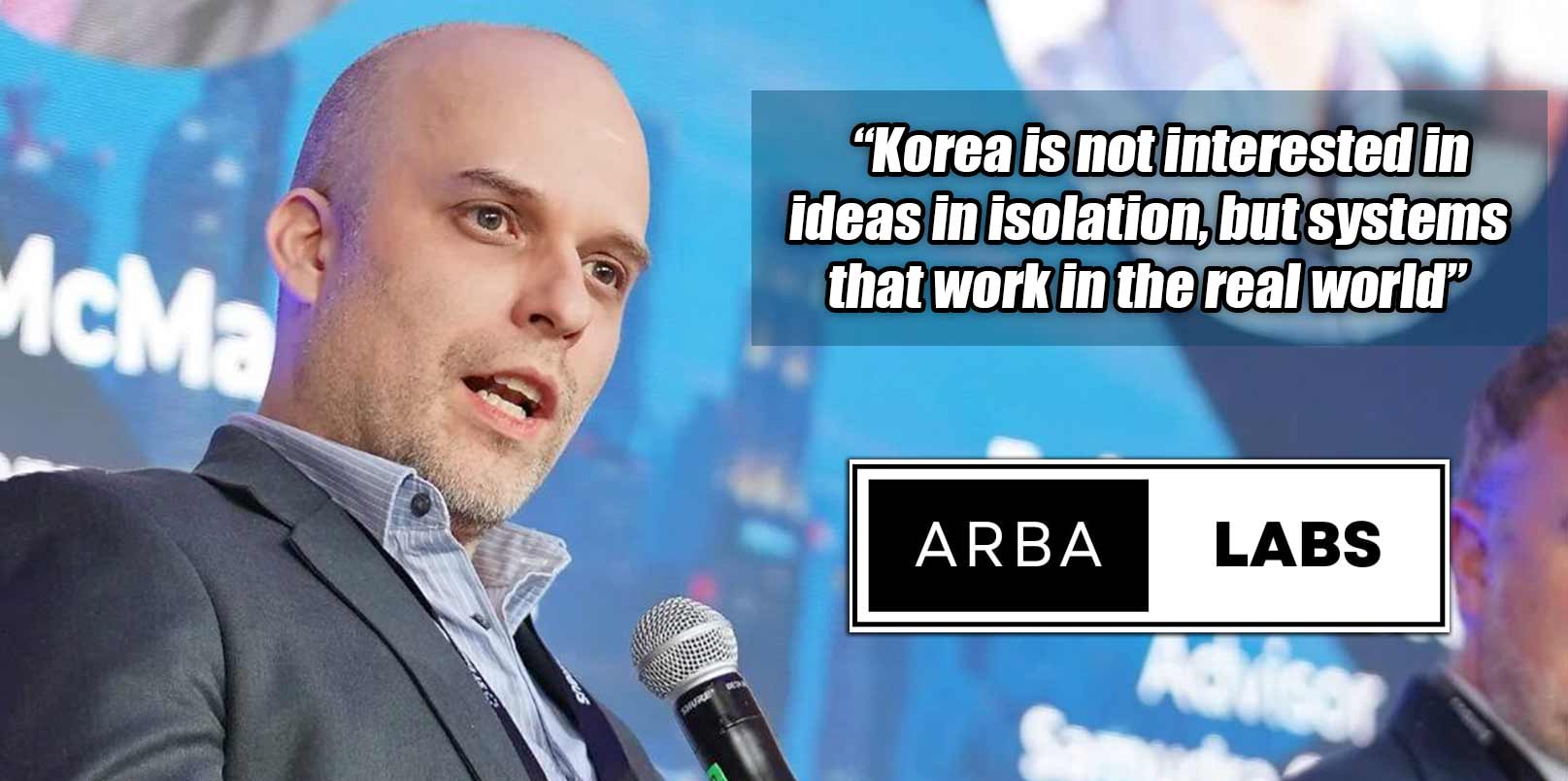

Most people hear a machine hum; Leon Lim hears a conversation waiting to be translated. With a background that spans chemical engineering, orchestral performance, and two startup exits, the Singaporean founder of Groundup.ai built a company around one elegant idea — what if machines could tell us when they need help, before breaking down?
Now part of the 40 companies selected for K-Startup Grand Challenge (KSGC) 2025 Phase 2, Groundup.ai is bringing its “Cognitive Maintenance” platform to Korea’s industrial heartland, aiming to redefine reliability itself.
KoreaTechDesk spoke to Leon Lim, revealing the company’s growth and experience while joining the 2025 K-Startup Grand Challenge in Korea.
The Breakdown That Sparked a Movement at Groundup.ai
Q1. What motivated you to start this company, and what core problem were you trying to solve?
Groundup.ai emerged from a difficult lesson during our previous experience managing large-scale crypto mining operations. Our machines operated continuously, and every breakdown resulted in more than repair expenses. It meant lost mining hours, lost revenue, and lost competitive advantage. We saw firsthand how even a short period of unplanned downtime could erase an entire day of profit, yet we had no reliable way to anticipate failures before they occurred.
This challenge reflected a broader issue faced by many industrial operators: machine failures are unpredictable, and existing tools rarely detect early-stage anomalies. In maintenance, the most effective repair is the one that never becomes necessary.
This insight led us to create Groundup.ai. We set out to build a solution capable of identifying machine anomalies early, preventing breakdowns, and protecting revenue across industries far beyond crypto. By combining our proprietary sensors with AI-powered anomaly detection, we developed a Cognitive Maintenance platform that identifies issues weeks before they escalate, helping companies reduce downtime and maintain operational stability.
What began as a problem we encountered ourselves has grown into a mission to eliminate avoidable machine failures for businesses worldwide.
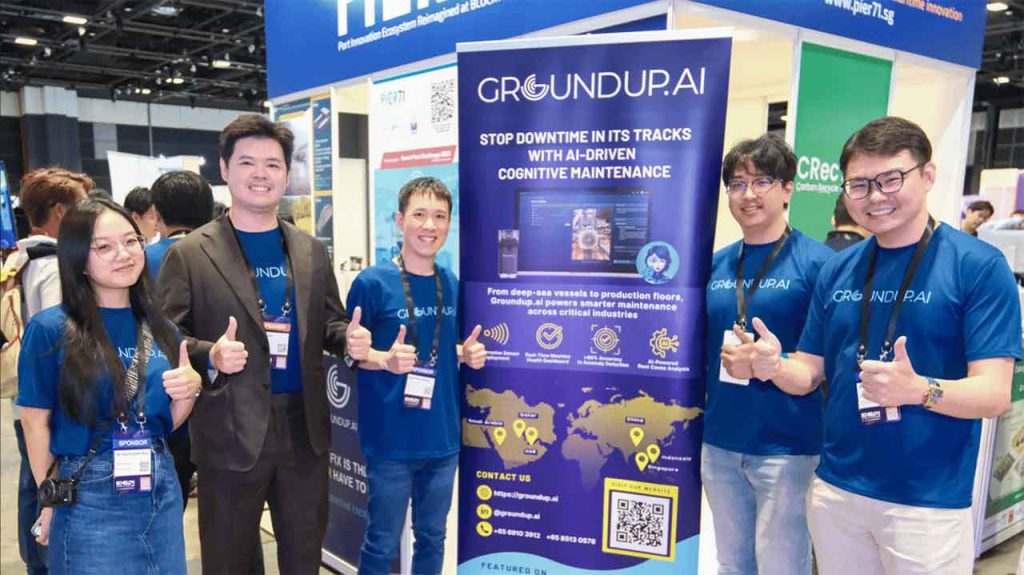
Listening to the Machines of Korea
Q2. What opportunity or unmet need did you identify in the Korean market, and what early signals convinced you that your solution could gain real traction here?
Korea’s industrial landscape—spanning food manufacturing, maritime, petrochemical, and heavy industry—faces a universal challenge: aging assets, rising labor costs, and mounting pressure to maintain uptime.
Although Korea is known for its technological sophistication, many factories still rely on manual inspections or conventional vibration tools that offer limited predictive insight. This created a clear opportunity to introduce Cognitive Maintenance as a strategic upgrade for reliability, safety, and productivity.
Our early signals were strong. During market validation, more than 30 Korean companies across manufacturing, infrastructure, and maritime expressed interest in rapid-deployment AI maintenance. We also saw strong traction through KSGC’s networking events, where decision-makers consistently emphasized their need for simpler, faster sensors and AI models that don’t require extensive data preparation.
Learning What “Reliability” Means in Korean Industry
Q3. During KSGC, were there any mentors, partners, or specific insights that significantly influenced your product or strategy?
A key influence during KSGC came from one of our program speakers, Hassan Imran from AC BIODE, and a mentor from the “Groundup.ai Mentoring – Fundraising Strategy with Korean VCs” session. Both had deep experience advising major Korean manufacturers.
Their insights revealed a crucial truth: Korean companies prize predictability and reliability above experimental innovation. They expect AI solutions to deliver consistent, measurable outcomes—not theoretical potential.
That advice reshaped how we communicate our technology. We shifted our messaging from “advanced predictive maintenance” to a “trusted reliability platform”, focusing on stability, safety, and tangible ROI. We began emphasizing how our AI assists engineers rather than replaces them—helping companies enhance productivity while preserving human expertise.
This cultural understanding transformed our go-to-market approach, aligning us with the values Korean enterprises hold highest: certainty, dependability, and partnership.
Preparing for Expansion with Strategic Clarity
Q4. After joining KSGC, what has been the most meaningful change for your company and what evidence supports this growth?
The greatest transformation for Groundup.ai has been the strategic clarity and operational readiness we gained through KSGC’s ecosystem and mentorship.
Through the program, we engaged legal experts, labor consultants, and government-linked organizations who helped us navigate entity setup, visa pathways, hiring considerations, and data compliance in Korea. What once felt complex became an actionable expansion plan.
KSGC also introduced us to manufacturing mentors and ecosystem partners who deepened our understanding of Korean reliability standards, procurement practices, and operational priorities. These insights shaped our market-entry strategy and positioned us as a Cognitive Maintenance partner rather than just another AI vendor.
While it’s too early to measure revenue impact, the structural and strategic foundation built through KSGC has accelerated our readiness to expand sustainably into Korea’s industrial ecosystem.
Groundup.ai: A World Without Unplanned Downtime
Q5. Looking ahead, what is the most important vision or long-term goal your company aims to achieve, and what steps are you taking to move toward it?
Our long-term vision is to make Groundup.ai the world’s leading Cognitive Maintenance platform—an intelligent infrastructure layer that monitors machine health, prevents breakdowns, and enables industries to operate with zero unplanned downtime.
To achieve this, we’re expanding our proprietary sensor ecosystem and enhancing our machine-health models to cover diverse industries and assets with consistent reliability. We’re also building an international partner network across Korea, Indonesia, Singapore, the Middle East, and the UK, enabling rapid deployment in high-impact industrial environments.
Meanwhile, we continue strengthening our AI capabilities—including adaptive learning and generative diagnostics—to deliver clearer root-cause insights and automated maintenance recommendations.
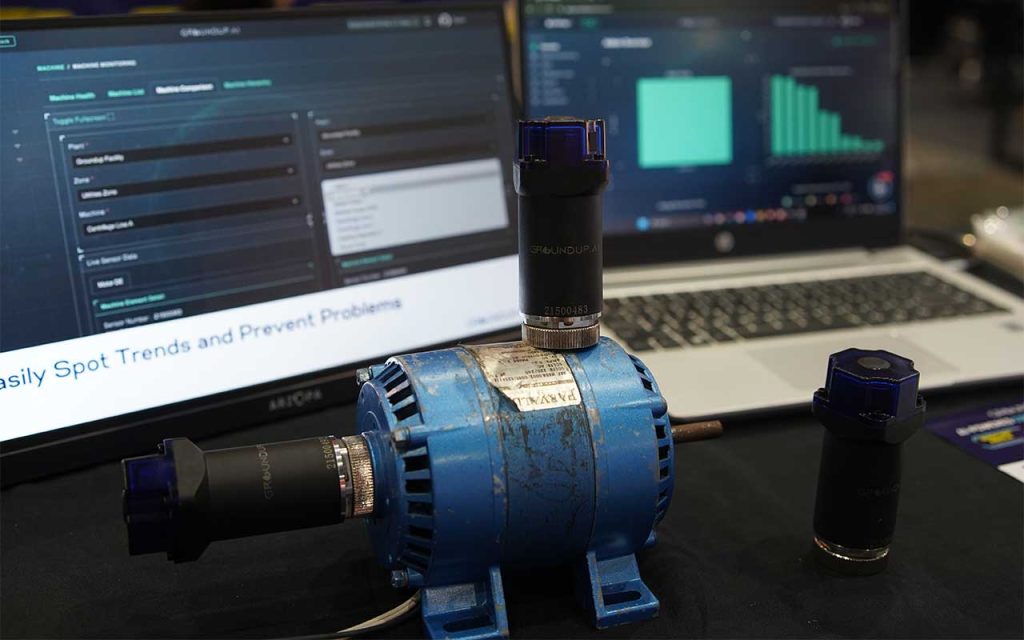
Korea plays a pivotal role in this vision. Its national “smart manufacturing” strategy and government-backed push for AI-driven industrial transformation create an ideal stage to showcase Cognitive Maintenance at scale.
Our goal is for Korean factories to evolve from reactive maintenance toward a self-learning reliability ecosystem, setting a new global benchmark for industrial excellence.
Through the K-Startup Grand Challenge 2025, Groundup.ai stands as proof that machine intelligence isn’t about replacing humans—it’s about preventing waste, protecting uptime, and listening to what the world’s machines have been trying to say all along.
“The intelligence gained through KSGC has significantly accelerated our readiness for the Korean market, establishing the foundation we need to expand sustainably and confidently in one of Asia’s most advanced industrial ecosystems.”
About This Series
This article is part of the “K-Startup Grand Challenge 2025 Interview Series,” featuring 40 global startups from Phase 2 of Korea’s leading accelerator program. The series highlights how international founders are scaling innovation through Korea’s startup ecosystem.
Read more stories from the K-Startup Grand Challenge 2025 Interview Series on KoreaTechDesk.
– Stay Ahead in Korea’s Startup Scene –
Get real-time insights, funding updates, and policy shifts shaping Korea’s innovation ecosystem.
➡️ Follow KoreaTechDesk on LinkedIn, X (Twitter), Threads, Bluesky, Telegram, Facebook, and WhatsApp Channel.
🤝 Looking to connect with verified Korean companies building globally?
Explore curated company profiles and request direct introductions through beSUCCESS Connect.