KoreaTechDesk | Korean Startup and Technology News

Mon, February 09, 2026

Sign in

Virtual Demo Day
Menu
  • Home
  • Startup News
    • AI & Big Data
    • AR & VR
    • Blockchain
    • Clean Technology
    • Content & Games
    • Cybersecurity
    • Enterprise & SaaS
    • FinTech
    • Gadgets & Electronics
    • Health & Bio
    • Manufacturing
    • Press Release
    • IoT
    • Marketplaces & E-commerce
    • Robotics
    • Transportation
    • Investments
    • Ecosystem & Lists
  • Governments
    • Artificial Intelligence Industry Cluster Agency
    • Daegu Technopark
    • GANGNAM-GU
    • Gyeonggido Business & Science Accelerator
    • Hwaseong Industry Promotion Agency
    • Invest Seoul
    • Korea Creative Content Agency
    • Korea Internet & Security Agency
    • Korea Information Security Industry Association
    • Korea Institute of Startup & Entrepreneurship Development
    • Korea Tourism Organization
    • Korea Trade-Investment Promotion Agency
    • Ministry of Culture, Sports and Tourism
    • Ministry of SMEs & Startups
    • National IT Industry Promotion Agency
    • Pangyo Techno Valley
    • Seoul Business Agency
    • Seoul FinTech Lab
    • South Gyeongsang Province
    • Seoul Metropolitan Government
  • Events
    • COMEUP
    • Korea Fintech Week
    • K-Content Expo
    • NextRise
    • Try Everything
  • Interviews
    • Investors’ interviews
    • Founders’ interviews
  • Programs
    • Asan Voyager
    • CAPA Global Program
    • Campus Town Program
    • SGSC Global Bootcamp
    • Gangnam-gu Global Roadshow
    • Global SaaS Marketplace Support Project
    • LAUNCHPAD
    • COMEUP STARS 120
    • K-Startup Grand Challenge
    • TIPS X beSUCCESS Global Project
    • SFL Global Program
    • KTO Global Showcase
    • Yonsei Univ Global Class
    • KOSME Global Program
  • Partner With Us
    • Press Release
    • Startup Scouting
    • Business Agencies
    • Global Mentorship Program
    • Investment Opportunities
    • K-Scouter Program
  • Lists
  • Home
  • Startup News
    • AI & Big Data
    • AR & VR
    • Blockchain
    • Clean Technology
    • Content & Games
    • Cybersecurity
    • Enterprise & SaaS
    • FinTech
    • Gadgets & Electronics
    • Health & Bio
    • Manufacturing
    • Press Release
    • IoT
    • Marketplaces & E-commerce
    • Robotics
    • Transportation
    • Investments
    • Ecosystem & Lists
  • Governments
    • Artificial Intelligence Industry Cluster Agency
    • Daegu Technopark
    • GANGNAM-GU
    • Gyeonggido Business & Science Accelerator
    • Hwaseong Industry Promotion Agency
    • Invest Seoul
    • Korea Creative Content Agency
    • Korea Internet & Security Agency
    • Korea Information Security Industry Association
    • Korea Institute of Startup & Entrepreneurship Development
    • Korea Tourism Organization
    • Korea Trade-Investment Promotion Agency
    • Ministry of Culture, Sports and Tourism
    • Ministry of SMEs & Startups
    • National IT Industry Promotion Agency
    • Pangyo Techno Valley
    • Seoul Business Agency
    • Seoul FinTech Lab
    • South Gyeongsang Province
    • Seoul Metropolitan Government
  • Events
    • COMEUP
    • Korea Fintech Week
    • K-Content Expo
    • NextRise
    • Try Everything
  • Interviews
    • Investors’ interviews
    • Founders’ interviews
  • Programs
    • Asan Voyager
    • CAPA Global Program
    • Campus Town Program
    • SGSC Global Bootcamp
    • Gangnam-gu Global Roadshow
    • Global SaaS Marketplace Support Project
    • LAUNCHPAD
    • COMEUP STARS 120
    • K-Startup Grand Challenge
    • TIPS X beSUCCESS Global Project
    • SFL Global Program
    • KTO Global Showcase
    • Yonsei Univ Global Class
    • KOSME Global Program
  • Partner With Us
    • Press Release
    • Startup Scouting
    • Business Agencies
    • Global Mentorship Program
    • Investment Opportunities
    • K-Scouter Program
  • Lists
Home Uncategorized

Korea Turns Crisis into Infrastructure: How ‘Trade Barrier 119’ Redefines Export Resilience in a Fragmented Global Market

by Richard Park
February 9, 2026
in Uncategorized
0

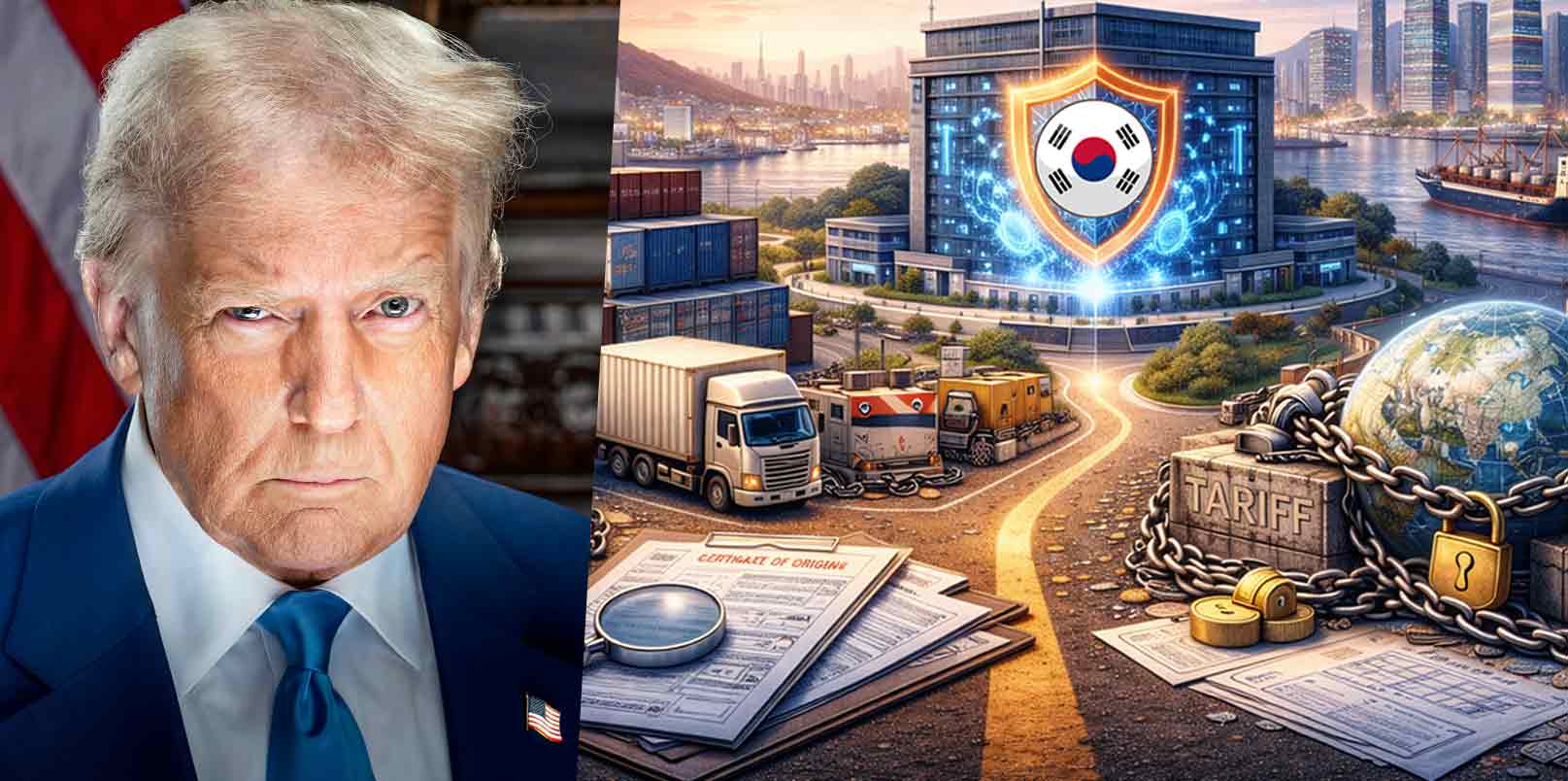
South Korea is no longer just reacting to global trade turbulence — it is building infrastructure to withstand it. The country’s new “Trade Barrier 119” initiative, led by the Ministry of Trade, Industry and Energy (MOTIE) and the Korea Trade-Investment Promotion Agency (KOTRA), transforms crisis management into a standing framework for export defense. Born from tariff disputes with the U.S., the system now aims to help Korean startups and SMEs navigate a world fractured by protectionism and compliance hurdles.

KOTRA Expands ‘Tariff Response 119’ into ‘Trade Barrier 119’

Less than a year after launch, KOTRA’s “Tariff Response 119” logged over 10,000 consultations, reflecting how deeply the U.S. tariff uncertainty has impacted Korean exporters. Established in February 2025, the hotline originally served as a rapid-response system to guide firms through customs complexities, tariff reclassifications, and Free Trade Agreement (FTA) applications.

Now, amid intensifying trade fragmentation, the government has restructured and expanded it into “Trade Barrier 119” — a comprehensive platform that supports exporters facing not only tariff hikes but also non-tariff barriers such as stricter environmental, technological, and certification standards.

Beginning February 14, 2026, the upgraded system will coordinate support across 11 national institutions, including the Korea Chamber of Commerce and Industry and the Korea Trade Insurance Corporation, creating a cross-agency safety net for exporters under pressure from global protectionism.

From Tariff Shock to Structural Defense

The move follows more than a year of escalating U.S. tariff volatility under President Donald Trump’s administration, which disrupted pricing and operations for Korean exporters across automobiles, steel, and manufactured goods. In response, KOTRA’s original “Tariff Response 119” became a lifeline for SMEs that lacked in-house legal or customs expertise.

Its impact went beyond consultation. Through data gathered from exporter grievances, the system directly influenced bilateral negotiations, leading to tariff exemptions for select product categories and improved application of FTA rules of origin.

However, as global trade disputes evolved into complex webs of non-tariff barriers (NTBs) — from carbon border measures in the EU to U.S. origin verification crackdowns — Korea realized that reactive responses were no longer enough. “Trade Barrier 119” represents the institutionalization of export defense, embedding crisis management into the country’s trade infrastructure.

Turning Policy into Practice Through Trade Barrier 119

According to KOTRA President Kang Kyung-sung, the shift toward “Trade Barrier 119” is both preventive and strategic:

“As protectionism deepens, non-tariff barriers are becoming as restrictive as tariffs. By building a dense support network that integrates information, market alternatives, and even production relocation consulting, we aim to deliver tangible help to exporters.”

KOTRA officials noted that consultations now increasingly concern U.S. Customs and Border Protection (CBP) refund and appeal procedures, origin verification under tightened U.S. compliance, and potential impacts of the forthcoming IEEPA Supreme Court ruling, which could affect tariff refund eligibility.

A trade ministry source added that cooperation among domestic institutions and overseas offices would help companies access real-time intelligence on regulatory shifts, enabling faster response to policy changes in major markets.

Why Trade Barrier 119 Matters for Startups and Global Investors

While large conglomerates can absorb tariff shocks through diversified global networks, startups and SMEs remain vulnerable. The establishment of Trade Barrier 119 signals a structural evolution — embedding policy infrastructure into Korea’s startup ecosystem.

For tech-driven exporters, especially those scaling cross-border SaaS, AI, or clean-tech solutions, non-tariff compliance is now as critical as market fit. Environmental certifications, data sovereignty laws, and localization mandates are shaping competitiveness as much as pricing or logistics.

The initiative also complements Korea’s SME Export Specialist Program and MSS 2026 agenda, which focus on data-driven export governance and diversification. Together, they point to an integrated vision: transforming Korea’s export ecosystem from reactive to anticipatory — an essential capability in a multipolar, politically fragmented trade order.

Globally, Korea’s model offers a potential template for middle-power economies facing similar trade headwinds. It merges trade diplomacy, data analytics, and institutional coordination into a system that helps smaller firms survive large-scale geopolitical turbulence.

Embedding Resilience as Korea’s Trade Infrastructure

While it may seem like just another administrative expansion, the “Trade Barrier 119” also embodies a philosophical shift in Korea’s trade governance — from treating tariff crises as episodic to embedding resilience as infrastructure.

As protectionism and industrial nationalism redefine global trade, the next frontier of competitiveness will not be found in factory floors or policy pledges but in how effectively governments build systemic tools for adaptation.

Korea’s new model of institutionalized trade support may mark one of Asia’s earliest attempts to engineer such long-term resilience for exporters of all sizes.

Key Takeaways on Korea’s Trade Barrier 119

  • Policy Evolution: Korea expands “Tariff Response 119” into “Trade Barrier 119”, integrating tariff, customs, and non-tariff assistance.
  • Volume of Support: Over 10,000 cases processed in one year, signaling widespread corporate strain from U.S. tariff policies.
  • Institutional Collaboration: Backed by 11 agencies including KOTRA, MOTIE, and KCCI, ensuring whole-of-government response.
  • Scope Expansion: Now covers origin verification, customs refunds, environmental and technical compliance, and market diversification.
  • Strategic Implication: Establishes export resilience as national infrastructure — aligning trade governance with startup agility.
  • Global Insight: Provides a replicable model for other economies balancing export dependence with geopolitical risk.

– Stay Ahead in Korea’s Startup Scene –
Get real-time insights, funding updates, and policy shifts shaping Korea’s innovation ecosystem.
➡️ Follow KoreaTechDesk on LinkedIn, X (Twitter), Threads, Bluesky, Telegram, Facebook, and WhatsApp Channel.

Tags: cross-border trade complianceeconomic resilience initiativesexport assistance platformexport diversification strategyFTA utilization KoreaGlobal ProtectionismKorea Trade Barrier 119Korean export resilienceKorean startups global expansionKorean trade ecosystemKOTRAMinistry of Trade Industry and Energynon-tariff barriersreciprocal tariffsSME export support KoreaSouth Korea trade infrastructuresupply chain adaptation KoreaTarifftariff crisis responsetrade governance Koreatrade policy innovation AsiaU.S. TariffU.S. tariffs on Korean goods
Previous Post

Korea’s “Zero-Base Regulation” Moment: Can a Startup Nation Be Built Without Breaking Its Old Rules?

Next Post

Korea’s Venture Market Refines Its Focus: Quality, Not Quantity, Defines Early February’s Startup Funding Pulse

Next Post

Korea’s Venture Market Refines Its Focus: Quality, Not Quantity, Defines Early February’s Startup Funding Pulse

MOST READ ARTICLE OF THE WEEK

1.
Han Seong-sook’s ‘Startup-Style Government’: Korea Bets on Youth to Rewire Its Innovation Engine
3 Feb 2026
2.
ONECEAD by CJ ENM, JYP, and Tencent: Korea – China Policy Thaw Opens New Growth Corridor for K-Content Startups
3 Feb 2026
3.
TheVentures Builds Global AI Pipeline with OpenAI, Google, and Anthropic to Ease Startup Costs
3 Feb 2026
4.
Dnotitia Readies IPO After Turning AI Memory Bottlenecks into a New Semiconductor Category
4 Feb 2026
5.
Rebellions and Wert Intelligence Link AI Chips to LegalTech, Becoming Korea’s Pioneers in Patent AI Infrastructure
4 Feb 2026
Register for Event

[the_ad id=”18508″]

List Article

1.
6 Reasons Why Seoul Is Poised to Become a Top 5 Global Economic Hub by 2030
20 Aug 2024
2.
Top Co-working Spaces for Startups & Companies to Explore in South Korea
3 Apr 2024
3.
Top Accelerators in South Korea Shaping Startup Success
29 Nov 2023
4.
Top Korean Venture Capital Firms Backing Startup Success
26 Oct 2023
5.
Top Apps for Seamless Korean to English Translation
14 Aug 2023

Similar Articles

Uncategorized

RIFFAI: Turning Satellite Data into Earth Intelligence Through K-Startup Grand Challenge 2025

More
Uncategorized

Korea’s Startup Playbook for 2026: AI Expansion, Policy Reform, and a Venture Identity Reset

More
Uncategorized

Korea Connects AI Startups and SMEs: MSS Pushes AX Policy Testbeds and Open Innovation at Wrtn Roundtable

More

Topics

Menu
  • AI & Big Data
  • AR & VR
  • Blockchain
  • Clean Technology
  • Content & Games
  • Cybersecurity
  • Enterprise & SaaS
  • FinTech
  • Gadgets & Electronics
  • Health & Bio
  • IoT

Program

Menu
  • Asan Voyager
  • CAPA Global Program
  • SGSC Global Bootcamp
  • LAUNCHPAD
  • COMEUP STARS 120
  • K-Startup Grand Challenge
  • TIPS X beSUCCESS Global Project
  • SFL Global Program
  • KTO Global Showcase
  • Yonsei Univ Global Class
  • KOSME Global Program

About

Menu
  • About Us
  • all articles
  • Terms of Use
  • Privacy
  • Cookie-policy
  • twitter

Subscribe and be informed first hand about actual Korean startup news.

All the day’s headlines and highlights, direct to you every morning.

Contact us : [email protected]

Topics

Menu
  • AI & Big Data
  • AR & VR
  • Blockchain
  • Clean Technology
  • Content & Games
  • Cybersecurity
  • Enterprise & SaaS
  • FinTech
  • Gadgets & Electronics
  • Health & Bio
  • IoT

Program

Menu
  • Asan Voyager
  • CAPA Global Program
  • SGSC Global Bootcamp
  • LAUNCHPAD
  • COMEUP STARS 120
  • K-Startup Grand Challenge
  • TIPS X beSUCCESS Global Project
  • SFL Global Program
  • KTO Global Showcase
  • Yonsei Univ Global Class
  • KOSME Global Program

About

Menu
  • About Us
  • all articles
  • Terms of Use
  • Privacy
  • Cookie-policy
  • twitter

Subscribe and be informed first hand about actual Korean startup news.

All the day’s headlines and highlights, direct to you every morning.

© 2023 Koreantech News & Media Korea Zrt. All rights reserved.

Our Spring Sale Has Started

You can see how this popup was set up in our step-by-step guide: https://wppopupmaker.com/guides/auto-opening-announcement-popups/

Our Spring Sale Has Started

You can see how this popup was set up in our step-by-step guide: https://wppopupmaker.com/guides/auto-opening-announcement-popups/

We hope you enjoy our content, May you please give us Feedback regarding our website!

Single Post Feedback

dgdfgfdgdf

What you think about Koreatechdesk, Share your idea with us!

feedback popup

Invitation submission has been closed

Insert/edit link

Enter the destination URL

Or link to existing content

    No search term specified. Showing recent items. Search or use up and down arrow keys to select an item.