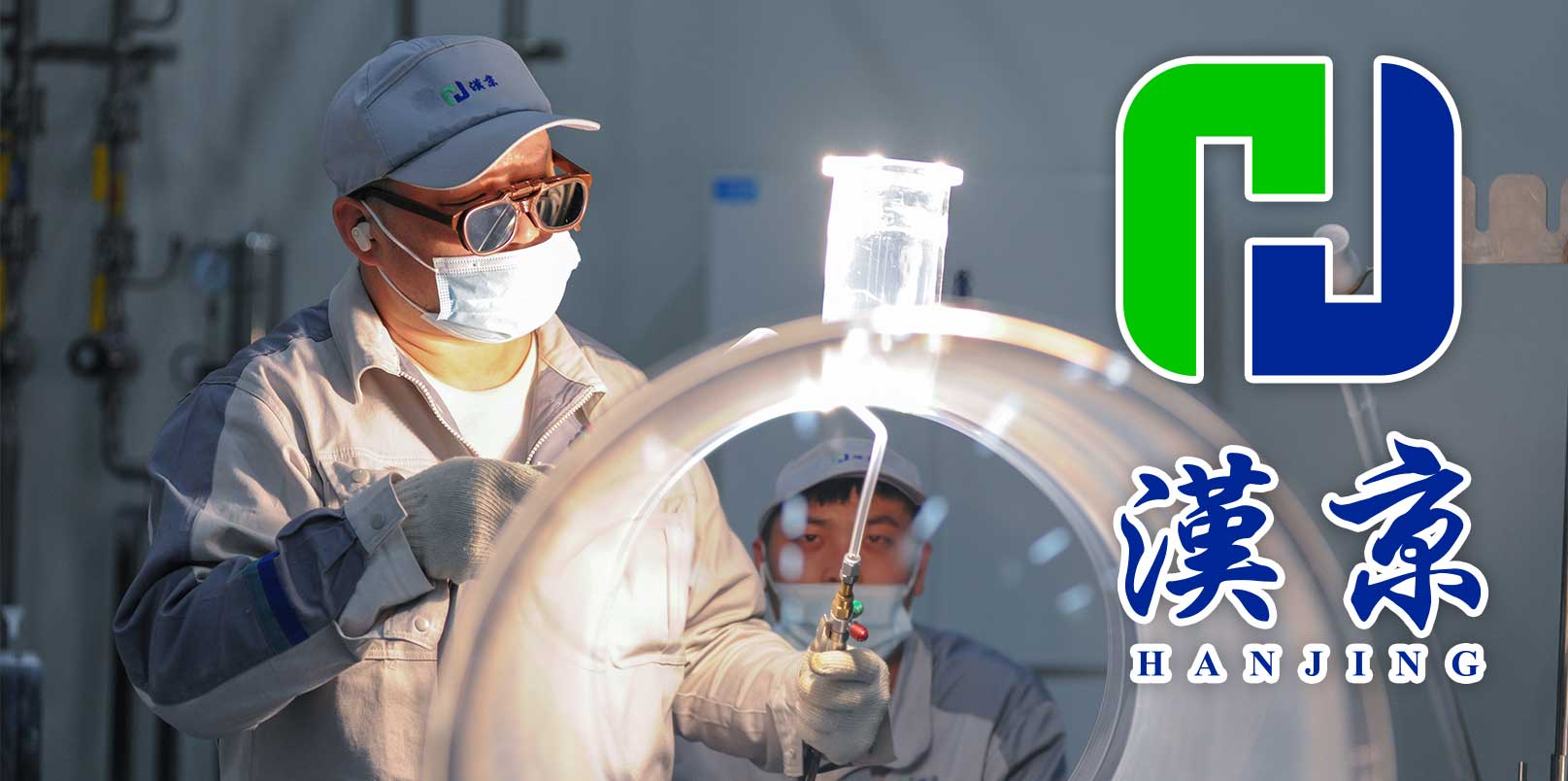
Behind every microchip lies an invisible infrastructure — a network of components that must perform flawlessly under extreme precision. Hanjing Semiconductor Material, founded by Frank Lu, a former Heraeus engineer with multiple TEL/KE OEM certifications, is one of the few companies focusing on the very materials that make next-generation fabs possible: high-purity quartz.
Joining the 40 selected companies for K-Startup Grand Challenge (KSGC) 2025 Phase 2, the company is positioning itself as a vital enabler for Korea’s semiconductor supply chain transformation, bringing innovation to the parts most manufacturers never even see — but depend on completely.
In an exclusive interview, we spoke to Frank Lu on the company’s improvement and strategies as they joined the 2025 K-Startup Grand Challenge.
Hanjing Semiconductor: Engineering Precision Where It Matters Most
Q1. What motivated you to start this company, and what core problem were you trying to solve?
Hanjing Semi began with a shared frustration among its early engineering team. Advanced semiconductor diffusion and epitaxy processes required ultra-precise, contamination-controlled quartz components, yet the available options frequently fell short.
Critical parts such as quartz nozzle tubes and gas delivery components often lacked the precision, purity, and lifecycle stability demanded by next-generation fabs. The reliance on a small pool of overseas suppliers also created long lead times, higher costs, and limited flexibility for local process needs.
This gap pushed the team to focus on a solution. By combining material science expertise with precision manufacturing capabilities, the company set out to deliver reliable, long-life quartz components that enhance process consistency and help fabs reduce their total cost of ownership.
The core problem the company aimed to solve was the absence of quartz components capable of consistently meeting the stringent performance requirements of modern semiconductor production environments.
Korea’s Semiconductor Powerhouse Needs a Stronger Foundation
Q2. What opportunity or unmet need did you identify in the Korean market, and what early signals convinced you that your solution could gain real traction here?
The Korean semiconductor market presented a clear opportunity due to its concentration of world-class memory and logic manufacturers operating some of the most advanced fabs globally.
Even with this level of sophistication, we noticed a consistent gap in the supply chain. Equipment innovation progressed quickly, yet the availability of high-precision quartz components remained limited, expensive, and heavily reliant on long-established overseas suppliers.
This imbalance showed us an unmet need: Korean fabs required partners capable of offering technical customization, faster development cycles, and more responsive support. These conditions convinced us that our solution could gain meaningful traction in the local market.
Turning from Supplier to Process Partner
Q3. During KSGC, were there any mentors, partners, or specific insights that significantly influenced your product or strategy?
One of the most influential insights during KSGC came from an industry mentor with extensive experience in Korean fab supply chain management, who emphasized that technical superiority alone is not enough — trust, localization, and process integration are equally critical in the Korean market. This guidance fundamentally reshaped our go-to-market strategy.
Therefore, rather than positioning ourselves purely as a component supplier, we began aligning our product roadmap with the process logic of Korean fabs. This insight then led us to develop a more collaborative engineering model, where our technical team works closely with customer process engineers from the design stage onward. We also adjusted our communication and service processes to meet Korean expectations for rapid feedback cycles and detailed technical documentation.
Additionally, KSGC facilitated introductions to potential technology partners and provided structured feedback on how to localize QC standards and certification processes. This helped us refine not only our product specifications but also our operational workflows, making our solutions more compatible with Korean production ecosystems and reinforcing our credibility as a long-term technical partner.
From Sample Tests to Strategic Integration
Q4. After joining KSGC, what has been the most meaningful change for your company and what evidence supports this growth?
The most meaningful change after joining KSGC has been the acceleration of our commercial validation and market integration in Korea, which has directly impacted both our revenue growth and strategic positioning.
Before KSGC, our presence in Korea was limited to exploratory discussions and small-scale sample testing. But within 12 months of program participation, we are able to strengthen our position, transitioning into structured pilot production and long-term evaluation projects with potential Korean semiconductor manufacturers.
Revenue related to Korea-linked orders increased 0 to 1.
Equally important, our team expanded by 30%, including the addition of engineers focused on Korean customer support and application development. These tangible improvements — in revenue, partnerships, technical validation, and organizational capability — demonstrate that KSGC has been a critical catalyst for our scalable growth.
Hanjing Semiconductor Material: Shaping the Future of Quartz Technology
Q5. Looking ahead, what is the most important vision or long-term goal your company aims to achieve, and what steps are you taking to move toward it?
Our long-term vision is to become a globally recognized technology leader in precision quartz solutions for advanced semiconductor manufacturing, setting new standards for component reliability, process stability, and lifecycle performance. We aim to not only replace imports but also redefine how quartz components contribute to yield enhancement and operational efficiency at the most advanced technology nodes.
To achieve this goal, we are investing heavily in three strategic areas. First, we are strengthening R&D capabilities by developing next-generation ultra-smooth internal polishing and enhanced CMP technologies to support sub-5nm process requirements. Second, we are expanding international collaboration, particularly in Korea and Europe, to co-develop application-specific components integrated directly into customer process systems. Third, we are building an intelligent manufacturing infrastructure that combines precision automation, real-time quality monitoring, and data-driven optimization to ensure consistent, scalable production.
In parallel, we are also establishing a global technical service network to provide faster response and localized engineering support. Through continuous innovation, strategic partnerships, and quality leadership, Hanjing Semi aims to evolve from a component supplier into an indispensable technology partner for the world’s leading semiconductor fabs.
As one of the companies advancing through the K-Startup Grand Challenge 2025, Hanjing Semiconductor Material demonstrates how specialized engineering excellence can strengthen Korea’s semiconductor supply chain — transforming the unseen components of chipmaking into the backbone of global reliability.
“Within 12 months of KGSC, we are able to accelerate our commercial validation and market integration in Korea, which has directly impacted both our revenue growth and strategic positioning.”
About This Series
This article is part of the “K-Startup Grand Challenge 2025 Interview Series,” featuring 40 global startups from Phase 2 of Korea’s leading accelerator program. The series highlights how international founders are scaling innovation through Korea’s startup ecosystem.
Read more stories from the K-Startup Grand Challenge 2025 Interview Series on KoreaTechDesk.
– Stay Ahead in Korea’s Startup Scene –
Get real-time insights, funding updates, and policy shifts shaping Korea’s innovation ecosystem.
➡️ Follow KoreaTechDesk on LinkedIn, X (Twitter), Threads, Bluesky, Telegram, Facebook, and WhatsApp Channel.
🤝 Looking to connect with verified Korean companies building globally?
Explore curated company profiles and request direct introductions through beSUCCESS Connect.