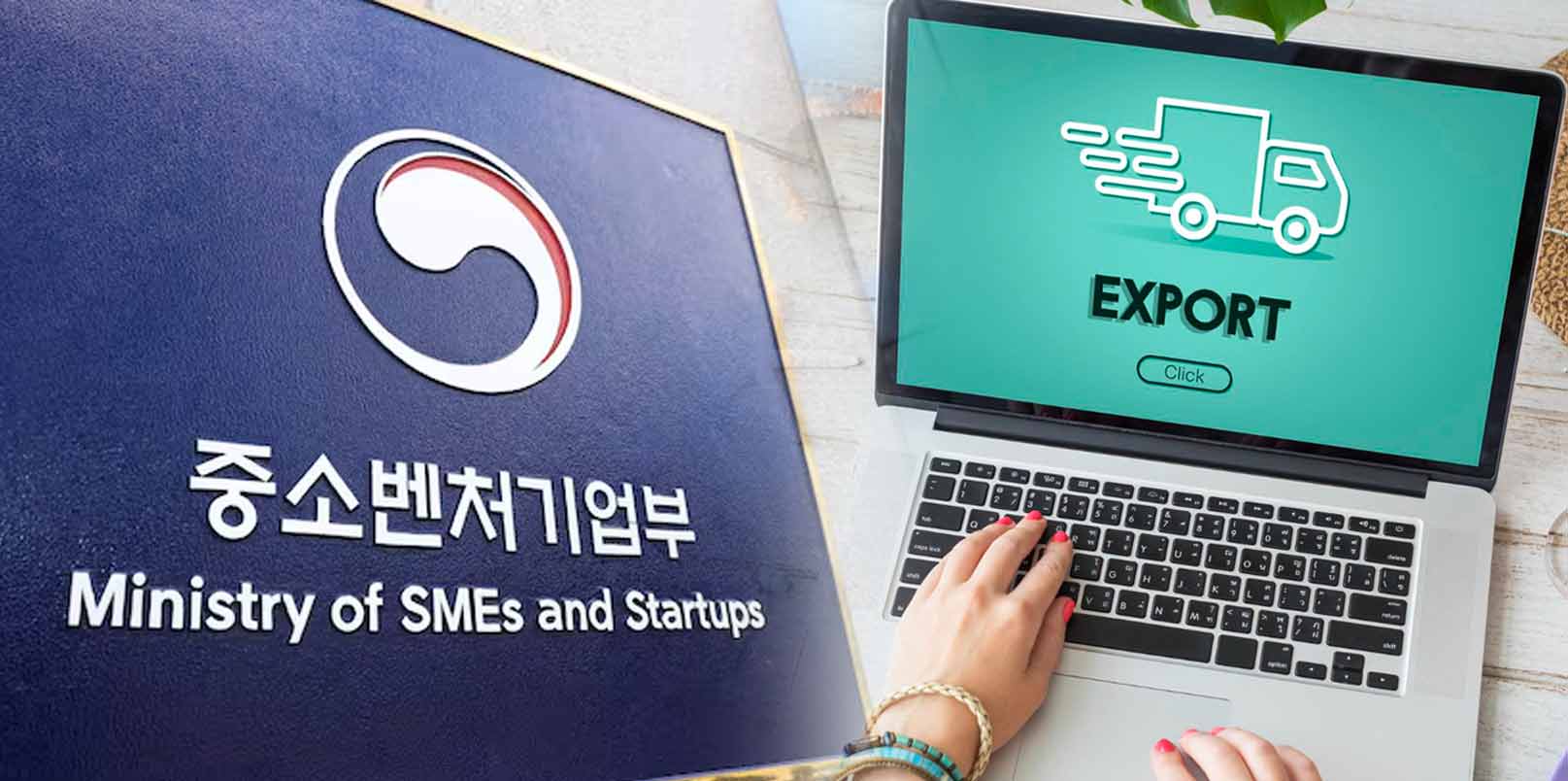
South Korea is recalibrating how its small and medium-sized enterprises reach global markets. Rather than relying solely on trade diplomacy or manufacturing scale, the government is placing K-brands, data analytics, and digital platforms at the center of its 2026 export strategy. The move signals a structural shift: online exports are no longer peripheral to SME policy but a core growth channel.
2026 E-Commerce Export Market Entry Plan Formalized
On February 12, the Ministry of SMEs and Startups (MSS) confirmed its “2026 E-Commerce Export Market Entry Promotion Plan.” The initiative focuses on strengthening K-brand global expansion through online channels and recruiting participants for its K-Brand Specialized Global Platform Development Program.
From February 13 to March 10, MSS will recruit domestic SME platform operators and global platform companies that will serve as implementing partners. Details are available through the government-operated GobizKorea portal under the Korea SMEs and Startups Agency (KOSME).
The broader program supports Korean SMEs entering overseas markets via global shopping mall listings, digital marketing, platform integration, and logistics services. It builds on the government’s previously announced online export activation strategy but expands it with new funding mechanisms and platform-centered incentives.
Expanding Platform Capacity and Strategic Item Designation
A key pillar of the 2026 plan is the elevation of domestic SME platforms into competitive global players. MSS will select promising platforms in sectors such as beauty and fashion that have demonstrated market validation, growth potential, and innovation in the private sector. Selected platforms can receive up to KRW 200 million for renewal and global marketing activities.
In parallel, the ministry will designate high-potential products as “K-Online Export Strategic Items.” The selection process draws on export statistics and private transaction data, reflecting a data-informed approach to market positioning.
For companies identified under this framework, a new online export voucher of up to KRW 10 million per firm will be introduced. The voucher allows SMEs to select from various support programs tailored to overseas market entry.
Additional measures include pilot product localization programs that help firms adapt ingredients, packaging, and labeling to meet destination country requirements. Cooperative projects with overseas distributors will also be tested, alongside programs that convert popular offline products into export-ready online offerings.
Integration and Rebranding of K-Brand Promotion Programs
MSS is consolidating existing export promotion programs under a broader K-brand framework.
The former “K-Beauty Creator Challenge” will be restructured into the “K-Brand Challenge,” expanding beyond beauty to include food this year and fashion and lifestyle sectors starting next year.
Meanwhile, the annual “Global Sourcing Week,” which invites overseas buyers to meet Korean firms, will be integrated with “K-BRAND GLOW WEEK.” The unified format is intended to combine company selection, exhibition, pop-up retail, business consultations, and policy promotion within a single event structure.
According to the ministry, the approach reflects lessons observed from previous overseas promotional events, including a K-Beauty GLOW WEEK held in Shanghai.
Logistics Relief and Risk Infrastructure Strengthened
Recognizing logistics costs as a persistent burden for SMEs, the ministry is increasing annual fulfillment support to KRW 5 million and adding international shipping cost support.
For SMEs using Korea Post’s EMS services, MSS will subsidize part of the fee while the postal service offers discounts of up to 30 percent. Preferential express shipping rates ranging from 15 to 66 percent will be available through cooperation with DHL and Hanjin, and dedicated shipping space will be secured with support from Samsung SDS.
On the risk management side, the Online Export Specialized Insurance Program operated with the Korea Trade Insurance Corporation will expand coverage. A K-Brand Intellectual Property Protection Council will coordinate prevention and response to overseas IP infringement. The ministry will also launch training programs to cultivate online export specialists.
Expanding Support for K-Brands’ Online Export
Lee Soon-bae, Director General for Global Growth Policy at MSS, stated:
“Last year, SME online exports reached USD 1.1 billion, up 6.3 percent year-on-year, marking a record high. SMEs accounted for 75.6 percent of total online exports. We will further expand support centered on K-brands such as beauty and fashion.”
The ministry emphasized that online exports have become a structurally significant component of SME trade performance.
Digital Trade as Industrial Policy
The 2026 plan suggests that Korea is moving beyond reactive trade countermeasures toward structural export digitization.
Unlike earlier tariff-response measures focused primarily on logistics relief or financing buffers, this framework positions platform development and data analytics as long-term infrastructure. The designation of “K-Online Export Strategic Items” indicates that trade policy is being shaped increasingly by private transaction data and real-time market signals.
The emphasis on K-brands—particularly beauty and fashion—reflects sectors where Korean SMEs have demonstrated global demand elasticity through digital channels. Expanding the scope to food, lifestyle, and other categories may signal diversification beyond flagship K-beauty exports.
For venture investors, the policy may lower entry friction for D2C brands and platform startups seeking overseas traction. As for global partners, it suggests Korea intends to embed its SMEs deeper into cross-border e-commerce ecosystems rather than relying solely on traditional export intermediaries.
A Platform-Centric Export Strategy
With SME online exports reaching USD 1.1 billion last year and accounting for more than three-quarters of total online export volume, the ministry appears to view digital trade not as a supplementary channel but as an industrial growth lever.
If effectively implemented, the 2026 e-commerce export plan could shift Korea’s SME export model toward a more platform-driven, data-informed structure—where branding, logistics efficiency, insurance coverage, and IP protection operate as coordinated pillars of competitiveness.
The execution timeline, recruitment phase ending March 10, will provide the first indicator of industry uptake.
Key Takeaways on Korea’s Online K-Brands Export Strategy
- MSS finalized the 2026 E-Commerce Export Market Entry Promotion Plan on February 12.
- Recruitment for the K-Brand Specialized Global Platform Development Program runs until March 10 via GobizKorea.
- Selected SME platforms may receive up to KRW 200 million for renewal and global marketing.
- New K-Online Export Strategic Item designation uses export statistics and private transaction data.
- SMEs can receive up to KRW 10 million in online export vouchers.
- Logistics relief includes fulfillment support up to KRW 5 million and EMS discounts up to 30 percent.
- Online export insurance coverage and IP protection mechanisms are being expanded.
- SME online exports reached USD 1.1 billion in 2025, up 6.3 percent year-on-year, representing 75.6 percent of total online exports.
– Stay Ahead in Korea’s Startup Scene –
Get real-time insights, funding updates, and policy shifts shaping Korea’s innovation ecosystem.
➡️ Follow KoreaTechDesk on LinkedIn, X (Twitter), Threads, Bluesky, Telegram, Facebook, and WhatsApp Channel.