As tensions rise over the government’s investigation into Coupang, Korea finds itself at the intersection of law enforcement, diplomacy, and digital sovereignty. While Washington voices concern through official and investor channels, Seoul maintains that its probe is guided solely by legal and regulatory principles—not by trade politics. The dispute has now become an early test of how Korea manages global pressure while upholding domestic governance standards in the digital economy.
Korea Clarifies: Coupang Probe Not a Trade Issue
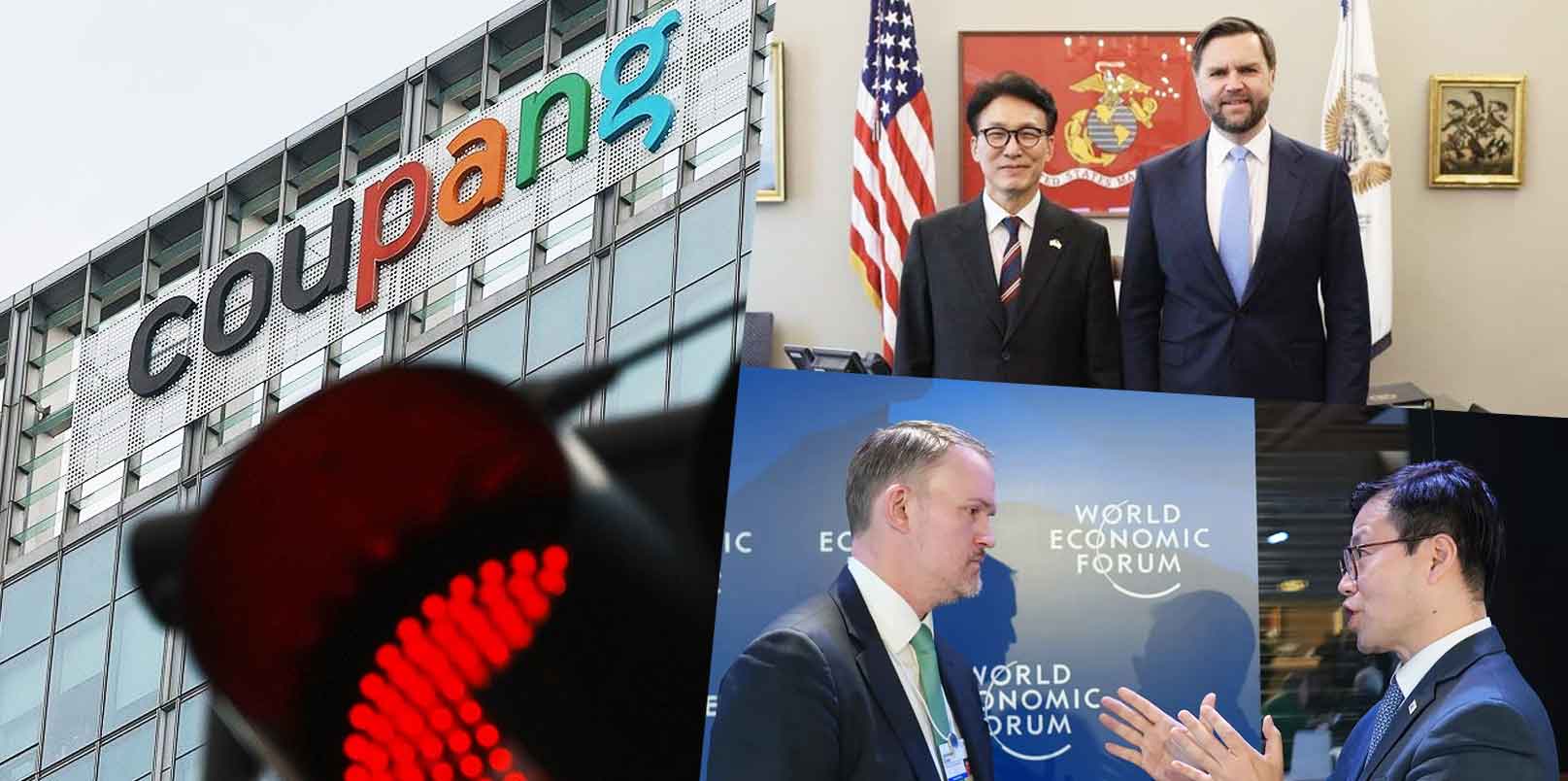
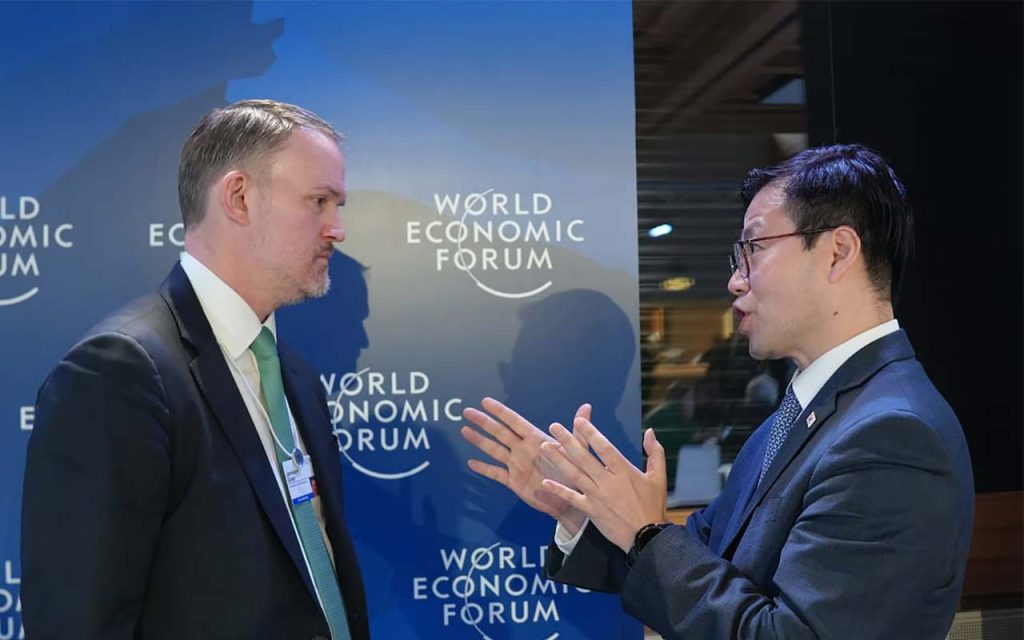
During the World Economic Forum (WEF) in Davos, Director General Yeo Han-koo for MOTIE’s Trade Negotiations, met with U.S. Trade Representative Jamieson Greer to address Washington’s growing unease over Korea’s treatment of Coupang.
According to Yeo, the government made its position “clear and firm”—that the ongoing domestic investigation into Coupang’s data breach and business practices is a matter of Korean law enforcement, not a case of discrimination against a U.S.-listed company.
The director explained,
“This is not about Coupang being an American company. If a Korean firm had suffered a similar data breach, we would have conducted the same transparent and non-discriminatory investigation.”
Yeo added that Seoul has been in close contact with the USTR, U.S. Congress, and other stakeholders to dispel misconceptions that the Coupang case represents an act of economic retaliation.
The Ministry of Trade, Industry and Energy (MOTIE) later reiterated that Korea “will not allow any domestic legal investigation to be reframed as a trade dispute.”
Background: Trade Tension Builds Amid Investor Complaints
The diplomatic friction comes after U.S. investment firms, including GreenOaks and Altimeter, filed a Notice of Intent to Arbitrate (NOI) under the Korea–U.S. Free Trade Agreement (FTA). The investors allege that Korea’s prolonged regulatory scrutiny of Coupang violates fair treatment standards for American entities and favors domestic and Chinese competitors.
Their filings claim that Korean authorities have “conducted repeated raids, blocked contracts, and publicly threatened punitive actions” following the data breach incident.
In response, Korea’s Ministry of Justice confirmed receipt of the NOI and stated it will “respond firmly and in accordance with international arbitration protocols.” The ministry stressed that the notice does not yet constitute a formal arbitration case, as investors can only proceed 90 days after the initial filing.
Stakeholder Statements: Law, Not Lobbying, Will Decide the Case
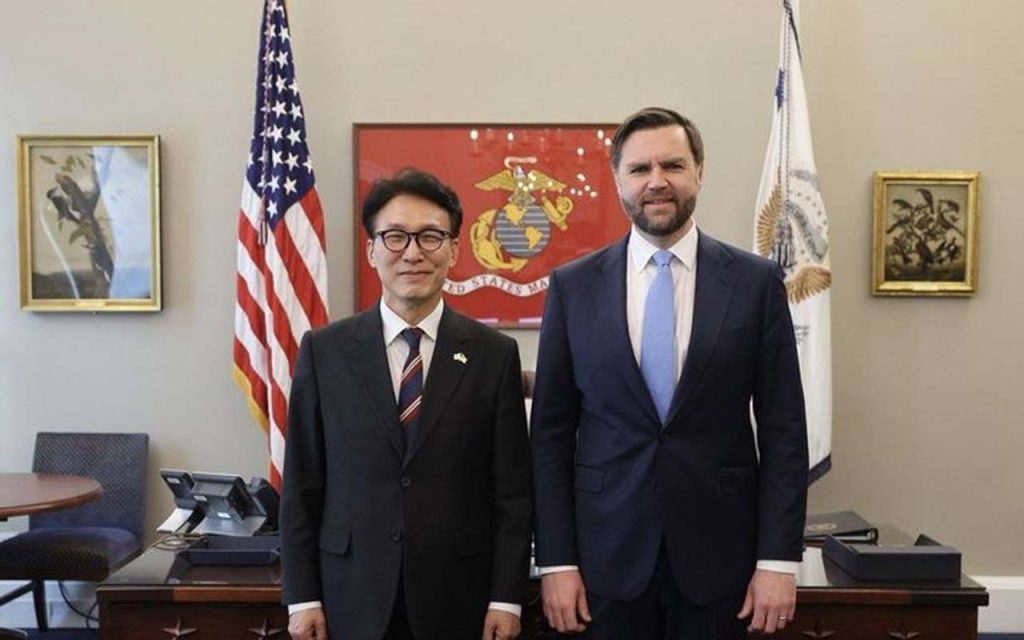
Prime Minister Kim Min-seok, who met U.S. Vice President JD Vance at the White House on January 23, also addressed the issue directly.
Kim said during a press briefing at the Korean Embassy in Washington,
“Vice President Vance raised questions about Coupang, and we provided a clear explanation. We clarified that the issue involves a serious data breach affecting millions, delayed reporting for over a year, and unverified claims directed even at national leaders.”
He added,
“We made it clear that there is no discriminatory treatment toward U.S. companies. The Vice President understood the situation within the context of Korea’s legal framework.”
Both sides agreed to prevent the controversy from escalating into a diplomatic conflict.
President Lee Jae-myung later reinforced the same stance during a domestic press briefing:
“Whether it is a global enterprise or a small business, Korea will act on the basis of law and principle. We will handle this responsibly as a sovereign state, consistent with international norms.”
Fair Trade Commission Intensifies Investigation
Meanwhile, Korea’s Fair Trade Commission (FTC) has expanded its probe into Coupang, extending its investigation into a third week and deploying more than 30 investigators across three divisions.
The FTC is reportedly focusing on allegations that Coupang pressured partner merchants to convert best-selling products into its private-label (PB) lines, or replicated sales data to prioritize its own products through algorithmic manipulation.
The probe also revisits questions about Chairman Kim Bom-seok’s controlling shareholder status, with the FTC reviewing whether he should be designated as the company’s “Same Person”—a key position under Korea’s antitrust framework.
Additionally, Coupang faces scrutiny for allegedly bundling its delivery and streaming services within its WOW Membership program, a practice regulators suspect could constitute market dominance abuse.
If confirmed, Coupang could face penalties of up to 6% of related revenue, according to FTC enforcement standards.
Ecosystem Significance: Digital Sovereignty Meets Trade Diplomacy
The escalating tension between Seoul and Washington marks a critical inflection point in Korea’s digital-era governance model.
The Coupang investigation highlights how domestic regulatory enforcement in data protection, antitrust, and platform accountability increasingly intersects with global trade diplomacy.
For Korea’s startup and platform ecosystem, the outcome will shape how foreign investors perceive regulatory predictability and digital sovereignty.
While Korea seeks to balance investor confidence with consumer protection, this case also underscores the challenge of navigating dual obligations—national jurisdiction on one side, international economic pressure on the other.
As Korea continues to tighten oversight in its platform economy, policymakers and founders alike are watching whether this case becomes a precedent for balancing foreign capital engagement with national regulatory autonomy.
A Measure of Korea’s Institutional Resilience
The Coupang controversy has evolved into more than a corporate investigation—it is now a measure of Korea’s institutional resilience under external scrutiny.
By asserting that its response is guided by law, not diplomacy, Seoul aims to signal that digital governance cannot be negotiated as a trade concession.
In the long run, how Korea handles this case will influence not only its bilateral credibility with Washington but also its global standing as a rules-based, sovereign digital economy—capable of protecting users and ensuring fair competition without compromising investor trust.
Key Takeaway on Coupang Investigation
- Korea reaffirmed that the Coupang investigation is governed by domestic law, not trade politics.
- U.S. investors filed a Notice of Intent to Arbitrate (NOI) under the Korea–U.S. FTA, citing alleged discrimination.
- Prime Minister Kim Min-seok and Trade Chief Yeo Han-koo emphasized transparency and non-discrimination in talks with U.S. officials.
- The Fair Trade Commission (FTC) expanded its investigation into Coupang’s data practices and market dominance allegations.
- The issue now tests Korea’s ability to uphold digital sovereignty while maintaining stable U.S.–Korea economic relations.
- Seoul’s handling of Coupang will set a precedent for platform regulation and investor diplomacy in the AI-driven economy.
🤝 Looking to connect with verified Korean companies building globally?
Explore curated company profiles and request direct introductions through beSUCCESS Connect.
– Stay Ahead in Korea’s Startup Scene –
Get real-time insights, funding updates, and policy shifts shaping Korea’s innovation ecosystem.
➡️ Follow KoreaTechDesk on LinkedIn, X (Twitter), Threads, Bluesky, Telegram, Facebook, and WhatsApp Channel.