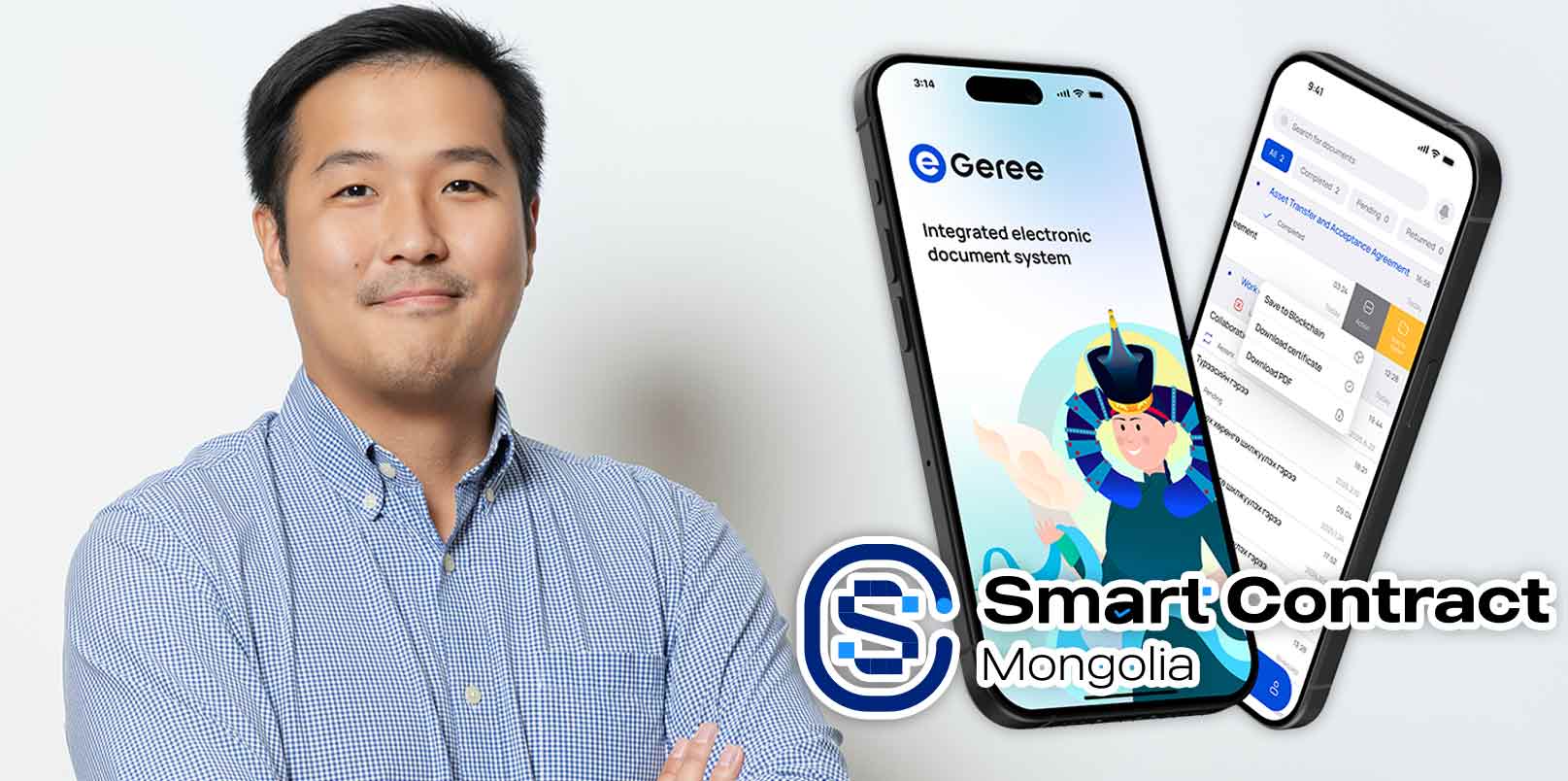
In an era where borders blur online but paperwork still slows progress, E-Geree (Smart Contract), a Mongolian startup led by Tuguldur Bayarsaikhan (CEO) and R. Javkhlan (CIO), is reimagining how digital trust works across nations. After pioneering Mongolia’s first NFT marketplace and blockchain-verified diploma system, the founders turned their expertise toward solving one of Asia’s most stubborn problems—secure, multilingual contracts for global users.
Now part of K-Startup Grand Challenge (KSGC) 2025 Phase 2, E-Geree is building the infrastructure for transparent, tamper-proof agreements that connect Korea, Mongolia, and beyond.
E-Geree: From NFTs to Digital Contracts That Never Disappear
Q1. What motivated you to start this company, and what core problem were you trying to solve?
Before founding E-Geree, our team created Octagon, Mongolia’s first NFT marketplace. We developed the country’s first major NFT collections and minted the National University of Mongolia’s “Hawk NFT,” which stored diploma data on the blockchain. We also operated the Mongolian Basketball All-Star player selection using DAO voting.
These experiences gave us deep technical expertise in blockchain development and smart contracts—and one crucial insight: blockchain’s most practical value lies in creating secure, permanent contracts that cannot be changed or deleted.
At the same time, we saw how individuals and companies struggled with traditional contracts—handwritten signatures, translation errors, misplaced papers, and high fraud risk in cross-border transactions. This was especially true in healthcare, education, HR, and e-commerce.
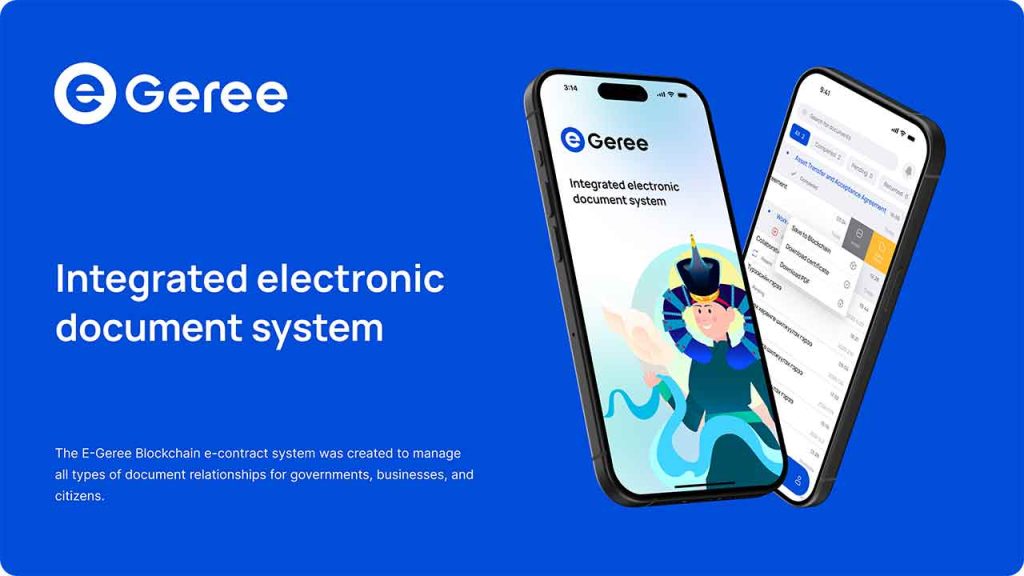
E-Geree was born to solve these pain points. Our goal is to build a secure, multilingual, blockchain-verified digital contract platform that replaces unreliable paper workflows and broker-dependent processes with trust, transparency, and permanence.
South Korea: A Nation Where Trust Meets Technology
Q2. What opportunity or unmet need did you identify in the Korean market, and what early signals convinced you that your solution could gain real traction here?
We discovered a clear unmet need in Korea’s cross-border medical market. Foreign patients—especially from Mongolia and Central Asia—had no standardized or legally reliable way to sign agreements with Korean hospitals.
Most contracts were handled by brokers or through informal channels, leading to fraud, inconsistent pricing, and administrative chaos. Korean hospitals told us they urgently needed a compliant, multilingual, digital onboarding system to replace risky manual processes.
Our traction confirmed the demand almost immediately. Within weeks, more than ten hospitals, real estate firms, and logistics agencies requested meetings. Three organizations signed partnership agreements even before our Korean entity was officially registered. One clinic formalized a strategic cooperation contract, and two companies completed actual payments of KRW 2 million and KRW 20 million.
We also held over 666 investor discussions, receiving strong positive feedback on our cross-border contract platform. Korea proved to be not just a potential market—but an ecosystem actively searching for the digital bridge we provide.
Insight That Redefined Our Product
Q3. During KSGC, were there any mentors, partners, or specific insights that significantly influenced your product or strategy?
One of the most valuable lessons we gained through KSGC came directly from Korean mentors and clinics. They identified a precise gap: hospitals wanted to reduce dependence on brokers, but lacked a secure, compliant, and multilingual solution to onboard foreign patients directly.
That insight changed our direction. Instead of building a generic e-signature tool, we focused on medical-specific cross-border contracting, complete with refund logic, ID verification, bilingual templates, and fintech-based payment features.
KSGC’s ecosystem also made market entry much faster. The program helped our founders secure the right visas, complete company incorporation, and establish an official office at the GSO—steps that allowed us to operate locally and build credibility quickly.
Recognition followed: we were selected among the K-Startup Top 40 and named Top 3 in Central Asia at Maker in China. This visibility boosted investor confidence and helped us secure our Seed Round.
KSGC didn’t just refine our product—it positioned us as a serious contender in Asia’s trust-tech space.
From Mongolia to Korea: Turning a Vision into a Business
Q4. After joining KSGC, what has been the most meaningful change for your company and what evidence supports this growth?
After joining KSGC, E-Geree evolved from a Mongolia-based concept into a cross-border business with real customers and legal presence in Korea.
Within the first few weeks, we secured three paid or formal partnerships:
- UA Properties (KRW 2 million)
- Road & Construction Company (KRW 20 million)
- A Korean medical clinic (strategic cooperation agreement)
These contracts were signed even before our Korean registration was finalized—clear proof of strong product-market fit.
KSGC also guided us through visa applications (D-10-2), company incorporation, and establishing our GSO office. This operational support enabled us to legally engage partners, attract investors, and run business development on Korean soil.
In short, KSGC turned E-Geree from a promising idea into a scalable, revenue-generating cross-border platform ready for Asian expansion.
Building Asia’s Next Digital Trust Infrastructure
Q5. Looking ahead, what is the most important vision or long-term goal your company aims to achieve, and what steps are you taking to move toward it?
Our vision is to create Asia’s leading cross-border digital trust infrastructure—a platform where anyone from Mongolia, Central Asia, or emerging markets can securely sign, verify, and pay for agreements without brokers or paper.
We see Korea as the strategic gateway for this mission, especially in sectors like medical tourism, HR, education, e-commerce, and real estate.
To realize this vision, we are:
- Establishing our Korean corporation and building a fully compliant digital contracting layer that aligns with local regulations.
- Integrating over 50 Mongolian fintech services to support escrow, verified identity, and AI-generated bilingual contracts for smoother cross-border transactions.
- Partnering with Korean hospitals, universities, HR agencies, and property firms, as well as local eKYC and digital-signature vendors, to ensure our platform fits Korean workflows.
- Preparing for a Series A round to fuel expansion into Central Asia, Japan, Singapore, and GCC markets.
Our ultimate goal is to make E-Geree the go-to trusted system for cross-border agreements across Asia—secure, transparent, and accessible to everyone.
Through the K-Startup Grand Challenge 2025, E-Geree embodies how frontier innovation from Mongolia can find its global stage in Korea—where blockchain technology meets human trust, and digital borders finally begin to disappear.
“KSGC sped up our growth in all areas: revenue, partnerships, investment, team, and product, turning us into a scalable cross-border platform with real customers, proven demand, and a clear path for growth across Asia.”
About This Series
This article is part of the “K-Startup Grand Challenge 2025 Interview Series,” featuring 40 global startups from Phase 2 of Korea’s leading accelerator program. The series highlights how international founders are scaling innovation through Korea’s startup ecosystem.
Read more stories from the K-Startup Grand Challenge 2025 Interview Series on KoreaTechDesk.
🤝 Looking to connect with verified Korean companies building globally?
Explore curated company profiles and request direct introductions through beSUCCESS Connect.
– Stay Ahead in Korea’s Startup Scene –
Get real-time insights, funding updates, and policy shifts shaping Korea’s innovation ecosystem.
➡️ Follow KoreaTechDesk on LinkedIn, X (Twitter), Threads, Bluesky, Telegram, Facebook, and WhatsApp Channel.