

The next frontier of Korea’s creative economy may not lie in producing more content, but in helping it cross borders faster. As global demand for Korean web novels grows, one startup is rewriting how that expansion happens. Armed with an AI system built to preserve storytelling integrity at scale, HiveMind is turning translation itself into Korea’s newest export technology.
Korean Startup HiveMind Launches AI Localization Aurorah in Japan
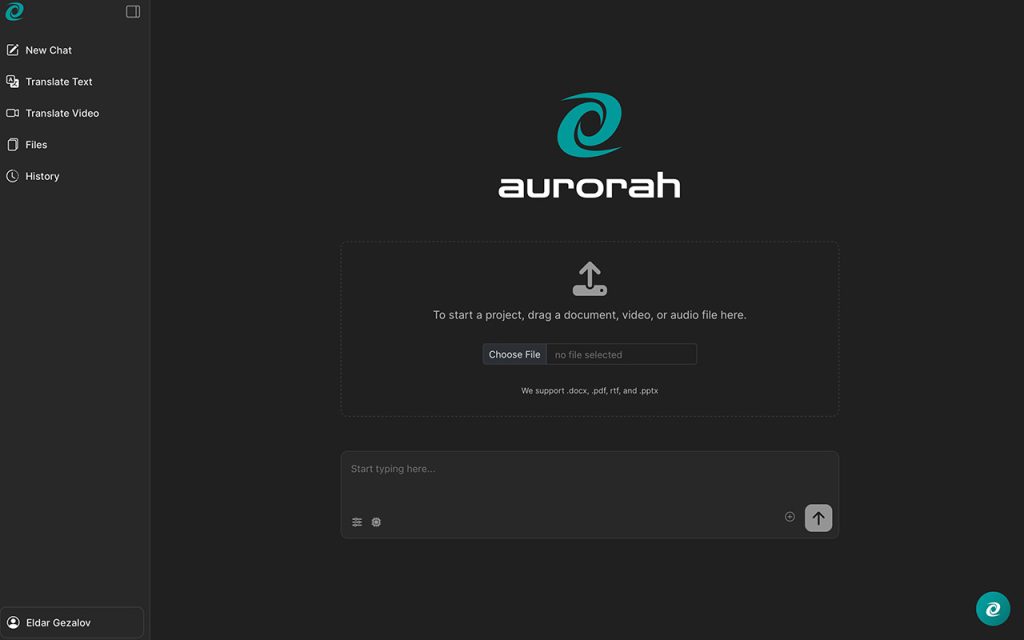
A Korean startup is addressing one of the most persistent challenges in creative content export — the high cost of translation and localization. HiveMind, led by CEO Kim Dong-wook, has begun supplying localized Korean web novels to Japan through contracts with publishers Insight Breeze and Story Lab. The rollout marks the company’s first commercial deployment of its proprietary AI translation and localization engine, Aurorah.
The service focuses on a single problem that has limited Korea’s global content expansion: making long-form narrative works affordable to adapt across languages. By handling both translation and localization for Japanese readers, HiveMind is opening a new channel for publishers that previously could not shoulder the cost of entering overseas markets.
Inside Aurorah: Maintaining Context Across a Million Characters
Aurorah is not a general-purpose translator. It was built specifically for long-text storytelling, such as web novels that can exceed one million characters.
Its foundation, Long-Text Context Maintenance, processes an entire manuscript as one continuous context rather than fragmented segments. This allows the system to preserve tone, character personality, and world-building details that typically collapse under conventional machine translation.
The workflow remains collaborative. Aurorah performs the preliminary translation, while professional human editors revise the output through a dedicated interface. The process cuts localization costs that once reached tens of millions of KRW per title yet maintains linguistic consistency and narrative quality — a balance that generic translation engines rarely achieve.
A Market Defined by Untapped IP
Korea’s web-novel sector is worth about KRW 1.3 trillion, according to HiveMind, but global exports account for roughly USD 400 thousand, a fraction of the domestic total. Thousands of stories with international appeal remain locked in Korean-only platforms because translation expenses outstrip potential overseas revenue.
HiveMind’s analysis places the bottleneck not in creative capacity but in cost structure. Localization of a single long-form novel can cost more than a small publisher’s annual marketing budget.
Today, Aurorah’s hybrid model reduces that threshold, letting mid-sized content owners test foreign demand without major upfront investment.
Revenue-Share Localization: Redefining Market Access
To shift the economics of content export, HiveMind introduced a revenue-share model. Instead of paying translation fees upfront, publishers partner with HiveMind, which provides localization using Aurorah and later shares overseas revenue. The approach lowers entry barriers and allows smaller publishers to participate in international distribution.
The model was recently presented at the 2025 Content IP Market, where global buyers expressed interest in a framework that enables Korean IP supply without advance payment. While still in early stages, this response highlights how AI-driven cost restructuring could alter the traditional supply chain of Korean creative exports.
Why Japan Comes First — and What Comes Next
Japan is a natural testing ground. It is one of the world’s largest consumers of serialized fiction, with reader communities already familiar with the web-novel format. Localization accuracy and cultural nuance will determine market adoption, but early demand signals are strong.
Additionally, Japan’s digital publishing landscape is one of the world’s most discerning, and Korean stories are finding growing audiences there. Web novels and webtoons are gaining traction on platforms such as Amazon Japan, yet success depends on far more than language conversion.
Japanese readers value tone, flow, and cultural resonance — factors that make the difference between a translated text and one that truly feels native.
Industry cases cited by Hivemind show that the line between translation and localization determines market traction. Japanese platforms require natural expression, cultural adaptation, and precise metadata formatting for visibility. In several recent collaborations, Hivemind’s localization approach helped publishers cut launch timelines from three months to just two weeks while improving narrative cohesion and reader engagement.
Japan remains more than a single export destination; it functions as a proving ground. Success there often signals readiness for broader Asian markets, making Hivemind’s AI-assisted localization model a potential blueprint for Korean content creators entering new language territories.
Following the Japanese rollout, HiveMind plans to expand to North America and Southeast Asia, targeting regions where online serial fiction platforms are gaining traction. The company’s long-term goal is to establish a technology-based operating model for content localization across multiple genres, not limited to web novels.
HiveMind: Lowering Barriers in Korea’s IP Economy
HiveMind’s progress illustrates a wider movement inside Korea’s startup ecosystem. Rather than competing in platform saturation, newer firms are using deep-tech specialization to resolve structural inefficiencies.
In HiveMind’s case, AI serves as infrastructure that allows creative IP to travel globally at lower cost and higher speed.
The company’s entry strategy aligns with national initiatives supporting content technology commercialization, showing how early-stage ventures can turn R&D capability into export opportunity. For founders, it underscores the value of solving vertical pain points. Investors can read it as proof that intellectual-property-based startups are viable beyond manufacturing. And policymakers may see it as reinforcement that supporting cross-disciplinary startups can directly translate into export diversification.
Aurorah by HiveMind: From Translation to Global IP Flow
As Korea’s creative exports mature, technology will increasingly decide which IPs reach global readers. HiveMind’s Aurorah demonstrates how AI can strengthen, not replace, human expertise — merging automation with editorial integrity to unlock new market access.
If the model scales, it could transform how small publishers participate in cross-border content trade, redefining localization as a shared-growth mechanism rather than a cost barrier. The next phase will test whether Korea’s combination of technology, storytelling, and strategic policy support can turn narrative IP into one of its most sustainable export engines.
– Stay Ahead in Korea’s Startup Scene –
Get real-time insights, funding updates, and policy shifts shaping Korea’s innovation ecosystem.
➡️ Follow KoreaTechDesk on LinkedIn, X (Twitter), Threads, Bluesky, Telegram, Facebook, and WhatsApp Channel.
🤝 Looking to connect with verified Korean companies building globally?
Explore curated company profiles and request direct introductions through beSUCCESS Connect.