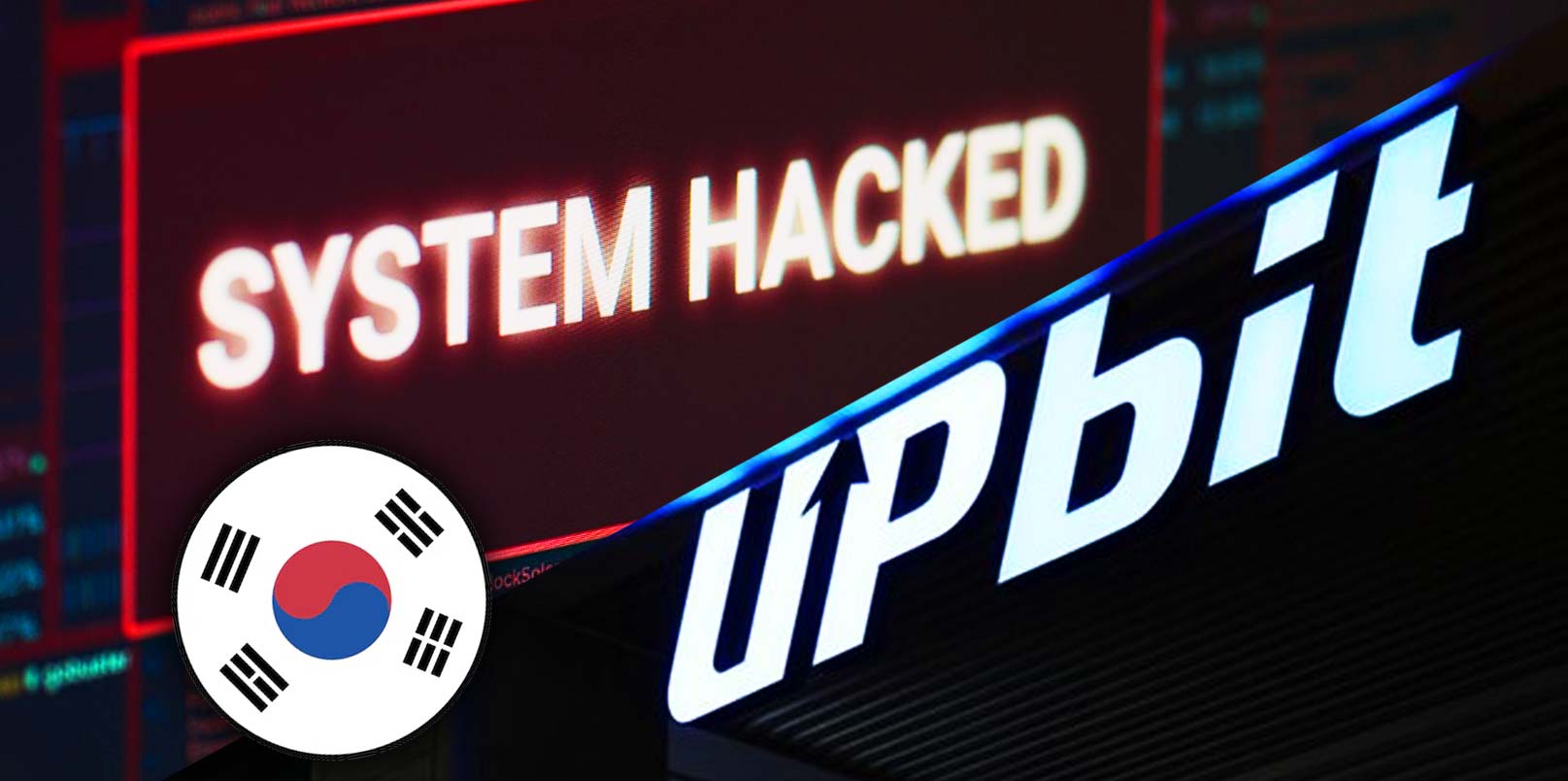
A fresh cyberattack on South Korea’s largest cryptocurrency exchange, Upbit, has once again put a spotlight on the nation’s digital asset security. As Korea positions itself as a global fintech and blockchain innovation hub, the incident raises pressing questions about regulatory enforcement, cybersecurity resilience, and the broader credibility of Asia’s rapidly expanding digital finance ecosystem.
The $33M Upbit Hack: Major Breach at Korea’s Leading Crypto Exchange
On November 27, Upbit operator Dunamu confirmed a KRW 44.5 billion (~ USD 33 million) theft involving 24 Solana-based digital assets. The unauthorized transfers were detected at 4:42 AM. and traced to unidentified external wallets.
Initially estimated at KRW 54 billion, the total loss was later adjusted to reflect real-time market valuations at the moment of the breach. The compromised tokens included Solana (SOL), Access Protocol (ACS), DoubleZero (2Z), Bonk (BONK), Raydium (RAY), Render (RENDER), Jupiter (JUP), and Orca (ORCA) among others.
Dunamu immediately suspended all digital-asset deposits and withdrawals at 8:55 AM, transferring remaining funds into cold wallets to prevent further outflows. The company reported that the intrusion occurred in one of its hot wallets, while cold storage remained intact.
On-Chain Response and Government Oversight
Dunamu has been working with blockchain project teams to trace and freeze assets on-chain. Around KRW 2.3 billion worth of Solayer (LAYER) tokens were successfully frozen, and ongoing cooperation continues with related projects and institutions.
Authorities moved quickly. The Financial Supervisory Service (FSS) deployed an on-site inspection team to Upbit’s headquarters, while the National Office of Investigation’s Cyber Terror Division began a preliminary inquiry to confirm details and identify possible foreign actors.
The event also comes at a sensitive time, as Korea’s newly enforced Virtual Asset User Protection Act introduces stricter compliance obligations for exchanges. While designed to protect users and institutionalize transparency, the transition has placed additional scrutiny on leading platforms like Upbit as they adapt to a tougher oversight environment.
This incident coincided with Dunamu’s official incorporation as a 100 percent subsidiary of Naver Financial, a development that could influence how future fintech-related cybersecurity responsibilities are distributed among Korea’s largest tech firms.
Upbit’s Response and Commitment to Investor Protection
Dunamu stated that all customer losses would be fully reimbursed using Upbit’s own assets. The company announced,
“We have confirmed the scope of abnormal withdrawals and will ensure that no members suffer any loss.”
The firm emphasized that safety verification across all systems—including non-Solana networks—was underway and that services would resume once security integrity was confirmed.
Korea’s Regulatory and Security Challenges
The breach revived scrutiny of Korea’s Virtual Asset User Protection Act, which mandates exchanges to maintain insurance or reserve funds to cover hacks and operational risks. As of the third quarter, Dunamu held KRW 67 billion in reserve deposits, according to its financial disclosures.
This is the second major hack in Upbit’s history, following a KRW 58 billion Ethereum theft in 2019, later attributed to North Korea’s Lazarus Group. Cybersecurity officials noted that the 2025 attack shared striking similarities in timing and methodology—occurring exactly six years later, again exploiting vulnerabilities between hot- and cold-wallet transfers.
Globally, blockchain analytics firm Chainalysis reported that North Korean groups accounted for nearly 80 percent of all crypto-related theft by value in 2024, underscoring the geopolitical implications of cybersecurity in the digital asset economy.
Rebuilding Trust in a Digital Finance Era
The Upbit breach underscores the complex balance Korea faces as it drives fintech innovation while ensuring investor protection. Exchanges and financial technology companies are now under greater pressure to reinforce on-chain forensics, real-time monitoring systems, and AI-driven threat detection—capabilities essential for sustaining international credibility.
The incident also strengthens the case for integrated fintech-security frameworks for policymakers, as it aligns with Korea’s broader ambition to become a trusted global hub for digital assets and blockchain-based finance.
A Crucial Checkpoint for Korea’s Fintech Credibility
Upbit’s swift compensation pledge and government oversight may contain short-term damage, but the long-term challenge lies in rebuilding trust.
The incident follows a period of record financial performance for Dunamu, which reported explosive third-quarter growth in 2025. The timing underscores how rapidly shifting confidence can be in Korea’s virtual asset sector—where market success remains vulnerable to both regulatory change and cybersecurity pressure.
As Korea expands its digital finance sector—anchored by major players such as Naver Financial, KakaoBank, and Dunamu—the nation’s ability to prevent and respond to cyberattacks will shape its global competitiveness.
Dunamu’s CEO Oh Kyoung-suk recently remarked at the APEC CEO Summit that blockchain innovation would redefine Korea’s position in global finance. The current breach, however, offers a sobering reminder that this transformation must be built on stronger alignment between technological ambition, regulatory clarity, and public trust.
If Korea succeeds in translating this crisis into stronger regulatory discipline and security innovation, it could emerge not just as a fintech growth leader, but as a model for secure, transparent, and accountable digital finance in Asia’s next decade.
🤝 Looking to connect with verified Korean companies building globally?
Explore curated company profiles and request direct introductions through beSUCCESS Connect.
– Stay Ahead in Korea’s Startup Scene –
Get real-time insights, funding updates, and policy shifts shaping Korea’s innovation ecosystem.
➡️ Follow KoreaTechDesk on LinkedIn, X (Twitter), Threads, Bluesky, Telegram, Facebook, and WhatsApp Channel.