

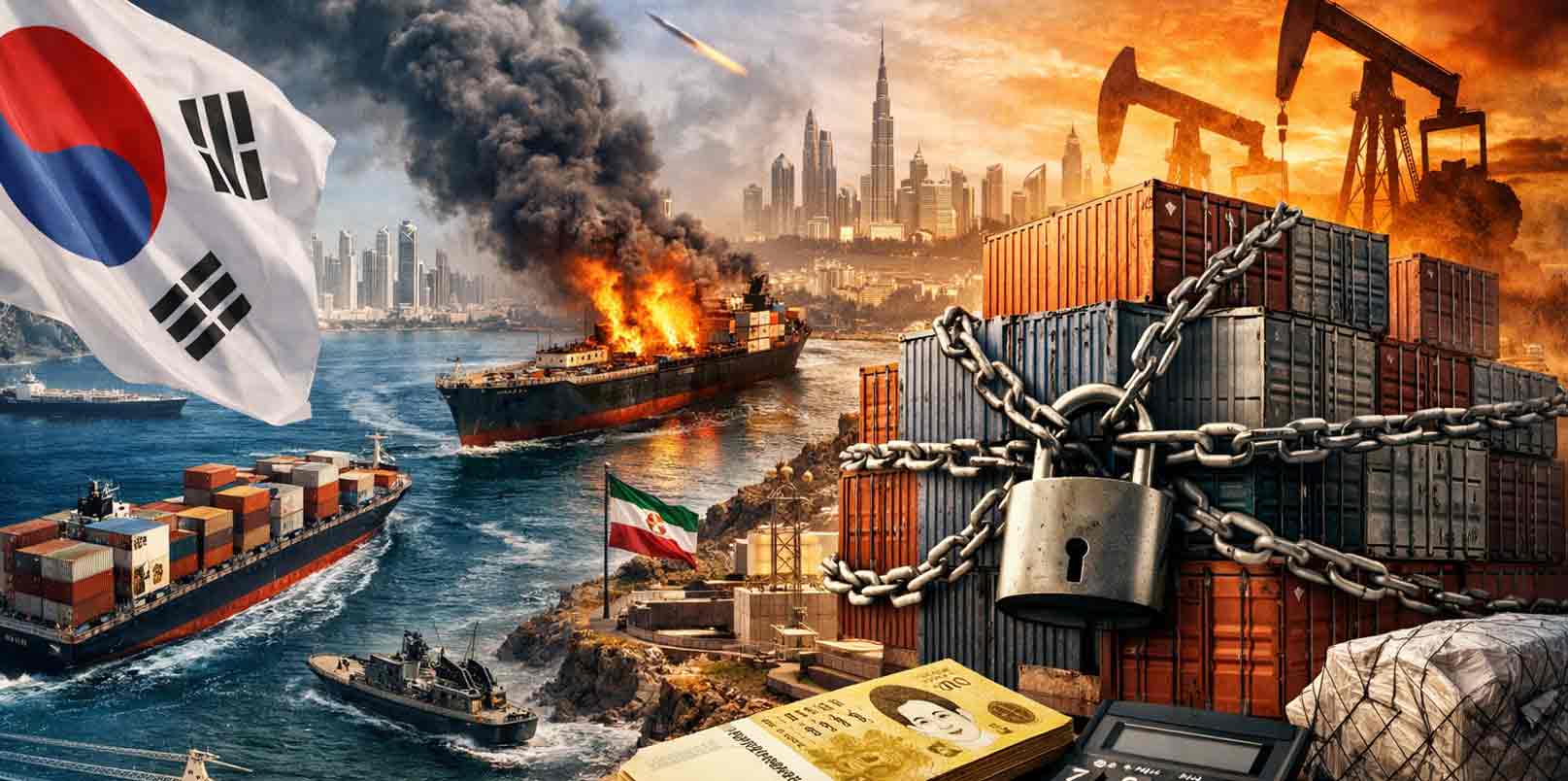
The “Middle East Boom” has been the cornerstone of South Korea’s 2026 global expansion strategy. However, the sudden death of Iranian Supreme Leader Ayatollah Ali Khamenei and the subsequent military escalation have introduced a massive structural bottleneck. This crisis tests the resilience of Korea’s venture ecosystem as the government scrambles to protect $6.45 billion in annual export value from a regional logistical collapse.
Emergency Response: MSS Activates Crisis Measures for 14,000 Exporters
The Ministry of SMEs and Startups (MSS) officially transitioned into an emergency response mode on March 1, 2026. This follows a series of preemptive strikes by Israel and the U.S. against Iranian leadership on February 28 (local time). The Ministry established a dedicated damage reporting system across 15 regional Export Support Centers to assist small and medium-sized enterprises (SMEs) caught in the crossfire.
Current data indicates that 13,956 Korean SMEs are active in the Middle East, representing over 14% of the nation’s total exporting startup base. With the Iranian Revolutionary Guard Corps (IRGC) threatening to block the Strait of Hormuz, the MSS is focusing on immediate liquidity. This includes the rapid disbursement of the Emergency Management Stabilization Fund and the doubling of international shipping vouchers to 60 million KRW.
First Vice Minister Noh Yong-seok is scheduled to chair a high-level Task Force on March 3. This group will include representatives from the Korea Federation of SMEs (KBIZ) and major financial institutions. They aim to assess the specific impact on product categories and regional trade routes as the “Operation Epic Fury” unfolds.
From Boom to Blockade: The Realities of the Strait of Hormuz Closure
The geopolitical shift is particularly jarring given the high concentration of Korean tech interest in the UAE and Saudi Arabia. These two nations account for over 53% of Korea’s total SME export volume in the region. The closure of the Strait of Hormuz—a corridor for 20% of global oil and gas—threatens to paralyze the physical delivery of Korean hardware, beauty tech, and medical devices.
While direct exposure to Iran and Israel remains statistically small at 0.1% and 0.3% respectively, the “halo effect” of the conflict is the primary concern for venture capital. Investors are currently re-evaluating the “K-Middle East” narrative as shipping rates spike and regional logistics hubs like Dubai face flight cancellations.
The current instability creates a massive gap between the government’s “Global Expansion” ambition and the execution of physical trade.
Structural Safeguards: Direct Statements from the Ministry
The South Korean government is emphasizing a “tailored response” to ensure that the momentum of the past two years is not completely lost. The priority is maintaining the flow of capital to prevent a secondary liquidity crisis among startups that have recently opened offices in Riyadh or Abu Dhabi.
First Vice Minister Noh Yong-seok stated,
“We are monitoring the Middle East situation with the utmost gravity.
Our focus is to minimize the impact on our exporting SMEs by working closely with the Ministry of Foreign Affairs and the Ministry of Industry. Through our regional centers, we will provide real-time monitoring and concentrated, customized support for every affected firm.”
Ecosystem Significance: Why This Matters for Global Venture Capital
For the global startup community, Korea’s predicament serves as a case study in “Geopolitical Venture Risk.” Many Korean startups recently pivoted toward the Middle East to escape the cooling domestic market and the latest U.S. reciprocal tariff issues. This sudden friction demonstrates that regional concentration—even in a high-growth market like the GCC—requires robust secondary logistics and diversified supply chains.
The MSS response is notable for its speed, but the 60 million KRW shipping cap may only offer temporary relief if the conflict extends into a multi-month blockade. Global LPs and VCs are watching how the Korean government bridges this gap.
If the “Emergency Management Stabilization Fund” successfully buffers the 14,000 companies exposed, it could provide a blueprint for state-led venture protection during global shocks.
Future Outlook: Navigating the New Middle East Risk Profile
The death of Khamenei marks the beginning of a leadership vacuum that will likely keep regional volatility high throughout 2026. Korean startups must now transition from a “growth-at-all-costs” mindset in the Middle East to a “risk-adjusted” strategy. A surge in demand for alternative logistics routes bypassing the Gulf will be much expected, such as land-based corridors through Central Asia or increased air-freight reliance.
The long-term credibility of the “K-Startup” brand in the Middle East depends on how these 14,000 companies handle this friction. Those that can maintain operations despite the blockade will emerge as the new “blue-chip” startups of the ecosystem. And it is essential to track whether the government’s financial measures are enough to sustain the $6.4 billion trade link.
Key Takeaway: Middle East Conflict Impact on Korean Tech
- Total Exposure: 13,956 Korean SMEs and startups are active in the Middle East, with $6.45 billion in annual export value at risk.
- Key Conflict Points: The death of Iran’s Supreme Leader and the potential closure of the Strait of Hormuz are the primary drivers of logistical friction.
- Government Support: The MSS has doubled international shipping vouchers to 60 million KRW and activated the Emergency Management Stabilization Fund.
- Market Concentration: 53.5% of Korea’s regional SME exports are concentrated in the UAE (34.1%) and Saudi Arabia (19.4%), making these markets the most vulnerable to regional instability.
- Logistical Disruptions: Major airlines (Emirates, Lufthansa, British Airways) have suspended flights to the region until at least March 7, 2026.
🤝 Looking to connect with verified Korean companies building globally?
Explore curated company profiles and request direct introductions through beSUCCESS Connect.
– Stay Ahead in Korea’s Startup Scene –
Get real-time insights, funding updates, and policy shifts shaping Korea’s innovation ecosystem.
➡️ Follow KoreaTechDesk on LinkedIn, X (Twitter), Threads, Bluesky, Telegram, Facebook, and WhatsApp Channel.


