South Korea has quietly introduced one of its most forward-looking ecosystem reforms — a professional certification for venture mentors. The new K-Venture Mentor-Coach Certification (KVMCC) moves beyond symbolic guidance to institutionalize how founders receive structured, verified, and outcome-driven mentorship. It signals Korea’s growing intent to globalize its startup support infrastructure and to align mentorship quality with the standards expected in top-tier innovation economies.
Korea Launches KVMCC: The First National Venture Coaching Certification
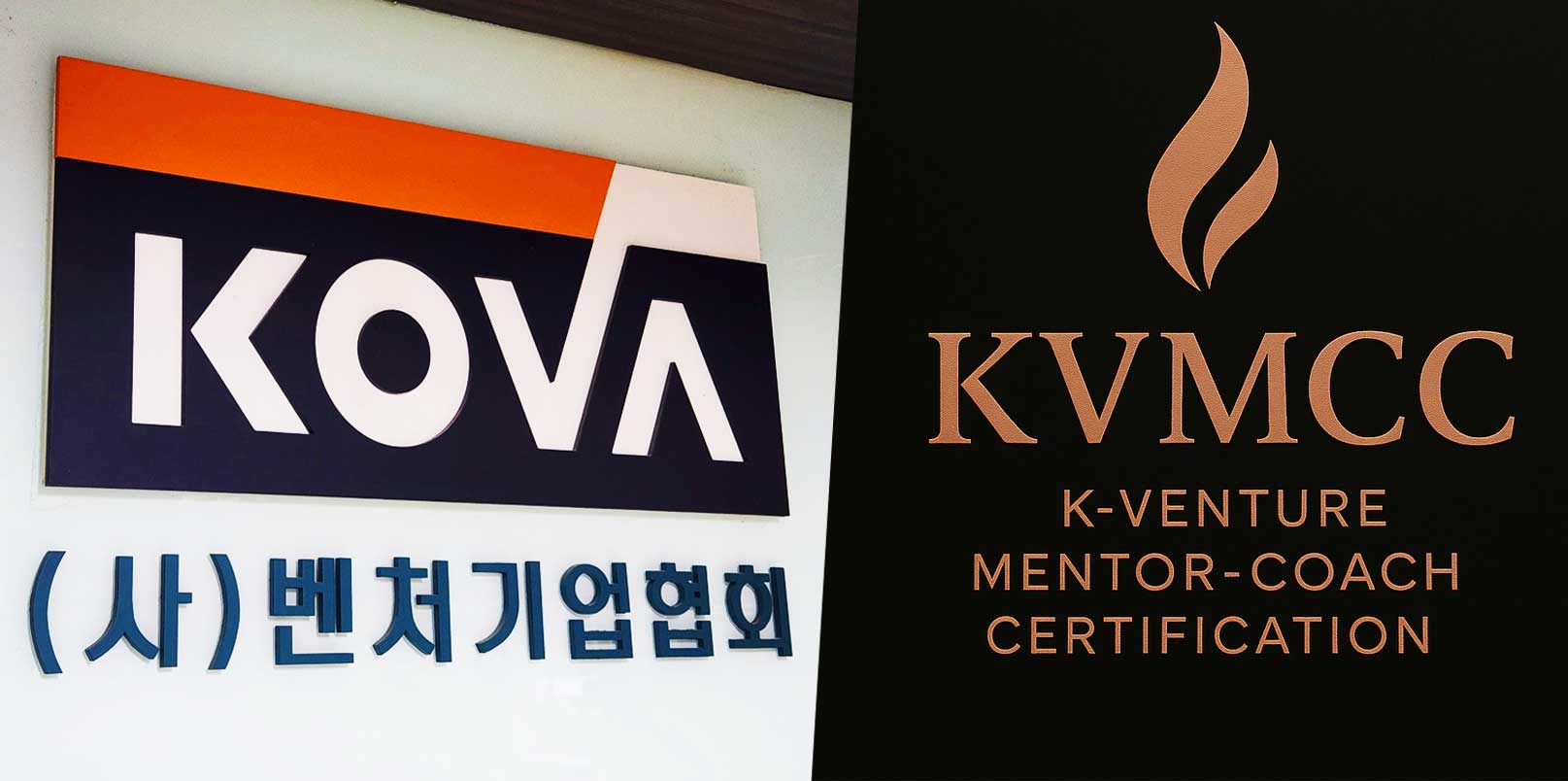
The Korea Venture Business Association (KOVA) announced the K-Venture Mentor-Coach Certification (KVMCC) program in December 2025, marking a strategic initiative that could redefine how entrepreneurship is nurtured in Asia’s fourth-largest venture economy.
Introduced to coincide with the 30th anniversary of Korea’s venture industry, the program aims to build a next-generation mentorship framework capable of supporting founders through every stage — from seed to scale to exit.
Unlike conventional advisory systems that rely on retired executives or short-term consultants, the KVMCC introduces a three-tier certification structure:
- Coaching Mentor for early-stage ventures,
- Pro Coaching Mentor for scale-up support, and
- Master Coaching Mentor for senior ecosystem contributors.
The system is jointly operated by the Korea Coach Association and the Korea Early-Stage Investment Accelerator Association, integrating verified coaching standards with venture operation expertise.
Addressing Structural Weakness in Korea’s Startup Mentorship Model
Korea’s venture ecosystem, despite its rapid funding growth and policy support, has long lacked a verified mechanism to ensure mentorship quality. KOVA identified that many existing programs depend on mentor seniority rather than coaching capability, often resulting in one-off consultations with limited practical value.
The KVMCC directly addresses this gap. Participants undergo 32 hours of structured training and evaluation, covering venture ethics, trust-based communication, IR simulation, and applied scaling strategy. Each mentor must demonstrate five key competencies, including growth mindset, partnership building, and active listening.
The certification’s philosophy draws on “unlearning” — the deliberate abandonment of outdated experience-driven approaches. Instead of replicating past formulas, mentors are trained to co-develop solutions with founders adapting to new technologies and markets.
KOVA benchmarked the program after Bill Campbell, known as “The Coach of Silicon Valley,” who guided Steve Jobs and Eric Schmidt by combining emotional support with executive-level strategy. The Korean system adopts this balance of empathy and execution to professionalize founder support at scale.
Building a Sustainable Mentorship Infrastructure with KVMCC
During the program’s introduction, KOVA representatives emphasized that real growth in Korea’s startup scene now depends on verified, repeatable mentoring capacity rather than ad hoc guidance.
A KOVA official stated,
“In today’s global competition, startups cannot afford to rely on intuition alone. Real-world coaching capability is no longer optional — it is infrastructure.”
The association also announced plans to appoint respected senior entrepreneurs as Honorary Mentors, ensuring that experience-based insight remains connected to verified methodology.
The first foundational course opened on December 16, 2025, with the inaugural class of certified mentors expected in mid-2026. KOVA confirmed that more than 30 participants from accelerators, VC firms, and corporate venture arms have already applied for the initial cohort.
KVMCC: Converting Mentorship into Measurable Certifiable Capability
Korea’s venture sector has grown into one of the world’s most dynamic, yet founder development often lagged behind capital supply. The KVMCC addresses this imbalance by converting mentorship — previously seen as soft infrastructure — into a measurable, certifiable capability.
This model could become particularly relevant as Korean startups expand through global programs such as K-Startup Grand Challenge and TIPS Global, where international founders often cite the need for consistent mentorship quality.
By introducing a national standard, Korea is signaling that ecosystem maturity is now defined not only by investment volume but by human capital depth. For international investors, this development enhances confidence in the country’s founder pipeline and may serve as a framework for other emerging ecosystems across Asia and the Middle East.
Beyond domestic certification initiatives, global mentorship networks are also emerging to strengthen Korea’s founder support infrastructure. Programs such as the beSUCCESS Global Mentorship Program connect world-class mentors with Korean startups preparing for international expansion. This approach complements KVMCC’s vision by linking structured local capability building with global insight sharing, bridging Korea’s innovation ecosystem with international expertise.
A New Chapter in Founder Support
Korea’s venture ecosystem has mastered capital formation; the next challenge is capacity formation. The KVMCC bridges that gap by systematizing how founders are coached, guided, and sustained through market cycles.
If executed effectively, it could place Korea among the few nations — alongside the US, Israel, and Singapore — that treat founder development as a strategic national competency. In an age when the right mentorship can determine whether innovation scales or stalls, this program may well redefine how venture nations measure readiness for the next decade of global entrepreneurship.
– Stay Ahead in Korea’s Startup Scene –
Get real-time insights, funding updates, and policy shifts shaping Korea’s innovation ecosystem.
➡️ Follow KoreaTechDesk on LinkedIn, X (Twitter), Threads, Bluesky, Telegram, Facebook, and WhatsApp Channel.
🤝 Looking to connect with verified Korean companies building globally?
Explore curated company profiles and request direct introductions through beSUCCESS Connect.