

A new wave of online bomb threats targeting Samsung Electronics, Kakao, and Naver has revealed how digital access points can be exploited to disrupt Korea’s largest technology firms. While no explosives were found, the incidents underscored a deeper vulnerability in the country’s innovation ecosystem—where the line between digital and physical security is blurring faster than response systems can adapt.
Police Investigate Bomb Threats on Major Korean Tech Firms
On December 18, police received a report after a post appeared on Kakao’s customer-service platform threatening to bomb Samsung Electronics’ Suwon headquarters and shoot Chairman Lee Jae-yong with a homemade firearm. The message listed only a name, with no further identifying details:
“I will blow up Samsung Electronics’ headquarters in Suwon, Gyeonggi, and shoot Chairman Lee Jae-yong with a homemade gun.”
Authorities immediately dispatched officers to Samsung’s Suwon campus to review security footage and inspect sensitive areas. After confirming no unusual activity, police classified the case as low physical risk but continued to reinforce patrols around the site.
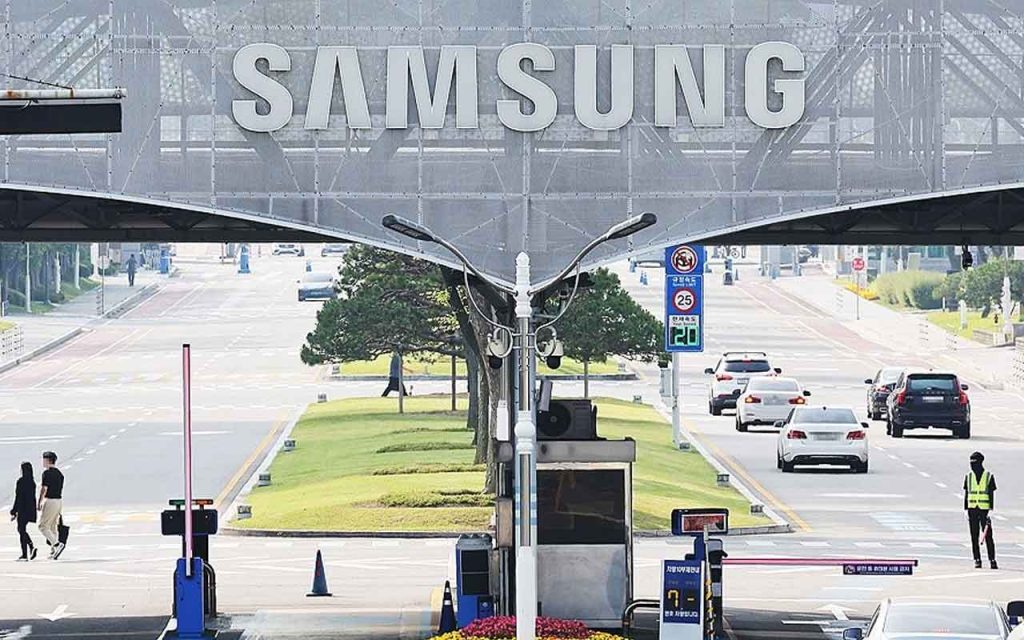
Officials later confirmed that similar online threats had been reported in recent days against Kakao’s Pangyo and Jeju offices, Naver’s headquarters in Seongnam, and KT’s Bundang campus. Investigators suspect that one or more individuals are posting messages under stolen identities, a pattern seen in previous cases.
The threats have forced some companies, including Kakao and Naver, to temporarily switch employees to remote work while authorities conducted building sweeps and digital tracing.
Expanding Pattern of False Threats and Identity Misuse
Police reports indicate that since December 15, at least four major Korean tech companies have received near-identical online threats through customer-facing portals. The posts mention specific buildings, corporate executives, and fabricated claims of explosive devices.
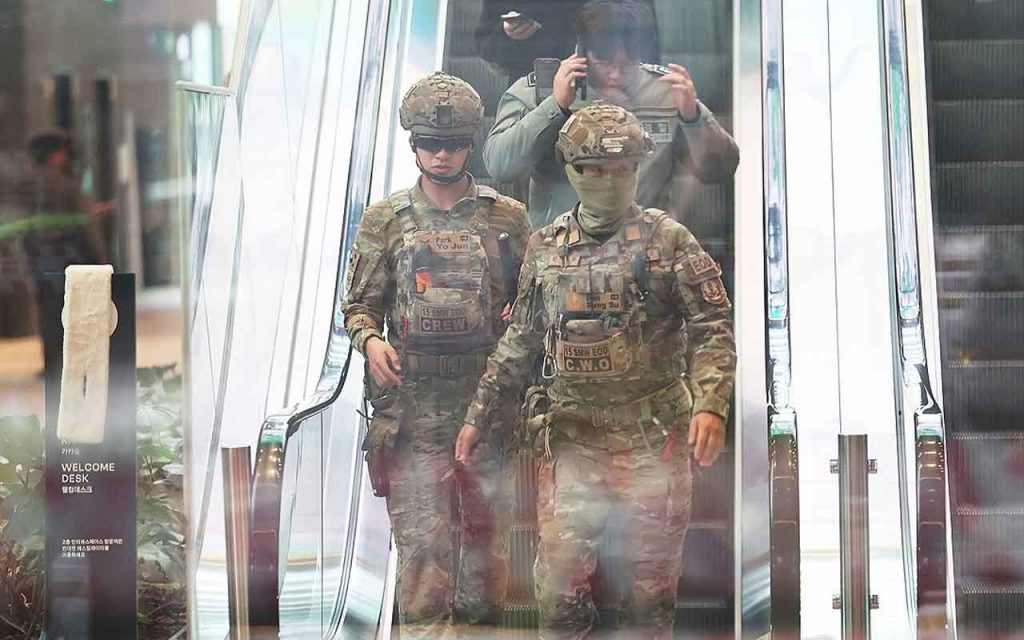
Investigators are tracing IP addresses and suspect a case of repeated identity theft, as multiple posts used the names of unrelated minors or former students in different cities. These incidents have led to widespread deployment of police, fire, and military personnel, despite each search concluding with no evidence of explosives.
Law enforcement is now pursuing charges of public intimidation (“공중협박”), a felony offense carrying penalties of up to five years’ imprisonment or a KRW 20 million fine, reflecting the state’s effort to treat these digital threats as serious criminal acts rather than pranks.
Officials and Experts Call for Stronger Cyber-Physical Coordination
Police representatives acknowledged the operational strain caused by repeated false alerts but emphasized that all reports must be handled with full precaution.
One investigator stated,
“We are treating this as a pattern of name-theft–based intimidation targeting major corporations.”
Experts have compared the incidents to “abnormal-motivation crimes,” where personal frustration or attention-seeking escalates into public intimidation.
Lee Byung-hoon, Professor Emeritus of Sociology at Chung-Ang University, stated,
“This resembles crimes driven by abnormal motives—an expression of anger or alienation directed at society. Early intervention and strong recognition of such acts as serious crimes are vital to prevention, along with social support systems to prevent vulnerable individuals from becoming radicalized.”
Industry observers also stress that digital channels originally built for customer communication have become attack surfaces capable of triggering large-scale physical responses, suggesting a need for unified cybersecurity, access-control, and emergency-response frameworks across corporate campuses.
Multiple Bomb Threats on Samsung, Naver, Kakao Challenging Korea’s Tech Economy
The cross-company threats point to an emerging governance challenge in Korea’s tech economy. As corporate operations, data management, and workplace safety become increasingly interconnected, security incidents now ripple through both digital systems and physical infrastructure.
This case has now become an important lesson for startups and foreign entrants that customer-facing digital platforms require not only engagement strategies but also protocols for managing misuse. The same channels built to facilitate communication can be exploited to amplify threats or trigger costly security responses.
Large firms like Samsung, Kakao, and Naver have robust internal protocols, but cascading disruptions—forced evacuations, remote-work transitions, and resource diversion—demonstrate the cost of unpreparedness. Such events can erode confidence among investors and partners assessing Korea’s stability as an innovation hub.
Internationally, the trend mirrors global concern over cyber-physical convergence in smart-city systems and digital infrastructure. As Korea advances in cloud, AI, and connected services, it faces growing expectations to embed safety governance not only in technology but also in operational culture.

Resilience as a Competitive Asset
The December wave of threats ended without physical damage, yet it exposed a structural blind spot in Korea’s digital economy. Preventing the next disruption will require cross-agency cooperation, real-time information sharing, and clear legal accountability for digital misuse.
For the broader ecosystem, resilience is becoming a competitive differentiator. As global startups and investors engage with Korea’s market, confidence will depend on how swiftly the country turns these incidents into a blueprint for integrated digital-physical security—a standard that can protect not just corporate giants but the entire innovation chain.
🤝 Looking to connect with verified Korean companies building globally?
Explore curated company profiles and request direct introductions through beSUCCESS Connect.
– Stay Ahead in Korea’s Startup Scene –
Get real-time insights, funding updates, and policy shifts shaping Korea’s innovation ecosystem.
➡️ Follow KoreaTechDesk on LinkedIn, X (Twitter), Threads, Bluesky, Telegram, Facebook, and WhatsApp Channel.